
Beyond Grey: Redefining Longevity as Malaysia’s Next Economic Frontier
Prof Nicola Palmarini Tells Conference Shift from “Ageing Society” to “Longevity Society” Prevention, Inclusion, and Design Can Unlock Billions in Value Unpaid Care Work Holds Untapped Potential

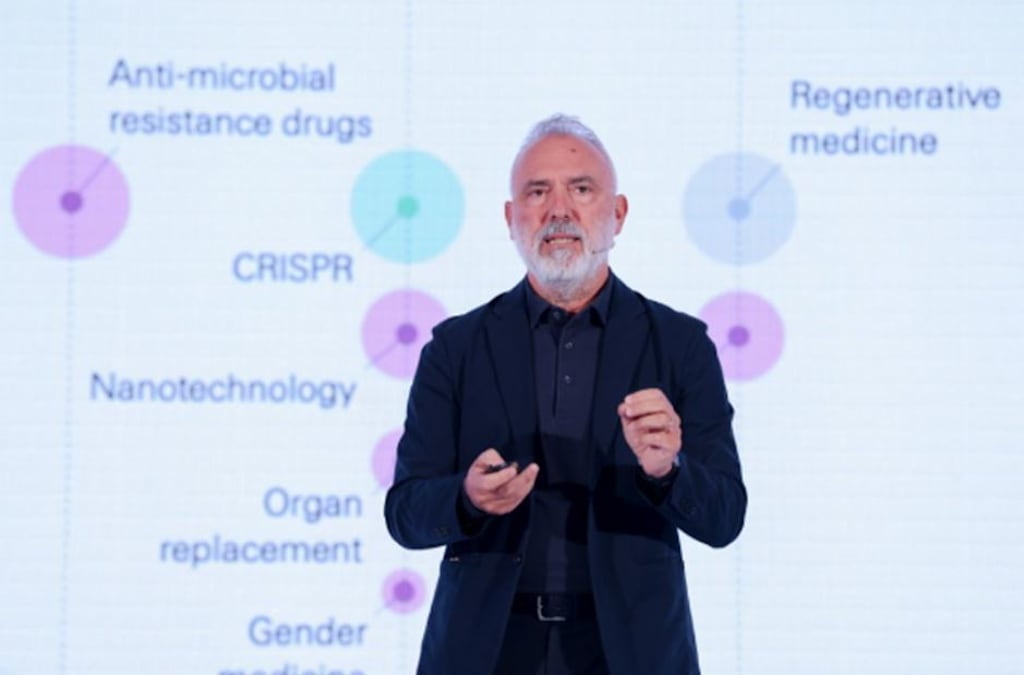
We are living longer but not necessarily better. That is the central challenge facing nations worldwide, including Malaysia, according to Professor Nicola Palmarini, Director of the United Kingdom’s National Innovation Centre for Ageing. Speaking at the International Social Wellbeing Conference 2026, he argued that treating longer lives chiefly as a burden on healthcare and pensions is not only short-sighted; it misses the single greatest economic and social opportunity of this century. By rethinking what longevity means, where it comes from, and how it benefits everyone, societies can transform an anticipated challenge into a foundation for shared prosperity.
Palmarini begins by drawing a sharp and essential distinction between two ideas often treated as one. An ageing society describes a demographic shift where more people reach advanced ages, and it is usually framed as a cost, a pressure, and a list of demands to be managed. A longevity society, by contrast, focuses not just on how long we live, but on how many years we live in good health, free from chronic illness, disability, and dependence. “We’re not only getting older; we’re living longer, which is very different,” he explains. That difference matters because adding years to life is not the same as adding life to years, and it is healthspan rather than lifespan that determines whether longer lives become a blessing or a strain.
The most powerful part of Palmarini’s argument challenges the assumption that healthcare spending is the primary driver of better health outcomes. He cites research showing that clinical care accounts for only eleven percent of what shapes a person’s health over time. Genetics contributes roughly twenty-two percent, the physical environment, including housing, air quality, and neighbourhood safety contributes seven percent, and the largest share, around sixty percent, comes from societal and behavioural factors such as diet, activity levels, social connection, purpose, and daily habits. He points to Malaysia’s standing as a telling example: the country ranks sixty-seventh globally in health-adjusted life expectancy, just below the United States, yet spends only about four percent of its gross domestic product on healthcare compared to America’s seventeen to eighteen percent. The gap demonstrates that pouring funds into medical systems alone will not produce healthier, longer lives; broader choices about how people live, work, eat, and connect matter far more.
Palmarini is careful to clarify that healthcare is not unimportant, but that it largely intervenes after harm has already occurred. The far larger opportunity lies in prevention in designing communities, workplaces, food systems, and public spaces that support well-being before anyone becomes a patient. “Why don’t we work on the prevention side instead of only caring about things that already have happened? Why don’t we care about people instead of patients?” he asks. This shift in perspective means viewing health as something built through education, employment, housing, transport, urban planning, and social inclusion, rather than something delivered only through hospitals and clinics.
This broader view leads to a redefinition of the economy itself. Palmarini urges moving beyond the familiar concept of the “silver economy,” which treats older people primarily as consumers of age-specific goods and services, toward a true longevity economy that spans every stage of life. For Malaysia, one of the clearest opportunities lies in recognising and valuing unpaid domestic and care work, an activity estimated to account for seventeen point six percent of the nation’s gross domestic product making it the second-largest economic sector behind manufacturing, and nearly double the global average. Much of this work falls on women, and bringing the estimated three-point-two million people performing these roles into fairer, more visible, and formally supported participation could raise national output by as much as four-point-nine percent. Employers also stand to gain through what Palmarini calls the “wisdom dividend” the productivity, guidance, and stability retained when experienced workers remain in the workforce on flexible, respected terms. Cities, too, have a vital role, evolving from merely “age-friendly” spaces into fully “longevity-enabling” environments where neighbourhoods, transport, housing, and public design encourage movement, connection, and independence for people of all ages.
To bring this vision together, Palmarini suggests governments consider creating dedicated ministries of longevity bodies with the authority to coordinate across education, labour, housing, trade, and urban planning, because health is shaped in all those places, not only within the walls of health facilities. “Longevity cannot be delegated to health ministries or hospitals,” he notes. “It is time we start designing what the strongest medicine we are aware of exercise, connection, purpose, and prevention into the very fabric of daily life.”
Malaysia stands at a turning point. Its population is maturing, and lifespans are continuing to rise. The choice the country faces is not whether more people will live to older ages that is already happening, but whether those extra years will be lived in health, dignity, and contribution, or in strain and separation. Palmarini’s message is clear: invest in the conditions that foster well-being long before illness appears, value the care that sustains families and communities, design spaces and systems that serve every generation, and recognise that longer, healthier lives are not a burden to be carried. They are the future we can build together.
About the Creator
Mark Lim
Hi I am mark an automotive student and a car, tech and food enthusiast ! Im gonna try and post daily & hope you enjoy what I write and do share my page with people you know. I would gladly appreciate it! Cheers
Enjoyed the story? Support the Creator.
Subscribe for free to receive all their stories in your feed.
Comments
There are no comments for this story
Be the first to respond and start the conversation.