
Beyond Fear: Reclaiming Merdeka as a Mandate for Shared Prosperity
As Malaysia marks another independence anniversary, the nation’s greatest challenge is no longer economic survival but political maturity rejecting identity-based insecurity to harness diversity as the engine of upward mobility and national resilience.

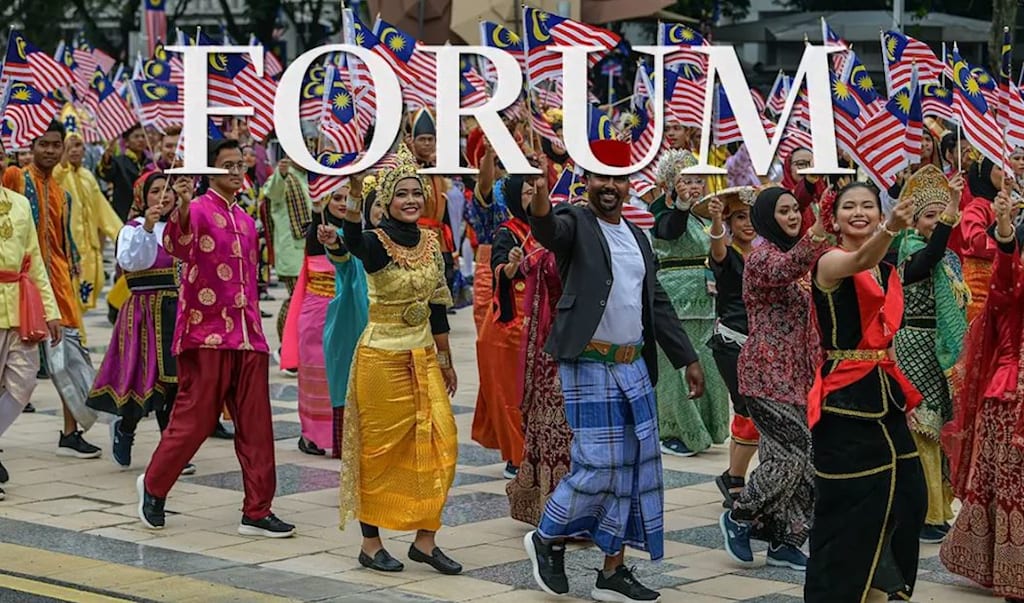
Every Merdeka and Malaysia Day invites reflection on the courage of Malaysia’s founders, but true commemoration demands more than nostalgia. Nearly seven decades after independence and six decades since the formation of Malaysia, the nation has achieved remarkable material progress: an industrialized trading economy deeply embedded in global semiconductor supply chains, a workforce of over 16 million, and nearly six million university graduates with graduate unemployment at just 3.2%. Malaysians of every ethnic background now thrive as professionals, entrepreneurs, and innovators across every sector. Yet despite this transformation, public discourse remains shackled to the anxieties of the past, perpetually stoked by fear-based politics that mistake division for protection and grievance for governance. The urgent task for this generation is not to defend identities already secure, but to build a future where confidence replaces suspicion, and shared prosperity supersedes zero-sum competition.
The persistence of identity-driven insecurity is not inevitable; it is manufactured. When economic uncertainty looms, it is politically expedient to blame “the other” rather than address structural failures in productivity, wages, or education. It is easier to name enemies than to create quality jobs; simpler to amplify dread than to inspire agency. But this strategy has exhausted its utility. Malays and Bumiputera have expanded their presence in universities, professions, business, and government beyond what earlier generations could envision. Chinese, Indian, Sabahan, and Sarawakian communities have equally contributed to and benefited from national development. To cling to narratives of existential threat is to deny the reality of collective achievement. True security lies not in guarding against fellow citizens, but in recognizing that someone else’s success does not diminish one’s own. Confidence, not fear, must be the foundation of national identity.
This confidence must translate into policy obsessed with upward social mobility, the defining challenge of our era. While access to education has broadened, its promise remains unfulfilled for too many. A median formal-sector wage of just over RM3,000 monthly is insufficient to sustain middle-class aspirations, let alone fund fiscal sustainability. Degrees alone cannot break cycles of low income if they do not align with market needs. Tomorrow’s economy demands digital literacy, critical thinking, adaptability, and collaboration with advanced technologies, not just credentials. Education reform must therefore be radical and responsive, integrating schools, universities, TVET institutions, and employers into a unified ecosystem focused on outcomes: Can graduates save? Own homes? Nurture families? If not, the system has failed. Government priority must shift from enrollment statistics to tangible life trajectories, ensuring that hard work reliably leads to dignity and stability.
Achieving this requires harnessing Malaysia’s diversity as a strategic asset, not a liability. Few nations possess such rich cultural and linguistic capital. In an increasingly fragmented world, Malaysia’s ability to bridge civilizations, evident in its ASEAN leadership and global commercial ties, is invaluable. Yet this advantage is squandered when talent is sidelined due to surname, state of origin, faith, or language. Our greatest natural resource is not oil or land, but Malaysians themselves. Unlocking it demands rejecting the colonial-era logic that still animates divisive politics: the belief that communities must compete for scraps rather than co-create abundance. The questions worth debating are not about who deserves more, but how to raise wages equitably, modernize curricula for the digital age, boost SME productivity, build globally competitive firms, and ensure every child fulfills their potential. Answers will emerge only through collective wisdom, not communal bargaining.
Merdeka was born of extraordinary courage and the conviction that disparate peoples could forge a nation together despite disagreement. Today, that same courage is needed to liberate Malaysia from the internal colonialism of fear-based politics. Democracy permits policy debate; it should not tolerate the weaponization of identity that stalls progress. The challenges ahead AI disruption, climate adaptation, energy transition, and geopolitical realignment are colorblind and urgent. They demand unity of purpose, not purity of lineage. This generation owes it to the founders, and to its children, to declare a new Merdeka: freedom from manufactured insecurity, confidence in shared destiny, and the resolve to build a Malaysia where origins do not dictate outcomes. Only then will independence mean more than memory—it will become a living promise, renewed daily through justice, opportunity, and trust.
About the Creator
Mark Lim
Hi I am mark an automotive student and a car, tech and food enthusiast ! Im gonna try and post daily & hope you enjoy what I write and do share my page with people you know. I would gladly appreciate it! Cheers
Enjoyed the story? Support the Creator.
Subscribe for free to receive all their stories in your feed.
Comments
There are no comments for this story
Be the first to respond and start the conversation.