
Before Nvidia Became an AI Giant, It Was Building Graphics for Sega
In the 1990s, Nvidia discovered that the technology it was building for Sega was taking the company in the wrong direction. Walking away could kill the startup. Continuing might do the same.
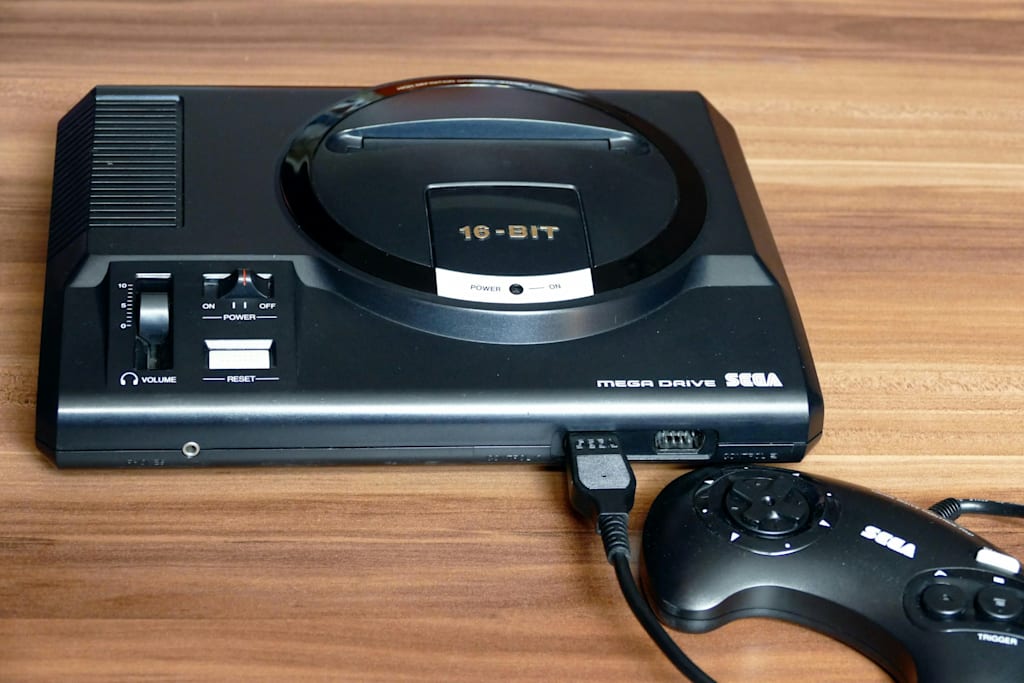
By Human Business Works
In the mid-1990s, Jensen Huang had to tell Sega something no young technology company wants to tell an important customer.
The graphics technology Nvidia had been developing was not going to work the way they had hoped.
Nvidia was only a few years old. Huang had founded the company in 1993 with Chris Malachowsky and Curtis Priem, initially betting that better 3D graphics would become important to PC games and multimedia. At the time, Nvidia was one of dozens of young companies trying to build graphics chips.
Sega was already a famous name in gaming.
Its arcades and consoles had given players Sonic the Hedgehog, Virtua Fighter and other recognizable franchises. For a small chip company, working with Sega meant access to exactly the kind of gaming market Nvidia wanted to enter.
The relationship started well.
In 1995, Nvidia released its first product, the NV1. Sega adapted Virtua Fighter for the PC, making it the first 3D game to run on Nvidia graphics, according to Nvidia's own corporate history.
Nvidia and Sega then worked together on graphics technology connected to future gaming systems. Nvidia now describes the early relationship as covering both arcade machines and game consoles.
For a young Nvidia, the direction seemed promising.
Then the industry changed around it.
Nvidia's early graphics architecture handled 3D images differently from the approach that was becoming standard. Microsoft introduced DirectX, a set of tools that helped game developers work with PC graphics hardware, and Nvidia's design was poorly matched to that emerging standard.
Huang later described the company's original architecture as the wrong answer. Continuing down the same path would mean spending more time and money on technology that the broader PC market was moving away from.
That created an ugly choice.
Nvidia could keep working on its Sega project and risk falling even further behind the rest of the graphics industry.
Or it could stop.
Stopping meant losing the project that was helping keep the small company alive.
The conversation Nvidia could not avoid
Shoichiro Irimajiri was one of Sega's senior executives at the time and later became the company's president.
According to Irimajiri's recent account, Sega had contracted Nvidia to work on a graphics processor for the game console that eventually became the Dreamcast. The project did not succeed, and Sega planned to terminate the arrangement.
Huang did something difficult.
He admitted that Nvidia had chosen the wrong technical direction.
Then he asked Sega for help anyway.
Irimajiri told Inc. that Huang explained the problem honestly and asked Sega to release Nvidia from the project while still providing roughly $5 million that remained connected to the agreement. Sega confirmed that it approved about $5 million around 1995 or 1996, although the surviving records do not make completely clear how much was a contract payment and how much was structured as an equity investment.
From Sega's perspective, it was hardly an obvious investment.
Nvidia had just failed to deliver the technology Sega needed.
The graphics market was crowded.
Nvidia itself was running short of time.
Irimajiri nevertheless supported the company. He later said that Huang's honesty, technical knowledge and determination convinced him that Nvidia deserved another opportunity. Inc.com
For Nvidia, the money meant time.
Huang has said Sega's support gave the company roughly six months to change direction.
That was not much.
But it was more than Nvidia had without it.
Six months to build something different
Nvidia now had to abandon part of the technology it had spent years developing and create something much better suited to where the industry was going.
The company reduced its size and focused its resources on a new graphics chip.
That chip became the RIVA 128.
The technical change was significant. Nvidia stopped trying to defend its earlier architecture and built around the standards game developers were increasingly using. Huang later called the RIVA 128 a reset for the company.
There was little room for another failure.
Nvidia tested much of the chip using computer simulations rather than waiting for the usual cycle of physical prototypes. Huang has recalled that the company was running short of both money and time when it committed to production.
The gamble worked.
Nvidia says more than one million RIVA 128 units were sold during the product's first four months on the market in 1997.
The company had survived its wrong turn.
More importantly, it had learned how quickly a technology business could become trapped by a decision that once looked reasonable.
Nvidia did not survive because its original idea had been right.
It survived because the people running the company were eventually willing to say that it was wrong.
That distinction can disappear when successful companies tell their histories later. The early mistakes begin to look like inevitable steps toward the final result.
They did not feel inevitable at the time.
Huang was asking an important customer to abandon a project Nvidia had promised to complete. Sega was deciding whether to put more money behind a supplier that had just failed. Nvidia employees were trying to build a different technology while the company's financial room was disappearing.
Nobody in that moment could see the company Nvidia would eventually become.
Gaming came long before AI
Nvidia remained closely tied to gaming for years.
In 1999, it introduced what the company calls the first GPU, or graphics processing unit. In simple terms, a GPU is a processor designed to handle many visual calculations at once, allowing computers to draw increasingly complex images quickly.
Those chips helped games look better.
Years later, researchers discovered that the same ability to perform many calculations in parallel was useful for work that had little to do with video games.
Nvidia introduced CUDA in 2006, allowing programmers to use GPUs for broader computing tasks. Then, in 2012, Nvidia GPUs powered AlexNet, the neural network whose performance helped accelerate modern deep learning.
The road from Virtua Fighter to artificial intelligence was not straight.
It passed through failed technology, a cancelled console project, layoffs, a desperate reset and one customer willing to give a struggling supplier more time.
Three decades later, the Sega connection returned to where it had started.
In July 2026, Huang joined Sega executives in Tokyo's Akihabara district to celebrate more than 30 years of the companies' relationship. Shoichiro Irimajiri was there too, along with Virtua Fighter creator Yu Suzuki. Nvidia and Sega announced that future Sega games, including a new Virtua Fighter, would support Nvidia's latest computing platform.
The reunion made the contrast hard to miss.
One company had once needed Sega's help simply to stay alive.
Now Nvidia was one of the companies supplying the computing power behind the AI industry.
But the most useful part of the story happened before any of that success was visible.
A young company realized that years of work had taken it in the wrong direction. Its founder admitted the problem to a customer. The customer chose to give the company another chance.
Nvidia still had to build the chip that would save it.
Sega simply gave it enough time to try.
About the Creator
Enjoyed the story? Support the Creator.
Subscribe for free to receive all their stories in your feed.
Comments
There are no comments for this story
Be the first to respond and start the conversation.