
Bearing Fault Diagnosis Using Digital Twin Technology
Learn how digital twin systems improve bearing-fault diagnosis using AI, sensors, and predictive maintenance for modern industrial equipment.

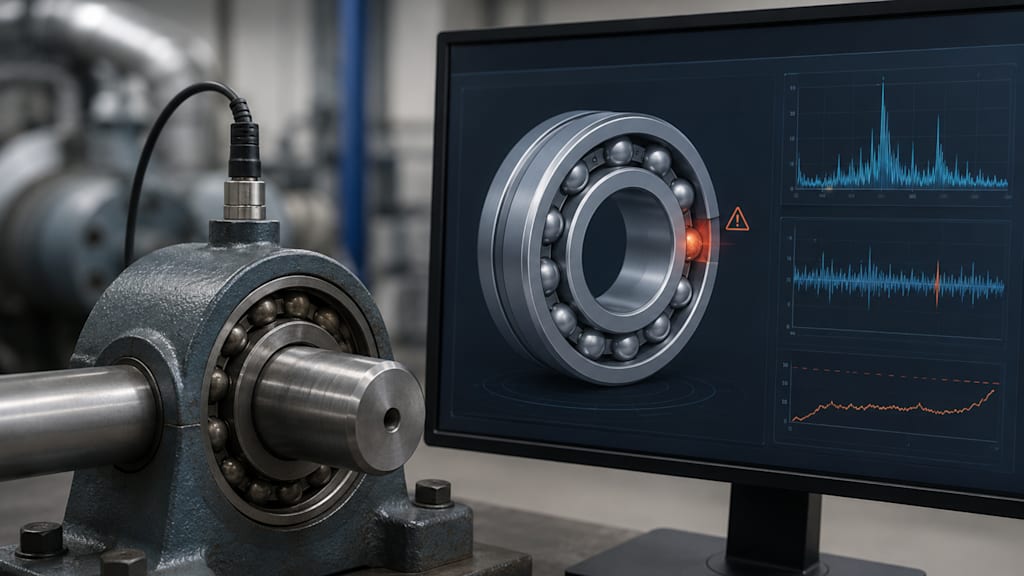
Industrial equipment failing is pretty unusual. Bearings usually give early warnings. Unfortunately, many industries rely on periodic inspections or scheduled maintenance to notice. This is the gap that modern bearing-fault diagnosis systems are trying to close.
Because of the ever-increasing variety of equipment, many engineers are using digital twin technology integrated with AI-based monitoring systems to enhance the accuracy of predictive maintenance. For every bearing manufacturing company working with high-speed shafts, early fault detection is a key way to reduce downtime and shaft damage and increase the reliability of machines.
The Limits of Traditional Scheduled Maintenance
Scheduled inspections or shutdowns are how many maintenance systems operate. There may be an inspection of the lubricant, temperature, vibration, or a visual inspection of wear. Scheduled inspections work well for many systems, but they have limitations.
Within weeks, bearings can show early, incipient signs of fatigue and fissures. In an industrial setting with high loads, these small defects grow quickly.
The limitations of conventional methods quickly become apparent in high-speed turbines and automotive or marine propulsion systems. Surprising failures of bearings in these systems can cause collateral damage to numerous interconnected components, such as shafts, housings, seals, and lube systems.
Bearing-failure diagnosis systems are a major area of focus in industry and modern maintenance strategies.
What is a digital twin in bearing systems?
Digital twins are real-time virtual representations of physical components. In bearing solutions, a digital twin gets real-time data from live sensors on the machine.
The virtual model assesses the following features:
- Heat behavior
- Rotational velocity
- Friction
- Vibration
- Lubrication
- Load
It checks all of these against the expected operational performance.
So, this virtual model can signal that something is wrong with the bearing before it becomes a huge problem. You can think of it as a virtual bearing that the system runs parallel to the real one. Instead of looking for symptoms of failure, engineers can now detect hidden operational changes.
How Sensor Data Helps With Bearing Failures
The more modern the maintenance system is, the more dependent it is on sensor accuracy. The majority of advanced systems utilize the following sensors:
- Vibration sensors
- Acoustic emission sensors
- Temperature sensors
- Speed sensors
- Oil condition sensors
Vibration is the technique most commonly used for bearing fault diagnosis. Small surface defects on the rolling elements or raceways create unique vibration frequencies that help identify:
- Inner race failure
- Outer race failure
- Faulty bearing cage
- Lubrication failure
- Misalignment
One challenge is that most real-world applications generate overwhelming amounts of operational data. Simple sensor data is not enough, which is why machine learning and digital twins are used.
How AI and Machine Learning Help Find Problems
Regular monitoring systems respond to specific threshold values. The same is not true for AI-led systems.
AI and machine learning analyze critical operational data and identify patterns associated with operational failures, including vibration waveforms, frequency spectra, variations in rotor speeds, temperature trends, lubrication conditions, and documented and historical operational failures.
By analyzing these inputs, the system can clearly distinguish between healthy baseline noise and genuine irregularities. Once a significant baseline of historical data is collected, the artificial intelligence model goes live, running in parallel with your machinery to automatically classify and diagnose faults as they occur.
For example, if the AI is well trained, it can assess faults associated with lubricant issues and damage. This reduces unnecessary part replacements and helps plan maintenance for the parts.
Why Bearing Manufacturing Quality Still Matters
Poor-quality components cannot be improved with intelligent software. Many organizations make the mistake of thinking that predictive maintenance systems will resolve all their reliability challenges. In fact, real digital twin models work best in combination with quality bearing manufacturing.
Documented operational data in critical systems is dependent on materials used, finishing processes, and surface roughness.
Manufacturing a poor-quality bearing can result in normal operational behavior, yet trigger alerts at a significantly higher level.
Competent engineering teams frequently recommend using a high-quality industrial bearing supplier and other sector partners alongside intelligent monitoring systems. To ensure your hardware is physically optimized from the start, understand how to prevent roller bearing failures using guidance from top bearing manufacturers before deploying complex digital modeling.
Real Industrial Applications of Digital Twin Monitoring
Many industries have started using digital twin-based monitoring.
1. Automotive Manufacturing
Production systems use rotating machines that can run continuously for long periods. The sooner a fault is identified, the lower the risk of an unexpected interruption during assembly-line operation.
2. Marine Equipment
Marine propulsion systems are subject to great loads and erosion. Monitoring bearings will greatly reduce the need for emergency maintenance at sea.
3. Wind Energy
The bearings in a wind turbine must contend with not only the elements but also the varying frequency and intensity of rotational loads. Using AI to plan maintenance will greatly reduce the need for service calls.
4. Heavy Industrial Machinery
The steel plants, mining equipment, and continuous production plants depend on rotating systems, where downtime can be immensely costly. The use of digital twin technology-based monitoring is extremely useful. It allows maintenance personnel to understand the behavior of the actual machine rather than planning maintenance based on set intervals.
Challenges Facing Digital Twin Systems
While digital twin technology offers many advantages, the operational hurdles can still be considerable. Multiple things can affect system performance. These can include not being able to cover all aspects with sensors, low-quality or insufficient data, difficult machine and operating conditions, and high computational demands.
AI fault patterns for one type of equipment won’t work for another. For example, patterns for marine equipment won’t identify faults in automotive manufacturing equipment.
One of the biggest hurdles in training these systems is that real-world failure data is incredibly rare and, obviously, far too dangerous and costly to collect deliberately. This is where high-fidelity digital twins offer massive value: they can simulate structural failures and generate synthetic fault data to safely train the AI on what a catastrophe looks like before it actually happens.
The Future of Intelligent Bearing Monitoring
As AI improves, we will be able to detect bearing faults in smart factories, automated systems, and robotics throughout the industry, as well as in new energy systems and in new ways to monitor the equipment and tools we use to improve how we work with them.
These systems may use new technologies such as cloud-based monitoring, edge computing, and improved vibration modeling, as well as enhanced AI that can simulate real-world operations. The point is not to have predictive equipment failure downtime, but to run operations without unnecessary, costly delays.
That is a major factor in why engineers revise their designs for rotating equipment and seek more reliable options.
Data Meets Precision Hardware
Digital twin technology represents a fundamental shift in how heavy industry approaches machinery health. However, data-driven software is only as good as the physical mechanical system it monitors.
To achieve full operational reliability, we need to combine advanced predictive algorithms with precision-designed, high-quality components from a trusted bearing manufacturer.
About the Creator
Enjoyed the story? Support the Creator.
Subscribe for free to receive all their stories in your feed.
Comments
There are no comments for this story
Be the first to respond and start the conversation.