
Bank Negara’s Tone Shift and Malaysia’s Economic Outlook
OPR Statement Wording Change Sparks Debate Growth Up, Inflation Contained, Risks Remain

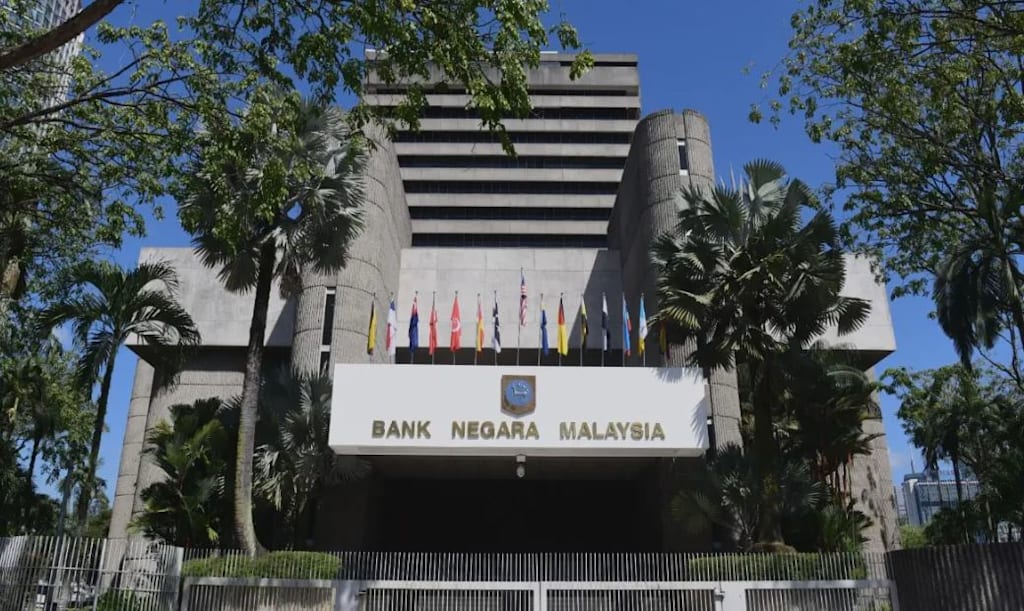
It is not often that a single word captures the attention of economists and markets, but the latest Monetary Policy Committee (MPC) statement from Bank Negara Malaysia did exactly that. On September 3, the central bank kept the overnight policy rate (OPR) unchanged at 2.75%, as widely expected, yet omitted the word “appropriate” from its description of the monetary policy stance. Instead of stating that the stance was “appropriate” for supporting growth and stability, the MPC said it was “consistent with” continued price stability and sustainable growth. That seemingly minor change has been interpreted as a subtle but meaningful shift toward greater flexibility and potentially a slightly more hawkish outlook as the economy strengthens and global risks persist.
Reading the Tone: Flexible Forward Guidance
CIMB Research noted in a September 3 analysis that the revised language points to “greater data dependence” rather than an immediate commitment to action. “It gives the MPC greater flexibility to respond, should stronger growth or higher cost pressures translate into more persistent inflation,” the firm explained. HSBC similarly described the tone as “slightly hawkish,” interpreting the change as signalling openness to eventual policy normalisation rather than a fixed path of rate hikes.
Two key developments underpin this shift: growth has accelerated beyond expectations, and inflation risks, while currently contained, are tilted upward. The MPC has raised its 2026 growth outlook to approximately 5%, following a second-quarter GDP expansion of 6% that brought first-half growth to 5.7%. Gone too is the previous assessment that global commodity price impacts would be “contained.” The committee now explicitly acknowledges that elevated prices are continuing to push costs higher, a reflection of the prolonged conflict in the Middle East and renewed concerns over crude oil breaching US$100 per barrel.
For now, the consensus is that the OPR will remain steady through 2026. Most economists anticipate a 25-basis-point increase in the first half of 2027, though some foresee no change at all next year.
Inflation: Moderating but Watchful
Consumer price inflation trended downward through mid-2026, peaking at 2.0% year-on-year in May before easing to 1.9% in June and 1.8% in July. Core inflation followed a similar path, declining from 2.3% in January to 1.8% in July. Food and beverage costs, which carry nearly 30% of the CPI weight remain the primary driver, rising 1.8% year-on-year in July after four months of moderating growth. Food-away-from-home inflation has held steady between 2.3% and 2.6% throughout the year, signalling persistent cost pressures in the services sector.
These pressures are global as well as local. Fertiliser, feedstock, and energy costs have risen sharply amid Middle East tensions, while El Niño-related dryness threatens harvests. Yet Malaysia’s targeted fuel subsidies have so far acted as a powerful buffer, keeping headline inflation significantly lower than in many regional peers. Maybank Investment Research notes that while risks remain tilted upward, the impact has been “relatively contained,” a testament to timely policy intervention. RHB Research cautions that the trajectory for the rest of the year will depend on commodity markets, domestic policy adjustments, and whether food price growth accelerates further.
Household Debt: High but Manageable
Malaysia’s household debt stood at 84.4% of GDP as at end-March 2026 approximately RM1.73 trillion one of the highest ratios in Southeast Asia, second only to Thailand’s 85.9%. While down from a pandemic peak of 93.3%, the figure has proven stubbornly persistent above 84%. More than 60% of this debt is tied to residential property, with vehicle loans at nearly 14% and personal financing at 12%.
Encouragingly, key repayment metrics remain stable: the median debt-to-income ratio held at 1.3 times as at December 2025, and the debt service ratio stood steady at 33%. Higher-risk borrowers accounted for less than 9% of total household debt, suggesting broad repayment capacity remains intact. Newer financial products are nonetheless drawing scrutiny: “buy now, pay later” (BNPL) balances rose to RM5.3 billion by end-March, though at just 0.3% of total debt, the segment remains small in absolute terms. The government has moved to regulate BNPL providers under the Consumer Credit Commission, using powers from the newly enacted Consumer Credit Act 2025.
Growth Momentum: Strong Start, Solid Foundation
First-half performance has surpassed forecasts, with UOB Global Economics attributing strength to AI-related investment spillover, supply chain reconfiguration amid regional tensions, a robust labour market, and contained inflation. Domestic demand remains the primary engine: TA Securities notes that household spending is supported by income growth and policy assistance, while investment in structures, machinery, and equipment continues to expand. Approved projects, infrastructure rollout, and tourism recovery provide further buffers against external softness. The challenge ahead, however, is to translate strong activity into sustained improvements in real income and productivity, the true drivers of long-term prosperity.
Ringgit: Resilience amid Global Shifts
The ringgit has strengthened dramatically over the past two years, rising from RM4.80 against the US dollar in mid-2024 to RM4.07 recently. Year-to-date, it has slipped just 0.4%, though it weakened 0.63% last week among the weakest performers in ASEAN amid stronger-than-expected US inflation data. August US CPI held steady at 3.4% year-on-year, while PPI rose to 5.4%, reinforcing expectations that the Federal Reserve may keep rates higher for longer or even raise them. Kenanga Research points to a sharp divergence between market pricing (70% odds of a hike) and economist forecasts (fewer than 20% expecting one), noting that this gap, not the data alone, is where the ringgit faces its greatest risk. The research house expects the Fed to hold steady this week, with the first cut not arriving until the second quarter of 2027.
Taken together, the picture is one of an economy performing well above expectations, but navigating a landscape where risks are real and interconnected. Higher growth brings the possibility of sustained inflation; a stronger currency helps contain import costs but weighs on exports; and household resilience should not obscure the need for longer-term deleveraging. Bank Negara’s subtle shift in language is not an alarm bell it is a reminder that vigilance remains necessary. For policymakers and observers alike, the message is clear: the economy is stronger, but the work is far from done.
About the Creator
Mark Lim
Hi I am mark an automotive student and a car, tech and food enthusiast ! Im gonna try and post daily & hope you enjoy what I write and do share my page with people you know. I would gladly appreciate it! Cheers
Enjoyed the story? Support the Creator.
Subscribe for free to receive all their stories in your feed.
Comments
There are no comments for this story
Be the first to respond and start the conversation.