
Banana Chip Market: A multi-billion dollar evolution
From Tropical Treat to Wellness Staple: Navigating the $2 Billion Global Shift in 2026

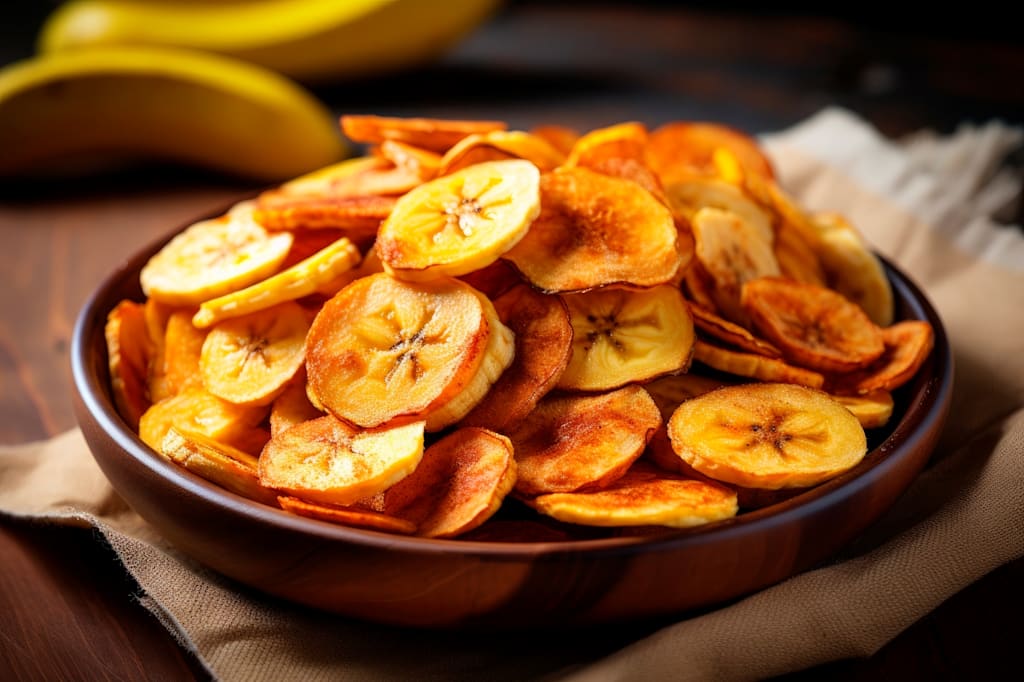
I’ve started noticing a subtle but undeniable change in the snack aisle lately.
It wasn’t that long ago that banana chips were relegated to the "health food" corner or the bulk bin of a forgotten trail mix.
But walk into any convenience store or browse an e-commerce snack hub today, and you’ll see them front and center reimagined with bold flavors like peri-peri or sea salt and vinegar, and touting "vacuum-fried" or "baked" labels. It seems the humble tropical slice has officially joined the ranks of the modern super-snack.
This personal observation is backed by significant market momentum. According to the latest data from Mordor Intelligence, the banana chips market size stands at USD 1.50 billion in 2025 and is projected to reach USD 2.04 billion by 2030. Far from a niche category, it is expanding at a steady 6.34% CAGR, proving that our collective appetite for plant-based, crunchy alternatives is only getting stronger.
The Science of a "Healthy" Crunch
The primary driver behind this growth is a fundamental shift in how we snack. According to the U.S. Department of Agriculture, a staggering 95% of US adults report daily snacking, with snacks now supplying 24% of our total energy intake. In this "snack-first" culture, we are increasingly looking for options that satisfy the craving for a crunch without the nutritional guilt of traditional potato chips.
The industry is responding with serious technological innovation. Low-oil vacuum frying has gained regulatory acceptance and consumer trust, allowing chips to retain their natural nutrients, fiber, and potassium content while using significantly less oil. Unlike atmospheric frying, which can lead to excessive browning and high oil uptake, vacuum frying operates at lower temperatures to preserve the fruit's natural color and flavor. Furthermore, regulatory moves like the FDA’s 2023 ban on partially hydrogenated oils have pushed processors toward cleaner labels. We are seeing a market that rewards "agile players" who can pivot away from heavy oils and toward organic, non-GMO, and baked alternatives.
Regional Dominance and Government Support
While the trend is global, the heart of the market remains in the Asia-Pacific region, which leads in both absolute value and growth. This isn't just due to the natural abundance of raw materials; it’s the result of massive, targeted government investment aimed at scaling production and export quality.
- The Philippines: In 2023, the Department of Agriculture invested over USD 10 million into banana farming infrastructure and downstream processing. This funding specifically targeted chip manufacturing to ensure the country remains a dominant exporter of high-quality, processed banana products.
- India: In 2024, state governments in Kerala and Tamil Nadu the "banana belt" of the country—launched grant programs for fruit-processing startups. This has sparked a wave of local brands launching flavored and organic banana chip lines that are now finding their way to global markets through e-commerce platforms.
The Rise of Organic and E-commerce Adoption
We are also witnessing a shift in how and what we buy. While the fried segment still dominates, baked innovations and organic positioning are rapidly gaining ground. Consumers are no longer satisfied with "just" a banana chip; they want a product that aligns with a plant-based lifestyle and carries an organic certification. In fact, organic and fair-trade labels can command price premiums of 20–30% in North America and Europe, as shoppers look for brands that support soil health and ethical farming.
Convenience retail and e-commerce are the engines driving this accessibility. The ability to discover a niche, organic banana chip brand from Kerala while sitting in a home office in New York has accelerated demand in ways we couldn't have imagined a decade ago. As e-commerce analytics allow brands to target "wellness-focused" shoppers directly through AI-driven discovery, the path to that USD 2.04 billion milestone looks incredibly clear.
The Sustainability Factor
Beyond the health benefits, the market is being reshaped by a focus on sustainability. Vacuum frying technology doesn't just produce a healthier chip; it also enables the utilization of "cosmetically imperfect" fruits that might otherwise be discarded. By transforming these "ugly" bananas into high-value snack products, processors are contributing to global waste reduction goals while creating additional revenue streams for farmers. Furthermore, the push toward eco-friendly and compostable packaging is becoming a key differentiator for brands looking to capture the loyalty of Gen Z and Millennial consumers.
Final Thoughts: A Greener Snack Bowl
As we look toward 2030, the banana chip is a perfect example of a traditional product being revitalized by modern values. It represents the intersection of taste, health, and a globalized supply chain that is increasingly focused on sustainability and "clean" technology.
The next time you reach for a bag of these golden slices, take a second to look at the label. Whether they are vacuum-fried in the Philippines or organic-certified from an Indian startup, that bag is a small piece of a multi-billion-dollar evolution in how the world eats.
About the Creator
Harvey Specter
I am passionate about Food & Beverage, Ag, & Animal Nutrition companies. I help organizations unlock their data's potential and fuel business growth. My expertise transforms raw data into actionable insights for strategic decisions.
Enjoyed the story? Support the Creator.
Subscribe for free to receive all their stories in your feed.
Comments
There are no comments for this story
Be the first to respond and start the conversation.