
B-52 Stratofortress Down: Why Was an 8-Person Crew on a 5-Seat Bomber?
What the recent B-52 crash reveals about modern military flight testing and aircraft modernization.

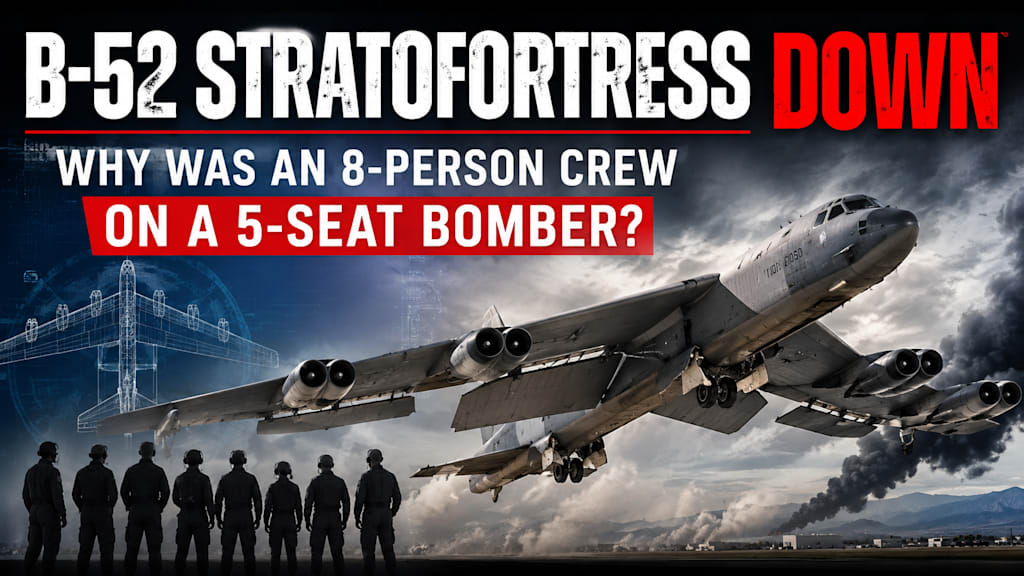
The recent crash of a B-52 Stratofortress at Edwards Air Force Base shocked aviation enthusiasts and military observers around the world. Reports indicated that all eight people aboard the aircraft were lost when the bomber crashed shortly after takeoff during what officials described as a routine test mission.
Almost immediately, one question began circulating across news outlets, aviation forums, and social media:
Why were eight people aboard a bomber that normally flies with only five crew members?
At first glance, the numbers seem confusing. The B-52 Stratofortress has long been known to operate with a standard crew of five. Yet this aircraft departed with eight people onboard.
The answer reveals an important aspect of military aviation that most people rarely see: flight testing and aircraft modernization.
The B-52: A Living Legend
The Boeing B-52 Stratofortress first entered service during the 1950s and remains one of the most recognizable military aircraft ever built. Despite being more than seven decades old, it continues to serve as a critical part of America's strategic bomber force.
The aircraft can:
- Fly more than 8,800 miles without refueling
- Carry up to 70,000 pounds of weapons
- Conduct conventional and nuclear missions
- Support long-range strike operations worldwide
What makes the B-52 remarkable isn't just its age. It's the aircraft's ability to adapt. New avionics, radar systems, communications equipment, and engine upgrades have allowed the bomber to remain relevant in the modern era.
How Many Crew Members Does a B-52 Normally Have?
Today's B-52H typically operates with five crew members:
- Aircraft Commander
- Pilot
- Navigator
- Radar Navigator
- Electronic Warfare Officer
Earlier versions carried six crew members, but technological improvements eventually reduced that number.
Because of this, seeing reports of eight people onboard immediately raised questions.
The Missing Piece: This Wasn't a Standard Mission
According to reports, the aircraft was conducting a test mission associated with modernization efforts. The B-52 involved belonged to the test fleet stationed at Edwards Air Force Base, one of the most important flight-testing locations in the world.
Unlike routine operational flights, test missions often require additional personnel beyond the standard flight crew.
These extra occupants may include:
- Flight test engineers
- Systems specialists
- Radar experts
- Data collection personnel
- Contractor representatives
- Government civilian evaluators
In fact, reports confirmed that two Boeing employees were among the eight people onboard.
This strongly suggests that the flight involved testing or evaluating equipment rather than conducting a normal operational mission.
Why Do Contractors Fly on Military Aircraft?
Many people assume military aircraft are flown exclusively by military personnel.
In reality, major defense contractors frequently participate in testing and evaluation programs.
When an aircraft receives a new radar, communication system, software package, or sensor upgrade, engineers who helped design those systems often need to monitor their performance in real-world conditions.
Their responsibilities may include:
- Monitoring test data
- Verifying system performance
- Diagnosing anomalies
- Supporting military test crews
- Evaluating upgrade effectiveness
Because the recent B-52 crash reportedly involved a radar modernization program, the presence of Boeing employees becomes easier to understand.
Why Edwards Air Force Base Matters
Edwards Air Force Base isn't an ordinary military installation.
It has been the birthplace of countless aviation milestones, including advanced aircraft testing and experimental flight programs. Some of the most important military aircraft in American history have undergone testing there.
Aircraft assigned to Edwards often carry additional personnel because their missions involve gathering extensive technical information.
A test flight can resemble a flying laboratory more than a routine military sortie.
The B-52's Ongoing Modernization
Many people are surprised to learn that the Air Force plans to keep the B-52 flying for decades to come.
Major modernization efforts include:
- New radar systems
- Advanced avionics
- Updated communications
- Modern digital infrastructure
- Replacement engines
These upgrades are expected to extend the bomber's operational life well into the future.
Ironically, the aircraft involved in the crash was participating in the very process designed to keep the legendary bomber relevant for another generation.
Why This Question Captured Public Attention
The phrase "8 people on a 5-seat bomber" sounds like a mystery.
However, aviation experts quickly recognized that test missions often differ significantly from combat or training flights.
Military aircraft frequently carry:
- Additional observers
- Flight test engineers
- Contractor specialists
- Evaluation personnel
The unusual crew size was not necessarily unusual for a test aircraft operating at a major flight-test center.
Instead, it reflected the complexity of maintaining and upgrading one of the world's oldest operational bomber fleets.
Final Thoughts
The tragic B-52 crash is a reminder that aviation testing remains one of the most demanding and potentially dangerous aspects of aerospace development.
While the bomber's standard crew consists of five personnel, test missions can require additional experts to evaluate new technologies, collect performance data, and ensure modernization programs succeed.
That's why a bomber designed for five people ended up carrying eight.
The extra personnel were likely there because the aircraft wasn't simply flying—it was helping shape the future of one of the most iconic military aircraft ever built.
As investigators continue examining the cause of the crash, one fact remains clear: the B-52 Stratofortress is more than just a bomber. It is a flying piece of history that continues to evolve, even more than seventy years after its first flight.
About the Creator
Hardik Barot
Hardik Barot is a technology enthusiast and writer passionate about AI, emerging technologies, startups, digital innovation, and future tech trends. He creates engaging content that simplifies complex topics for modern readers.
Enjoyed the story? Support the Creator.
Subscribe for free to receive all their stories in your feed.
Comments