
Aviation Market: Connecting Economies, People, and Opportunities Worldwide
How rising air travel, fleet modernization, and technological innovation are shaping the future of global aviation
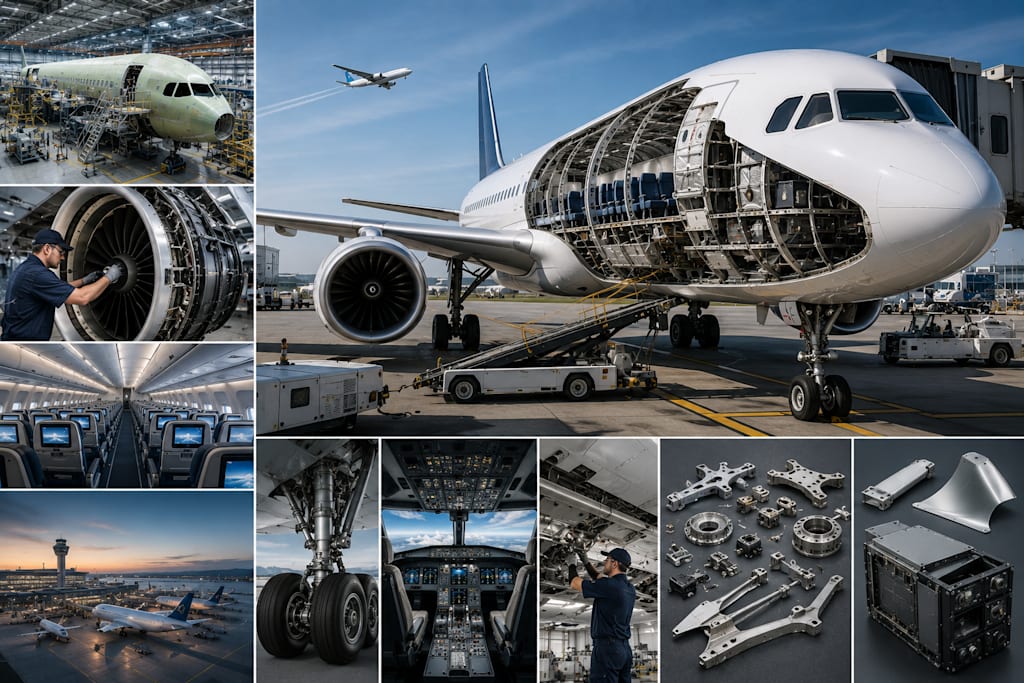
Hook Intro
Every day, millions of passengers board aircraft to travel for business, tourism, education, and trade. Behind every takeoff is a vast aviation ecosystem that connects cities, countries, and economies across the globe.
From commercial airlines and airports to aircraft manufacturers and maintenance providers, the aviation industry plays a critical role in supporting global mobility. As passenger traffic rebounds and demand for air connectivity continues to grow, the Aviation Market is entering a new phase of expansion driven by modernization, sustainability, and digital transformation.
Today, aviation is not just about moving people from one destination to another. It is about enabling global economic growth and connectivity.
Why Aviation Matters Today
Aviation remains one of the most important pillars of the global transportation network. It facilitates international trade, supports tourism industries, enables business travel, and connects remote regions to major economic centers.
Growing urbanization, rising disposable incomes, and expanding middle-class populations are increasing demand for air travel worldwide. At the same time, airlines are investing in more fuel-efficient aircraft and advanced technologies to improve operational performance and sustainability.
According to Mordor Intelligence, the Aviation Market size is projected to grow from USD 358.85 Billion in 2025 to USD 524.14 billion by 2030, registering a CAGR of 5.77% during the forecast period. Growth is being driven by increasing passenger traffic, fleet expansion programs, and ongoing investments in aviation infrastructure.
Understanding Aviation Market Size and Share
The Aviation Market size continues to expand as airlines add new routes, increase fleet capacity, and respond to growing travel demand. Commercial aviation remains the largest segment, supported by rising domestic and international passenger traffic.
Passenger aviation accounts for the majority of industry activity, while cargo aviation continues to play a crucial role in supporting global supply chains and e-commerce growth. Aircraft manufacturers, airports, maintenance providers, and technology suppliers all contribute to the industry's expanding ecosystem.
The Aviation Market share is led by North America, accounting for 34.87% of the global market. The region benefits from extensive airline networks, strong passenger demand, and continuous investments in aviation technology and infrastructure. Meanwhile, Asia-Pacific is emerging as one of the fastest-growing regions due to rapid economic development and increasing air travel demand.
Aviation Market Trends Driving the Industry
Several Aviation Market trends are reshaping the future of air transportation.
Airlines are investing in next-generation fuel-efficient aircraft.
Sustainable Aviation Fuel (SAF) adoption is gaining momentum across the industry.
Digital technologies are improving operational efficiency and passenger experiences.
Predictive maintenance solutions are helping reduce aircraft downtime.
Airport modernization projects are enhancing capacity and service quality.
These developments are enabling airlines and aviation stakeholders to improve efficiency while meeting evolving environmental and customer expectations.
Why Airlines Are Expanding Their Operations
Global passenger traffic continues to increase as travel becomes more accessible and affordable. Airlines are expanding fleets and route networks to capture growing demand across both developed and emerging markets.
Fleet modernization programs are also helping carriers reduce fuel costs, lower emissions, and improve operational reliability. New-generation aircraft provide significant efficiency improvements while enhancing passenger comfort.
This trend strengthens the broader Aviation Market analysis, where airlines are balancing growth opportunities with sustainability goals and operational efficiency requirements.
Cargo aviation is also benefiting from the growth of global trade and e-commerce, creating additional opportunities across the aviation value chain.
Challenges Facing the Industry
Despite strong growth prospects, the aviation industry faces several challenges. Rising fuel prices remain a major concern, as fuel represents one of the largest operating expenses for airlines.
Supply chain constraints continue to affect aircraft production and maintenance activities. Labor shortages, regulatory requirements, and infrastructure limitations also create operational pressures for industry participants.
Additionally, the sector faces increasing expectations to reduce carbon emissions and achieve long-term sustainability targets, requiring significant investments in cleaner technologies and alternative fuels.
Aviation Market Forecast and the Road Ahead
The Aviation Market forecast remains positive as global travel demand continues to rise and aviation infrastructure expands worldwide.
Future growth is expected to be supported by increasing aircraft deliveries, airport expansion projects, fleet modernization programs, and advances in aviation technology. Sustainable aviation fuels, electric aircraft technologies, and digital transformation initiatives are expected to play a growing role in shaping the industry's future.
As global connectivity becomes increasingly important, aviation will continue to serve as a vital link between economies, businesses, and communities around the world.
About the Creator
Enjoyed the story? Support the Creator.
Subscribe for free to receive all their stories in your feed.
Comments
There are no comments for this story
Be the first to respond and start the conversation.