
Automotive Parts Market: The Backbone of the Global Automotive Industry
How replacement demand, vehicle production, and technological innovation are driving growth across the automotive ecosystem
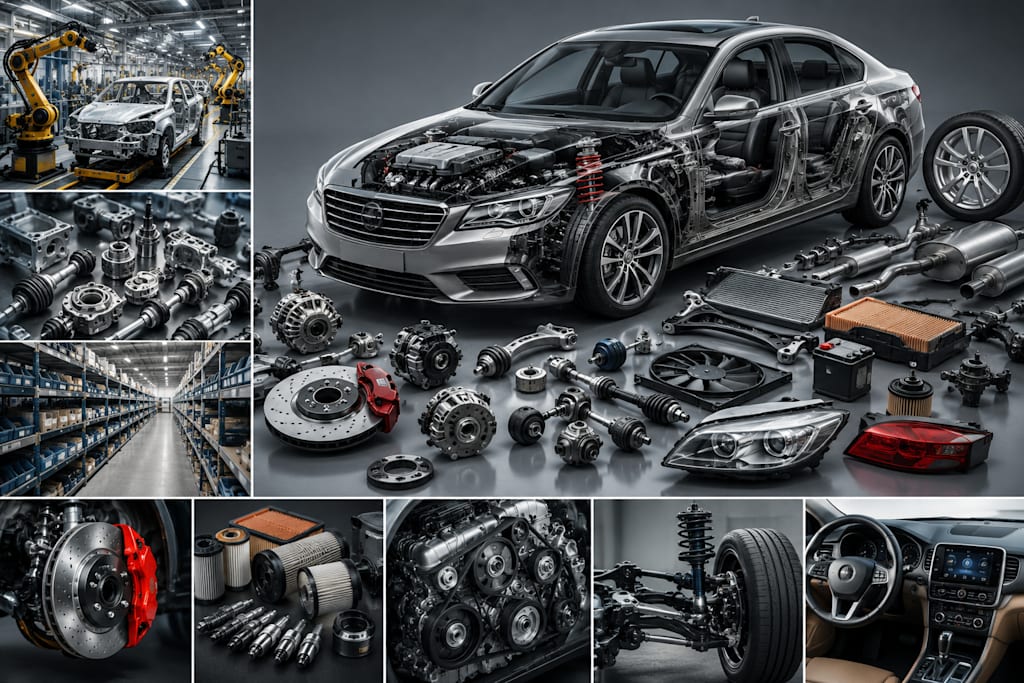
Hook Intro
Every vehicle on the road is made up of thousands of components working together seamlessly. From brake systems and batteries to sensors and engine parts, these components determine a vehicle's performance, safety, and reliability.
While automakers often receive the spotlight, the vast network of suppliers and manufacturers producing these critical components keeps the automotive industry moving. At the center of this ecosystem is the Automotive Parts Market, where innovation, vehicle production, and aftermarket demand continue to create significant growth opportunities.
As vehicles become smarter, safer, and more connected, the importance of automotive parts is only increasing.
Why Automotive Parts Matter Today
The automotive industry is undergoing rapid transformation driven by electrification, connectivity, automation, and stricter safety regulations. These changes are increasing the complexity and value of automotive components across nearly every vehicle category.
Automotive parts play a crucial role in vehicle manufacturing, maintenance, and repair. Whether supporting original equipment manufacturers (OEMs) or the aftermarket sector, these components help ensure vehicle performance, efficiency, and longevity.
According to Mordor Intelligence, the Automotive Parts Market size is projected to grow from USD 116.67 Billion in 2026 to USD 146.23 Billion by 2031, registering a CAGR of 4.61% during the forecast period. Growth is being supported by rising vehicle production, increasing vehicle ownership, and expanding demand for replacement parts worldwide.
Understanding Automotive Parts Market Size and Share
The Automotive Parts Market size continues to expand as global vehicle production increases and aging vehicle fleets drive aftermarket demand. Consumers are keeping vehicles on the road longer, creating sustained opportunities for maintenance and replacement components.
Engine components, electrical systems, braking systems, suspension parts, and transmission components remain among the most widely used automotive parts. At the same time, demand for advanced electronic components is growing rapidly as vehicles become increasingly connected and software-driven.
The Automotive Parts Market share is led by Asia-Pacific, supported by its strong automotive manufacturing base, large vehicle population, and extensive supplier ecosystem. Countries such as China, India, Japan, and South Korea continue to play a major role in global automotive parts production and consumption.
Automotive Parts Market Trends Driving the Industry
Several Automotive Parts Market trends are reshaping the industry.
Electrification is increasing demand for battery systems, power electronics, and electric drivetrains.
Advanced Driver Assistance Systems (ADAS) are driving growth in sensors, cameras, and control modules.
Connected vehicle technologies are expanding the market for electronic and software-integrated components.
Lightweight materials are helping manufacturers improve fuel efficiency and vehicle performance.
Predictive maintenance and smart diagnostics are creating new opportunities across the aftermarket sector.
These developments are transforming automotive parts from purely mechanical components into increasingly intelligent systems.
Why Demand for Automotive Parts Continues to Rise
Growing vehicle ownership remains one of the strongest drivers of automotive parts demand. Every vehicle requires regular maintenance, repairs, and component replacements throughout its operating life.
The expanding global vehicle fleet is creating substantial opportunities for aftermarket suppliers, while rising production volumes continue to support OEM demand. Increasing consumer expectations for safety, connectivity, and performance are also encouraging manufacturers to invest in more advanced components.
This trend strengthens the broader Automotive Parts Market analysis, where both new vehicle production and aftermarket activities contribute to long-term industry growth.
Challenges Facing the Industry
Despite strong growth prospects, the industry faces several challenges. Supply chain disruptions, raw material price fluctuations, and semiconductor shortages can impact production schedules and component availability.
Manufacturers must also navigate evolving regulatory requirements related to emissions, safety, and sustainability. The transition toward electric vehicles requires suppliers to adapt product portfolios while continuing to support conventional vehicle platforms.
In addition, intense competition and pricing pressures continue to challenge profitability across many segments of the automotive parts industry.
Automotive Parts Market Forecast and the Road Ahead
The Automotive Parts Market forecast remains positive as vehicle production grows and automotive technologies become increasingly sophisticated.
Future growth is expected to be driven by electric vehicles, connected mobility solutions, advanced safety systems, and digital automotive technologies. Suppliers that successfully adapt to electrification and software-driven vehicle architectures are likely to benefit the most from emerging opportunities.
As the automotive industry continues to evolve, automotive parts manufacturers will remain essential to enabling innovation, performance, and reliability across the global vehicle landscape.
Final Thought
Vehicles may be recognized by their brands, designs, and performance, but their true capability depends on the thousands of components working behind the scenes.
From traditional engine parts to advanced electronic systems, automotive components continue to power the evolution of modern mobility.
About the Creator
Enjoyed the story? Support the Creator.
Subscribe for free to receive all their stories in your feed.
Comments
There are no comments for this story
Be the first to respond and start the conversation.