
Automotive Lithium-Ion Battery Market: The Power Source Driving the EV Revolution
How advanced battery technology is accelerating vehicle electrification and transforming the future of mobility
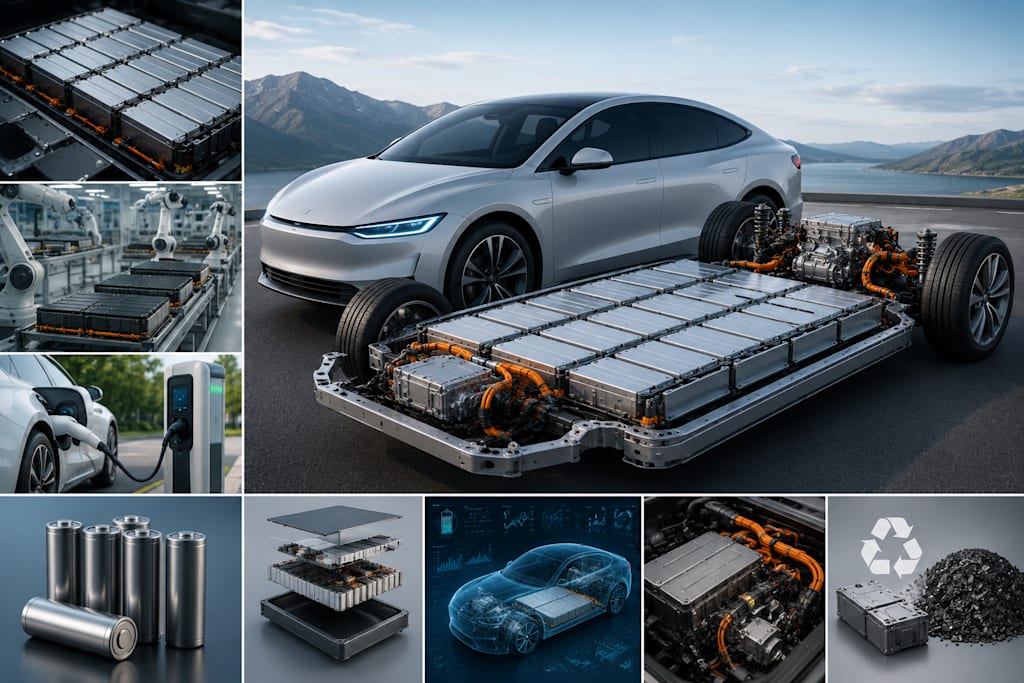
Hook Intro
You press the accelerator, and the vehicle responds instantly. No engine noise, no gear shifts, just smooth and efficient power delivery.
What makes this experience possible is not just the electric motor. It is the lithium-ion battery sitting beneath the floor, storing and delivering energy that powers the vehicle. As electric mobility expands worldwide, the Automotive Lithium-Ion Battery Market has become one of the most critical segments in the automotive industry.
From passenger cars and commercial vehicles to plug-in hybrids, lithium-ion batteries are powering the transition toward cleaner, smarter transportation.
Why Automotive Lithium-Ion Batteries Matter Today
The automotive industry is undergoing its biggest transformation in decades. Governments are introducing stricter emission regulations, automakers are investing heavily in electrification, and consumers are increasingly embracing electric vehicles.
Lithium-ion batteries have emerged as the preferred energy storage technology because they offer high energy density, faster charging capabilities, longer lifespan, and improved efficiency compared to conventional battery technologies.
According to Mordor Intelligence, the Automotive Lithium-Ion Battery Market is projected to grow from USD 75.05 billion in 2026 to USD 164.21 billion by 2031, registering a CAGR of 16.95% during the forecast period. This growth reflects the rapid expansion of electric vehicle adoption across global markets.
Understanding Automotive Lithium-Ion Battery Market Size and Share
The Automotive Lithium-Ion Battery Market size is expanding as automakers increase production of battery electric vehicles, plug-in hybrid vehicles, and hybrid electric vehicles. Growing investments in battery manufacturing facilities and supply chain localization are further supporting market growth.
Battery electric vehicles account for the largest share of battery demand, supported by favorable government policies and rising consumer interest in sustainable transportation. Automakers are also introducing electric models across multiple vehicle categories, creating new opportunities for battery manufacturers.
The Automotive Lithium-Ion Battery Market share is led by Asia-Pacific, which holds 48.10% of the global market. The region benefits from strong battery manufacturing capabilities, large-scale EV production, and an established supply chain ecosystem that supports continuous innovation and capacity expansion.
Automotive Lithium-Ion Battery Market Trends Driving the Industry
Several Automotive Lithium-Ion Battery Market trends are shaping the future of mobility.
Lithium Iron Phosphate (LFP) batteries are gaining traction due to their safety and cost advantages.
LMFP battery chemistry is emerging as one of the fastest-growing battery technologies.
Gigafactory investments are expanding battery production capacity worldwide.
Fast-charging technologies are improving EV convenience and usability.
Battery recycling initiatives are strengthening sustainability across the value chain.
These developments are helping improve battery performance while reducing costs, making electric vehicles more accessible to a broader consumer base.
Why Automakers Are Investing Heavily in Battery Technology
Battery performance directly impacts vehicle range, charging speed, and overall driving experience. As a result, battery innovation has become a major competitive focus for automakers.
Advancements in battery chemistry are improving energy density and extending vehicle range, while declining battery costs are helping narrow the price gap between electric and conventional vehicles.
This trend continues to strengthen the broader Automotive Lithium-Ion Battery Market analysis, where battery technology is becoming one of the most important factors influencing future vehicle development and market competitiveness.
Challenges Facing the Industry
Despite strong growth, the industry faces several challenges. The availability and pricing of critical raw materials such as lithium, nickel, and cobalt remain important concerns for manufacturers.
Supply chain disruptions and geopolitical uncertainties can impact battery production and pricing. At the same time, manufacturers face increasing pressure to improve sustainability through responsible sourcing and battery recycling programs.
Competition among battery suppliers is also intensifying as companies seek to develop higher-performance and lower-cost battery technologies.
Automotive Lithium-Ion Battery Market Forecast and the Road Ahead
The Automotive Lithium-Ion Battery Market forecast remains highly optimistic as electric vehicle adoption continues to accelerate globally.
Future battery technologies are expected to deliver greater energy density, faster charging speeds, improved safety, and longer operational life. Ongoing research into next-generation battery chemistries is expected to further enhance performance and efficiency.
As governments pursue decarbonization goals and automakers continue expanding their electric vehicle portfolios, lithium-ion batteries will remain at the center of the automotive industry's transformation.
Final Thought
Electric vehicles may be reshaping transportation, but battery technology is making that transformation possible.
Automotive lithium-ion batteries are doing far more than storing energy. They are enabling a future where mobility is cleaner, smarter, and increasingly electrified.
About the Creator
Enjoyed the story? Support the Creator.
Subscribe for free to receive all their stories in your feed.
Comments
There are no comments for this story
Be the first to respond and start the conversation.