
Automotive Horn Systems Market: The Sound of Road Safety
Why one of the smallest automotive components still plays a critical role in modern mobility
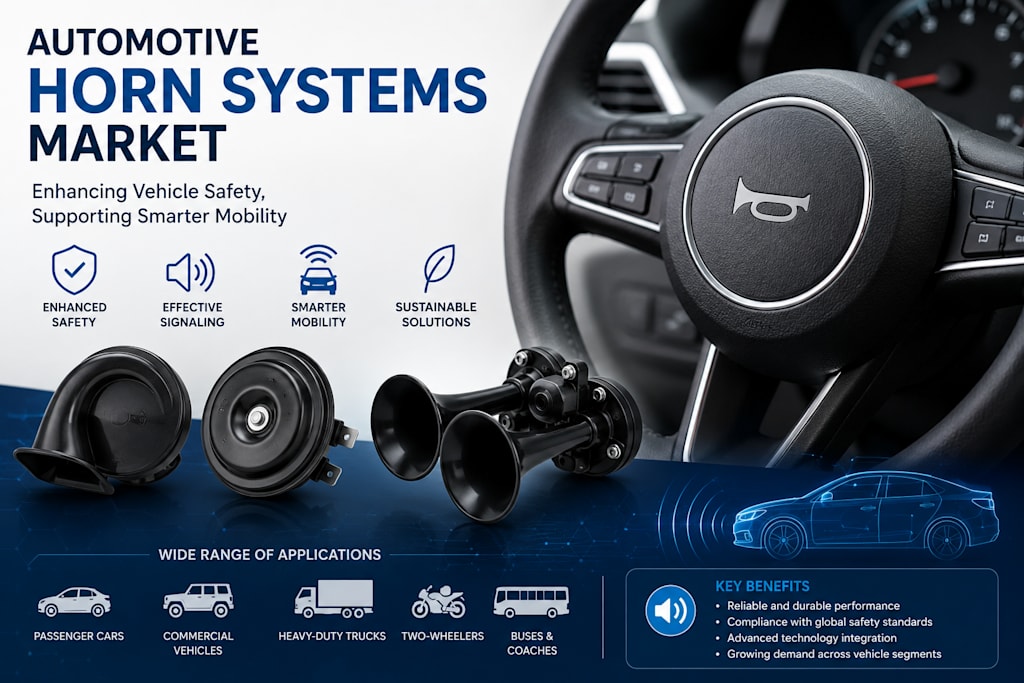
Hook Intro
A distracted pedestrian steps onto the road. A cyclist drifts too close to traffic. In a split second, a sharp sound cuts through the noise of the city. One short honk prevents an accident before it happens.
Drivers rarely think about horn systems until the moment they need them. Yet this simple device remains one of the most immediate forms of communication on the road. As vehicles become smarter and traffic environments more complex, horn systems continue evolving alongside automotive safety technologies. At the center of this evolution is the Automotive Horn Systems Market, where safety, regulation, and engineering quietly intersect every single day.
Why Horn Systems Still Matter
Modern vehicles are packed with advanced safety features, from cameras to collision avoidance systems. Even so, the horn remains essential because it communicates instantly with people outside the vehicle.
Horn systems help prevent collisions, alert distracted drivers, and improve awareness in crowded urban environments. Commercial vehicles rely on powerful horns for visibility and operational safety, while passenger vehicles increasingly integrate compact and efficient electronic horn systems.
According to Mordor Intelligence, the Automotive Horn Systems Market is witnessing steady growth driven by rising vehicle production, increasing road safety awareness, and advancements in vehicle electronics. This reflects how even small automotive systems continue adapting to modern mobility needs.
Understanding Automotive Horn Systems Market Size and Share
The Automotive Horn Systems Market size is closely tied to global automobile production. Passenger vehicles represent the largest demand segment due to their sheer production volume, while commercial vehicles contribute through heavy duty horn requirements.
Electric horns dominate modern vehicle platforms because they are compact, lightweight, and easier to integrate into electronic vehicle architectures. Air horns remain important in trucks, buses, and industrial vehicles where stronger sound output is required.
The Automotive Horn Systems Market share is influenced heavily by Asia Pacific due to high automotive manufacturing activity and growing urban mobility demand. North America and Europe maintain stable demand through safety regulations and premium vehicle production.
Market Trends Driving Innovation
Several Automotive Horn Systems Market trends are shaping how horn technologies evolve.
• Electronic integration: Modern horn systems are increasingly integrated with vehicle electronics and safety systems.
• Compact design: Manufacturers focus on lighter and smaller horn units that reduce space usage and improve efficiency.
• Sound optimization: Advanced tuning improves sound clarity while complying with regional noise regulations.
• Electric vehicle compatibility: Horn systems are adapting for quieter EV platforms where external warning sounds become more important.
These developments reflect broader automotive shifts toward smarter, lighter, and more connected vehicles.
The growing focus on pedestrian safety and urban mobility also supports a positive Automotive Horn Systems Market analysis, especially as cities become more crowded and traffic interactions increase.
Regional Growth and Industry Demand
Regional demand patterns vary according to vehicle production and infrastructure growth. Asia Pacific remains a major hub because of large scale passenger car manufacturing and rapid urbanization.
Europe emphasizes compliance with strict safety and environmental regulations, encouraging innovation in efficient electronic horn systems. North America maintains stable demand through commercial vehicle production and replacement markets.
Emerging economies are also contributing as expanding transportation networks increase vehicle ownership and freight movement.
Challenges Facing the Industry
Despite stable growth, manufacturers face challenges related to pricing pressure and regulatory compliance. Horn systems must balance durability, sound performance, and legal noise limits across different markets.
Electric vehicle growth also introduces new design requirements. Since EVs operate quietly at low speeds, horn systems and pedestrian warning sounds become even more critical for safety.
Competition from low cost manufacturers can affect margins, especially in highly price sensitive vehicle segments.
Automotive Horn Systems Market Forecast
The Automotive Horn Systems Market forecast points toward continued steady expansion as global vehicle production rises and road safety standards strengthen. Future systems will likely become more integrated with intelligent vehicle platforms and external communication technologies.
As mobility evolves, horn systems may seem small compared to autonomous driving software or advanced sensors, but their role remains fundamental. They provide the fastest and most direct form of communication between vehicles, drivers, and pedestrians.
Sometimes, safety begins with a single sound.
Final Thought
Drivers may never admire a horn system the way they admire engines or touchscreens, but its importance is undeniable. In crowded cities and high speed highways alike, the ability to communicate instantly can prevent confusion, protect lives, and keep traffic moving safely.
About the Creator
Enjoyed the story? Support the Creator.
Subscribe for free to receive all their stories in your feed.
Comments
There are no comments for this story
Be the first to respond and start the conversation.