
Automotive Engine Encapsulation Market: Engineering Silence, Efficiency, and Control
How thermal and acoustic innovation is redefining under-hood performance
Hook Intro
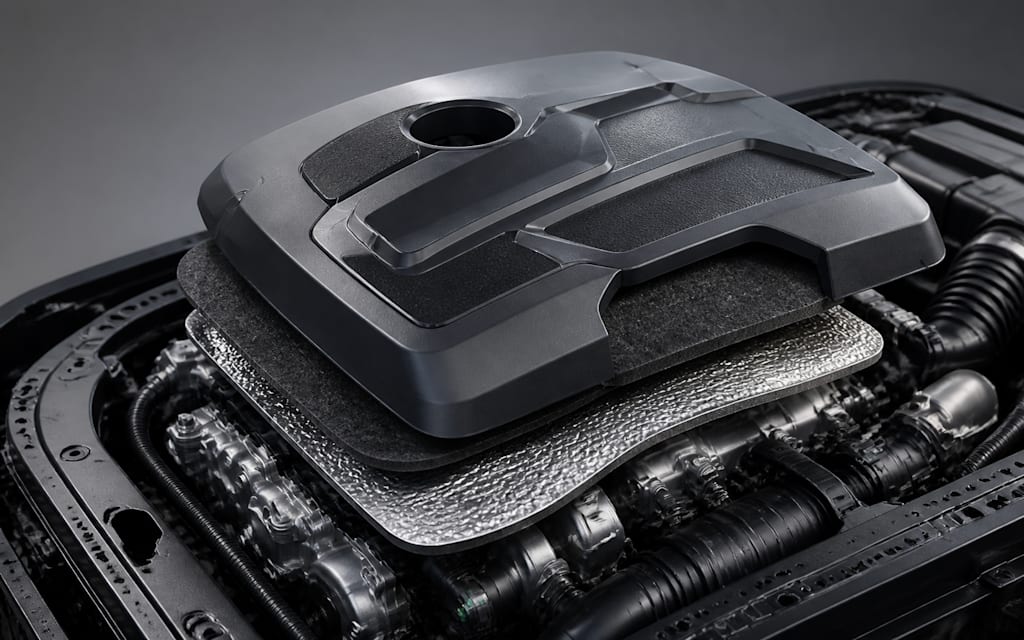
Before a vehicle accelerates into motion, a complex system beneath the hood is already at work managing heat, noise, and vibration. What was once an exposed mechanical core is now an engineered, insulated environment designed for efficiency and refinement.
This transformation is driven by the Automotive Engine Encapsulation Market, where thermal management, acoustic control, and lightweight material innovation come together to reshape modern vehicle architecture. As vehicles become quieter, more efficient, and increasingly electrified, engine encapsulation is becoming a critical design element rather than an optional enhancement.
Why Engine Encapsulation Matters More Than Ever
Modern vehicles are expected to deliver comfort, efficiency, and regulatory compliance simultaneously. Engine encapsulation plays a direct role in achieving all three by controlling heat loss, reducing cabin noise, and improving overall energy efficiency.
With stricter emission norms such as Euro 7 and rising demand for premium cabin comfort, automakers are increasingly integrating encapsulation systems into both ICE and hybrid platforms. These systems help optimize cold-start emissions, accelerate warm-up phases, and reduce overall noise, vibration, and harshness (NVH) levels.
According to Mordor Intelligence, the Automotive Engine Encapsulation Market is valued at around USD 5.73 billion in 2026 and is projected to reach USD 7.42 billion by 2031, growing at a CAGR of approximately 5.31%. This reflects steady demand supported by evolving powertrain architectures and regulatory pressure.
Automotive Engine Encapsulation Market Size and Share
The Automotive Engine Encapsulation Market size is primarily driven by OEM integration, where systems are designed directly into vehicle platforms during manufacturing. This ensures optimized fitment, better performance, and cost efficiency at scale.
Passenger cars dominate the market due to high production volumes and increasing adoption of NVH optimization features in mid-range and premium vehicles. Light commercial and hybrid vehicles are also contributing to growth as efficiency and thermal control become critical operational requirements.
In terms of Automotive Engine Encapsulation Market share, Asia Pacific leads globally with around 48.10% share, supported by large-scale vehicle production in China and rapid automotive expansion in India. Europe follows closely, driven by strict emissions regulations, while North America maintains steady demand from SUV and pickup segments.
Automotive Engine Encapsulation Market Trends Driving Innovation
Several key Automotive Engine Encapsulation Market trends are reshaping product development and material innovation:
• Lightweight composite materials: Increasing use of polypropylene and carbon fiber reduces weight while improving thermal and acoustic performance.
• Multi-functional designs: Encapsulation systems are evolving to combine thermal shielding, acoustic insulation, and structural reinforcement.
• Electric and hybrid integration: Dual-function solutions are being developed to manage both engine heat and electric drivetrain noise.
• Gigacasting compatibility: Large underbody structures are enabling integrated encapsulation systems with fewer components.
• Sustainability shift: Recyclable thermoplastics are gaining traction to support circular economy regulations.
These trends highlight a shift from single-purpose insulation to integrated performance engineering systems.
Challenges Across the Market
Despite strong growth, the market faces several challenges.
High material costs, especially for advanced composites like carbon fiber, limit large-scale adoption in lower vehicle segments. Volatility in polymer and petrochemical prices also affects production economics.
Additionally, the transition toward electric vehicles reduces long-term ICE volumes, creating uncertainty in traditional encapsulation demand. Complexity in multi-layer material recycling and packaging constraints in compact engine bays further add to design limitations.
These factors are central to ongoing Automotive Engine Encapsulation Market analysis, where innovation must balance cost efficiency, sustainability, and performance requirements.
Automotive Engine Encapsulation Market Forecast and the Road Ahead
The Automotive Engine Encapsulation Market forecast indicates steady and sustained growth through 2031, supported by tightening emission standards, rising demand for cabin comfort, and continued hybrid vehicle adoption.
Asia Pacific will continue to dominate due to production scale and hybrid vehicle expansion, while Europe will remain a key innovation hub driven by regulatory pressure. North America will sustain demand through high-performance and utility vehicle segments.
Looking ahead, engine encapsulation will evolve from a supporting component into a core vehicle architecture system. As vehicles become more electrified and software-driven, encapsulation will play a critical role in thermal efficiency, acoustic refinement, and overall driving experience.
About the Creator
Enjoyed the story? Support the Creator.
Subscribe for free to receive all their stories in your feed.
Comments
There are no comments for this story
Be the first to respond and start the conversation.