
Australia Refocuses Critical Minerals Strategy on Refining and Global Partnerships
As competition for investment intensifies, Canberra aims to capture greater value and strengthen supply-chain resilience

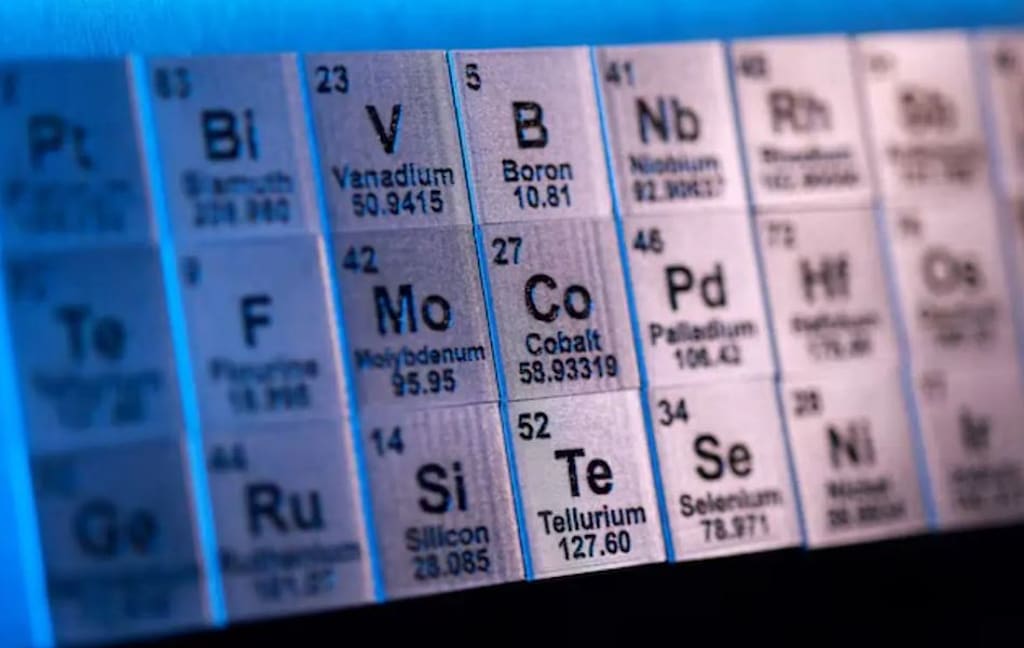
SYDNEY — Australia is fundamentally reshaping its approach to critical minerals, moving beyond its historic role as a leading raw-materials exporter to build a more self-reliant, high-value industry anchored in domestic refining and processing. Resources Minister Madeleine King unveiled the revised national strategy Tuesday, framing the shift as both an economic imperative and a matter of national security amid intensifying global rivalry over the materials that power the energy transition, defence systems, and advanced technology.
From Dig-and-Ship to Value-Added Leadership
Australia already ranks among the world’s top producers of rare earths, lithium, copper, and other minerals deemed essential to modern industry. Yet for decades, the nation’s model has been straightforward: extract vast quantities of high-quality ore and ship it overseas, overwhelmingly to China, for processing. That arrangement has generated export revenue but surrendered the most profitable and strategically vital segment of the supply chain to others.
King said the updated strategy corrects that imbalance. “It places far greater emphasis on processing and refining critical minerals, particularly where Australia already has, or can rapidly develop, a clear comparative advantage,” she told delegates at the International Mining and Resources Conference in Sydney. “Our goal is not just to dig it up and send it away. It is to refine, manufacture, and build industries right here, capturing the jobs, technology, and long-term wealth these resources represent.”
The original Critical Minerals Strategy launched in 2023 was conceived in a different market environment. Since then, capital has grown scarcer, global competition has sharpened, and geopolitical tensions have exposed how fragile cross-border supply lines can be. King noted that allies across North America, Europe, and the Indo-Pacific are all racing to diversify away from concentrated processing hubs, and Australia intends to be their preferred alternative.
The Geopolitics of Clean Energy
At the core of this overhaul lies one inescapable reality: China currently controls more than 60 % of global rare earth refining capacity, and in some segments the figure exceeds 90 %. Western governments have identified this dominance as a single-point failure for everything from electric vehicle production to fighter jet manufacturing. Reducing that dependency has become a bipartisan priority in Washington, Brussels, and beyond.
Australia has already moved to align itself with this push. One year ago, President Donald Trump and Prime Minister Anthony Albanese signed a landmark bilateral critical minerals agreement targeting deposits valued at US$53 billion. Canberra has also committed A$1.2 billion (US$842 million) to establish a national strategic reserve, with antimony, gallium, and rare earth elements identified as the highest-priority materials.
Crucially, officials are designing the reserve not as a stockpile of physical ore sitting in warehouses, but as a network of forward contracts, offtake agreements, and coordinated purchasing a model intended to underwrite new production while reassuring allies of reliable access. “It is not great piles of ore sitting somewhere in the outback,” explained Ambassador to the EU Angus Campbell. “It is about securing supply before it is even dug from the ground.”
Europe Looks South for Reliable Partners
Interest in Australia’s potential extends well beyond Washington. European representatives at the conference made clear they view the continent’s own mineral security as inextricably linked to strengthened ties with resource-rich nations such as Australia. The EU has already released its first list of critical raw materials and is preparing joint stockpiles of tungsten, rare earths, and gallium, all identified as essential yet vulnerable to disruption.
“There is a lot of untapped potential there,” Campbell said of trade with Europe, which currently receives only a small fraction of Australia’s critical mineral exports.
Alberto Castronovo, Italy’s special envoy for critical raw materials, confirmed his government is studying Australia’s reserve framework closely. “We are looking with very big interest at the critical mineral strategic reserve of Australia,” he noted. France’s interministerial delegate Benjamin Gallezot was equally direct, calling for partnership across the full supply chain from mine to finished material. “On tungsten, we need mines but even more strategic today, we need refining,” he said. “Australia and Europe have complementary strengths that together can create a genuinely independent supply network.”
The Road Ahead: Opportunities and Obstacles
Realising these ambitions carries significant challenges. Building new refineries requires billions in upfront investment, long-term certainty for lenders, and community acceptance of projects that can carry substantial environmental footprints. Processing rare earths, in particular, generates waste streams that must be carefully managed a reality King and her team acknowledge will require innovation, regulation, and transparency.
Competition is also fierce. Canada, Chile, Namibia, and others are pursuing similar strategies, and capital is limited. Australia’s advantage lies in its existing mining infrastructure, geological richness, and reputation for political stability advantages it must now leverage to attract partners willing to build processing facilities alongside extraction operations.
King was clear that no single nation can solve these challenges alone. “Growth in this sector will not be a solo endeavour,” she said. For Australia, the message to the world is straightforward: it has the resources, the will, and now the plan, and it is ready to do more than supply the raw materials of the future. It intends to help build them.
About the Creator
Mark Lim
Hi I am mark an automotive student and a car, tech and food enthusiast ! Im gonna try and post daily & hope you enjoy what I write and do share my page with people you know. I would gladly appreciate it! Cheers
Enjoyed the story? Support the Creator.
Subscribe for free to receive all their stories in your feed.
Comments
There are no comments for this story
Be the first to respond and start the conversation.