
Audi’s $4 Billion Georgia Bet: Tariffs, Politics, and the Reshaping of Auto Manufacturing
A Major Announcement in a Crucial State From Costly Tariffs to Domestic Investment The Scale of the Project Competing Narratives: Success or Trade-Off? A Broader Shift in Global Auto Strategy Risks, Uncertainty, and the Road Ahead

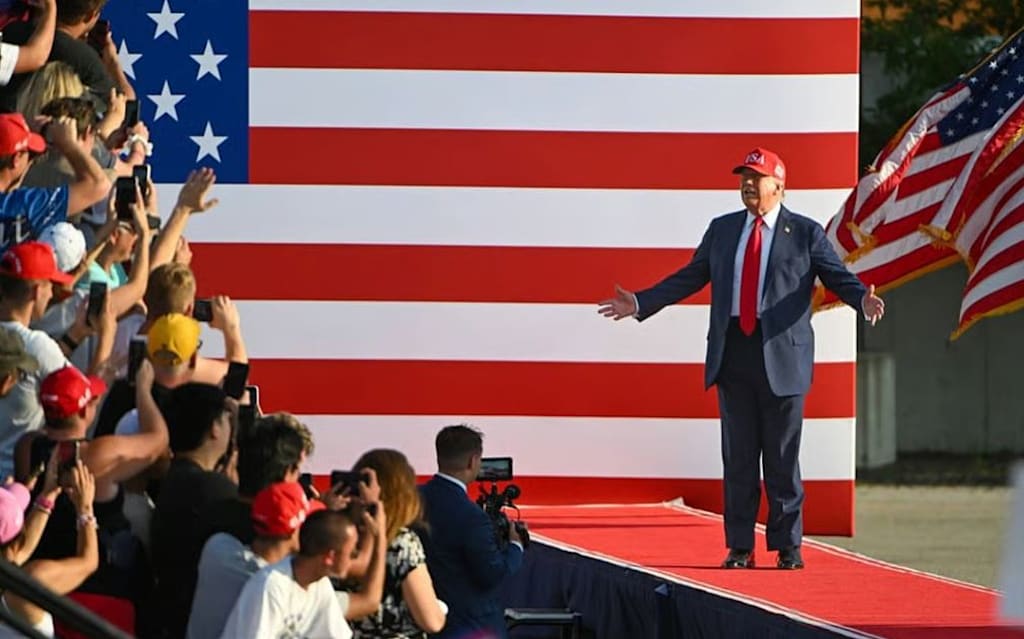
At a rally in Perry, Georgia, President Donald Trump unveiled a transformative automotive investment: Audi will construct a $4 billion assembly plant nearby, producing 200,000 premium SUVs annually and employing 4,500 people. The announcement underscores how trade policy is reshaping where vehicles are built, yet it arrives amid falling sales, factory threats overseas, and deep debate over who truly benefits.
A Major Announcement in a Crucial State
President Trump made the declaration on a Saturday in Perry, Georgia, a strategically chosen territory with fiercely contested Senate and gubernatorial races approaching the November 3 midterm elections. The timing was deliberate: to showcase economic progress and job creation ahead of voters heading to the polls. Standing beside the news was Audi CEO Gernot Doellner, who confirmed the commitment: “We are planning to bring our biggest and most premium SUVs and produce them here in Macon, Georgia. This is a long‑term investment because we believe in the American market.” A gleaming gold Audi sat outside the rally venue as a visible symbol of the partnership.
From Costly Tariffs to Domestic Investment
The decision follows a period of intense pressure on foreign automakers. Since imposing steep tariffs on imported vehicles, steel, and aluminum, the administration has argued that shifting production home strengthens national industry. For Audi, the financial impact was immediate: the company absorbed a €1.2 billion ($1.4 billion) hit last year because it historically shipped nearly all vehicles sold in the U.S. from Europe or Mexico. Now, rather than continue absorbing those costs, the brand is localizing production to avoid them.
Republicans frame this as proof of policy success. Senator Bernie Moreno of Ohio stated plainly: “This plant would never have happened without tariffs.” He further credited streamlined federal regulations and the rollback of California’s fuel‑economy standards as essential to making the project viable. Yet critics contend the picture is far more mixed: tariffs have lifted average vehicle prices across the market, and prolonged trade uncertainty has delayed or deterred other planned investments.
The Scale of the Project
When completed, the Georgia facility will be Audi’s first U.S. assembly plant, turning out the flagship Q7, Q8, and forthcoming Q9 premium SUV models previously manufactured abroad. Construction begins next year, with full production targeted for the early 2030s. The footprint extends beyond Georgia: Audi will also build 25,000 additional vehicles annually at Volkswagen’s new $2 billion Scout Motors plant under construction in Blythewood, South Carolina, for both domestic sale and export. Combined, these moves mark a fundamental reorientation of the brand’s North American manufacturing map.
Competing Narratives: Success or Trade‑Off?
The celebration coexists with sobering realities. Audi sales have declined for two straight years; in the first half of 2026 alone, they fell 7% globally and 16% in the U.S. market. Simultaneously, the Neckarsulm facility in southwest Germany, one of four German VW plants, faces potential closure after 2030, raising questions about whether jobs created in Georgia are displacing or replacing roles elsewhere.
Nationally, the broader trend also warrants scrutiny: since the administration took office, total U.S. motor vehicle and parts employment has declined, and incentives supporting electric vehicle manufacturing have been significantly reduced. These contrasting trajectories highlight a central tension in the policy: attracting foreign investment does not automatically translate into net growth across the entire domestic sector.
A Broader Shift in Global Auto Strategy
Audi is far from alone in recalibrating its footprint. In July, Toyota announced a $3.6 billion expansion in San Antonio, Texas, shifting truck production from Mexico to the U.S. and creating 2,000 new positions by 2030. Honda is actively evaluating whether to build a new U.S. plant but has warned it will not proceed without certainty around the U.S.-Mexico-Canada Agreement (USMCA). Hyundai similarly noted last year that clear trade terms could unlock more than $20 billion in pending American investments. Taken together, these signals suggest tariffs have accelerated a broader “America‑first” manufacturing realignment, but the pace and permanence remain tied to trade stability.
Risks, Uncertainty, and the Road Ahead
For Audi, Georgia represents a calculated wager: paying now to build capacity secures market access for decades to come. Yet substantial risks persist. If trade policies shift in future administrations, the financial logic underpinning the location could weaken. Sustained consumer pricing pressure, intensifying competition, particularly from Chinese manufacturers, and the unresolved transition to electrified models further complicate the outlook. The vehicles set to roll off the Georgia lines will arrive in an increasingly crowded and evolving marketplace.
Ultimately, Audi’s investment demonstrates that policy can redirect capital, but it cannot guarantee success. The plant will rise, jobs will follow, and the American South will solidify its status as a global automotive hub. Whether the broader industry prospers in tandem remains an open question, one that will be answered not in campaign speeches, but in sales figures, payroll reports, and the choices of car buyers across the country.
About the Creator
Mark Lim
Hi I am mark an automotive student and a car, tech and food enthusiast ! Im gonna try and post daily & hope you enjoy what I write and do share my page with people you know. I would gladly appreciate it! Cheers
Enjoyed the story? Support the Creator.
Subscribe for free to receive all their stories in your feed.
Comments
There are no comments for this story
Be the first to respond and start the conversation.