
Asian Markets Stumble as US Tech Rout Sparks AI Bubble Fears; Bargain Hunters Step In to Limit China’s Losses
Hang Seng and Shanghai indices decline following Nasdaq’s historic drop, but mainland stocks show resilience amid state-backed support and domestic self-reliance narratives.

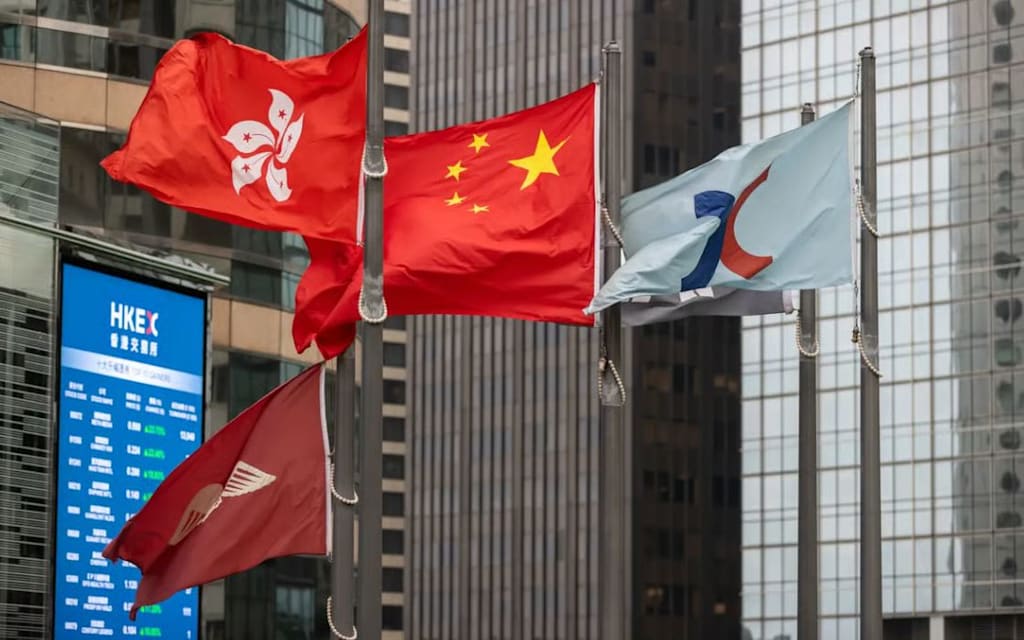
SHANGHAI/HONG KONG — Chinese and Hong Kong stocks fell on Friday as the shockwaves from a massive technology sell-off on Wall Street rippled across Asian markets, fueling anxieties that the artificial intelligence boom may be losing its momentum. While the initial reaction was sharp, with tech-heavy indices plunging, bargain hunters eventually stepped in to pare losses in mainland markets, buoyed by Beijing’s ongoing commitment to market stability.
The sentiment shift was triggered overnight in the United States, where the Nasdaq Composite posted its steepest one-day drop since April 2025. The rout, driven by fears that a Democratic sweep in the US midterm elections could lead to stricter regulatory scrutiny of the AI sector, wiped trillions of dollars off global market value. This risk-off mood spilled over into Asia early Friday, sending South Korea’s Kospi plunging more than 8% at one point and Japan’s Nikkei falling 5%.
Tech Sector Under Pressure
In China, the tech-focused Star 50 Index and the broader AI Index slumped as much as 5% in early trading before recouping some of their losses. By the midday break, China’s blue-chip CSI300 Index had dropped 1.5%, while the Shanghai Composite Index fell 1.1%. Despite the daily decline, the CSI300 remained on track to snap a daunting 12-week losing streak, a testament to recent policy support.
In Hong Kong, the benchmark Hang Seng Index dipped 1%, but the hangover from the US tech slump was more evident in the Hang Seng Artificial Intelligence Index, which tumbled 4%.
Chinese AI hardware companies with significant exposure to the US market were among the hardest hit. Zhongji Innolight, a major manufacturer of optical transceivers for data centers that generates most of its revenue in America, slumped 8% to a one-year low. Its rival, Eoptolink Technology, tanked 7%. Software firms also faced pressure, with Zhipu sinking as much as 15.4% amid concerns that a broader regulatory backlash in the West could threaten the timing of Anthropic’s anticipated IPO.
The "Backbone" Snaps?
Market participants are closely watching whether the AI narrative can survive without the relentless momentum of US equities. “The US stock market has been the standard-bearer and backbone of the global AI bull run. Now that backbone has snapped. Can AI bull markets elsewhere hold up on their own?” asked Dong Baozhen, chairman of asset manager Lingtong Shengtai.
Jason Hsu, founder and chairman of Rayliant Global Advisors, noted that China’s sentiment-driven stock market is heavily influenced by performance in the US. “Technology stocks carry significant weight in China’s stock market, and what people are really watching closely is whether AI in the United States is a bubble,” Hsu said. He added that any signs of that bubble bursting in the US “obviously will affect the Chinese market.”
Resilience Through Self-Reliance and State Support
Despite the panic selling, losses in mainland China were limited by bargain hunters who saw value in the dip. The market remains on course for weekly gains after Beijing rolled out a series of support measures and reiterated its commitment to preventing systemic financial risks.
Analysts cautioned against viewing China’s entire AI supply chain through the same lens as its US counterparts. “I don’t think China can completely escape the fallout from Wall Street, especially with selling this aggressively,” said Pepperstone strategist Dilin Wu. “But I’d be careful about treating China’s entire AI supply chain as one trade.”
Wu highlighted that growth in domestic AI chip players like Huawei and Cambricon is mainly driven by China’s push for technological self-reliance, a strategic imperative that remains intact regardless of US regulatory shifts. “When investors rush to cut risk, even good companies get sold,” she noted, suggesting that the current volatility may present opportunities for long-term investors focused on China’s internal tech development goals.
As the trading day progressed, the initial fear gave way to a more measured assessment of the landscape. While the global AI trade faces new headwinds from political and regulatory uncertainties, China’s dual strategy of market stabilization and domestic innovation continues to provide a floor for its equity markets.
About the Creator
Mark Lim
Hi I am mark an automotive student and a car, tech and food enthusiast ! Im gonna try and post daily & hope you enjoy what I write and do share my page with people you know. I would gladly appreciate it! Cheers
Enjoyed the story? Support the Creator.
Subscribe for free to receive all their stories in your feed. You could also give them a one-off tip, letting them know you appreciate their work.
Comments
There are no comments for this story
Be the first to respond and start the conversation.