
Are Event Activations Worth It? A Practical Guide for Businesses
A practical guide to understanding event activations, how they work, and how to measure if they are effective.

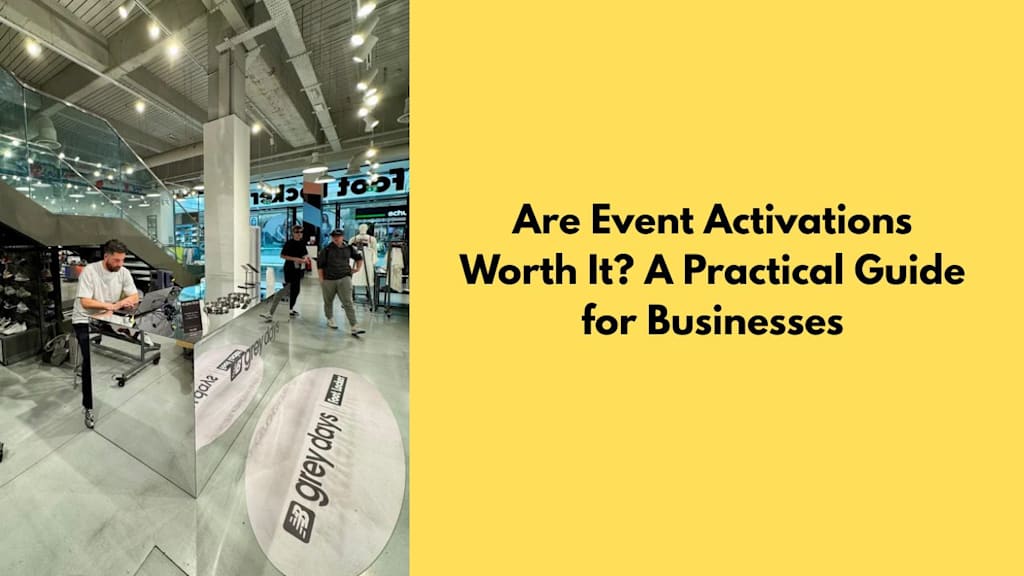
Event activations can look exciting: a pop-up stand, a fun game, free samples, or a hands-on demo that pulls people in. But for a business in the UK, the big question is simple: are event activations really worth the time and money?
This guide explains what they are, why people do them, what they cost, and how to tell if they worked. I’ll keep it clear and practical, with no sales talk.
What Are event activations?
Event activations are planned activities at an event that help people notice, try, and remember a brand or product. They are not just a banner and a table. The goal is to create a moment people want to join in.
A good activation usually has one main job, like:
- getting people to try a product,
- teaching something quickly,
- collecting sign-ups (with permission),
- or building trust by meeting people face to face.
In simple words: event activations turn “people walking past” into “people taking part”.
Why UK businesses use event activations
Online ads are everywhere. Many people scroll past them without thinking. Event activations can feel more real because you meet actual humans in an actual place.
UK businesses often use them to:
- Build awareness locally (especially for new shops or services)
- Launch a new product with live demos
- Create word of mouth (people talk more after a fun experience)
- Get feedback fast (you can ask quick questions on the spot)
- Make content (photos, short videos, testimonials—only if people agree)
They can work well in busy UK places like shopping centres, high streets, trade shows, community festivals, and uni campuses.
Types of activations for events that work in real life
Not all activations for events need a big budget. Here are common types that many businesses can copy in a simple way:
Sampling and try-before-you-buy
Food, drink, skincare, and small gadgets often do well here. People like testing something first, especially if it’s quick.
Live demonstrations
Showing how something works can be stronger than explaining it on a flyer. Keep it short. If your demo takes 10 minutes, many people will walk away.
Mini challenges and games
Spin-the-wheel, quick quizzes, or small challenges can pull crowds in. The key is making it fair and easy to join.
Workshops and “learn something” sessions
Great for services. Example: a 5-minute lesson, a short safety check, or a simple how-to.
Photo moments (done properly)
A photo wall or themed spot can work, but don’t push people to post. Also, be careful with photos of children and always respect consent.
How to plan brand activation events without wasting money
Many brand activation events fail because they look cool but have no clear plan. Before you book anything, answer these questions:
1) What is the one goal?
Pick one main goal, like:
- 200 product trials
- 80 email sign-ups (with consent)
- 30 bookings for consultations
- 50 qualified leads (real people who fit your target)
If you choose five goals, you often hit none properly.
2) Who is it for?
Write a simple line, like: “Parents with kids under 10” or “Small business owners who need accounting help.” If you try to speak to everyone, the message becomes bland.
3) What is the “hook”?
Your hook is the quick reason to stop. It could be:
- a free sample,
- a fast test,
- a useful tip,
- or a quick game.
Make it easy to understand in 3 seconds.
4) Where will it happen?
The right location matters more than fancy design. A perfect crowd in a simple space can beat a random crowd in a big venue.
5) Who will run it?
Staff matter a lot. Friendly, well-trained people can save a weak idea. Rude or bored staff can ruin a strong one.
Costs and ROI: Are event activations worth it?
So, are event activations worth it? Sometimes yes, sometimes no.
They are more likely to be worth it when:
- your product needs trying or seeing to “get it”,
- trust is important (health, finance, services, high-value items),
- you want local awareness fast,
- or you can re-use the content and learnings.
They may not be worth it when:
- your margins are tiny and you can’t afford staff time,
- you can’t measure results at all,
- or the event audience does not match your customers.
- event space or pitch fees
- stand build, signage, print
- staff time and travel
- freebies or samples
- storage and delivery
- insurance and safety needs
- number of demos completed
- samples given out
- sign-ups (only with clear consent)
- QR code scans
- discount code use linked to the event
- booked meetings or calls
- Total cost: £2,000
- Email sign-ups: 100
- Cost per sign-up: £20
- what you are collecting,
- why you are collecting it,
- and how you will use it.
- Too much text on banners (people won’t read it)
- No clear call to action (people don’t know what to do)
- Long queues (people leave)
- Giving away random freebies that attract the wrong crowd
- No follow-up plan (leads go cold)
- Forgetting basics like power, Wi‑Fi, tape, chargers, pens
- Ignoring accessibility (make space for wheelchairs and keep things easy to reach)
- Skipping risk checks (trip hazards, food safety, and crowd control matter)
- Define one goal and one audience
- Pick a simple hook
- Confirm venue rules, set-up times, and permissions
- Prepare consent wording for sign-ups
- Train staff with a short script and FAQs
- Test QR codes and links
- Keep the space tidy and welcoming
- Count key actions every hour
- Take notes: what people ask, what they like, what confuses them
- Follow up leads fast
- Review numbers vs costs
- Write down lessons for next time
What costs should you expect in the UK?
Costs change a lot, but common cost areas include:
It’s smart to set a total budget first, then build the activation to fit.
How to measure event activations (simple and honest)
If you don’t measure, you are guessing. Here are practical ways to track results:
Count real actions
Track things like:
Ask one quick question
You can ask: “How did you hear about us?” later on forms or checkout pages, then add “event” as an option.
Track cost per result
Example:
Then decide if that is good compared to your other marketing.
Be careful with data (GDPR)
If you collect emails, phone numbers, or any personal info in the UK, you must be clear about:
Also give an easy way to opt out later.
Common mistakes in activations for events
These mistakes happen a lot:
In the UK, safety and permissions are not “extra”. They are part of doing it properly.
A simple checklist for first-time event activations
Before the day:
On the day:
After the event (within 48 hours):
Final thoughts: when event activations make sense
Event activations are worth it when they are planned with a clear goal, the right audience, and a simple way to measure success. They are not magic, and they are not just for big brands. Small UK businesses can do strong brand activation events too—if they keep it focused, safe, and easy for people to join.
If you can answer “what are we trying to achieve, and how will we prove it?” you are already ahead of most teams.
About the Creator
MakersCAFE
MakersCAFE creates unforgettable experiences with live laser engraving and personalized brand activations. From events to trade shows, we help brands connect with their audience in unique and meaningful ways.
Enjoyed the story? Support the Creator.
Subscribe for free to receive all their stories in your feed.
Comments
There are no comments for this story
Be the first to respond and start the conversation.