
Anchoring the Future: How Malaysia’s Economic Diversification is Defying Global Headwinds
With total trade surging 27 percent and a strategic pivot toward high-tech manufacturing, Finance Minister II Amir Hamzah Azizan outlines a resilient, multi-sector growth roadmap designed to sustain the nation’s momentum through 2027.

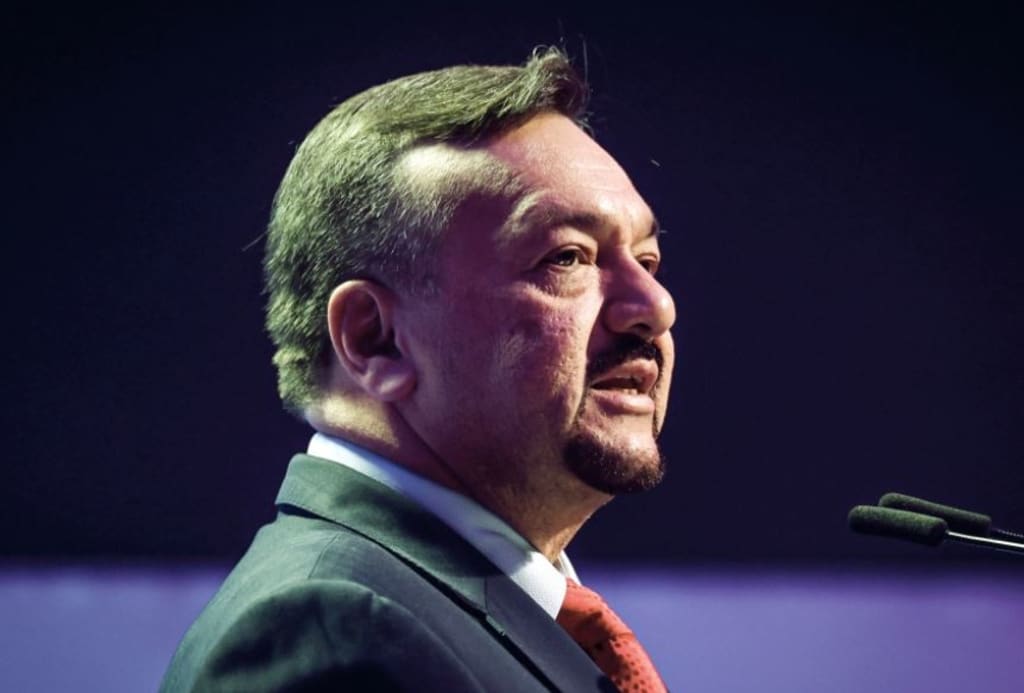
In an era defined by geopolitical fragmentation, shifting global trade patterns, and persistent macroeconomic uncertainty, the ability of a nation to withstand external shocks is the ultimate measure of its economic health. Speaking on the sidelines of the International Monetary Fund and World Bank Group Annual Meetings in Bangkok, Malaysia’s Finance Minister II, Datuk Seri Amir Hamzah Azizan, delivered a resounding message of confidence. He asserted that Malaysia’s increasingly diversified economy, robust export markets, and strengthened fiscal buffers have uniquely positioned the nation to cushion external disruptions and sustain a positive growth outlook through 2027.
The foundation of this optimism is rooted in hard, recent data. Despite a global environment fraught with volatility, Malaysia’s trade sector has demonstrated remarkable vitality. According to the Finance Minister, the country’s total trade expanded by a staggering 27 percent in the first eight months of the year compared to the same period previously. This surge is not merely a statistical anomaly but a reflection of deep-seated structural resilience. Unlike economies that are heavily tethered to the economic cycles of a single dominant partner, Malaysia has deliberately cultivated a broad and balanced portfolio of international trade relationships. Amir Hamzah noted that no single export market currently accounts for more than 17 percent of Malaysia’s total exports. This strategic diversification grants Malaysian businesses the agility to redirect trade flows toward better-performing markets when regional demand falters, proving that the nation’s trade apparatus is highly adaptable.
Equally critical to this resilience is the fundamental transformation of Malaysia’s domestic economic base. For decades, the nation’s prosperity was inextricably linked to the extraction and export of commodities, particularly palm oil and hydrocarbons. While these sectors remain important, the economic landscape has dramatically broadened. Today, Malaysia is rapidly ascending the value chain, with Electrical and Electronics (E&E), semiconductors, data centers, and advanced manufacturing emerging as powerful new engines of growth. This evolution is vital; by reducing reliance on any single industry, Malaysia insulates itself from sector-specific downturns. When commodity prices fluctuate, the high-value, knowledge-intensive sectors provide a stabilizing counterweight, ensuring continuous economic momentum and job creation.
This structural shift aligns perfectly with the evolving realities of the modern global economy. As shifting geopolitical alignments and the fragmentation of globalization make supply chain reliability a paramount concern for multinational corporations, Malaysia is capitalizing on its reputation as a stable, neutral, and trusted manufacturing and trading hub. The government is actively strengthening domestic industrial ecosystems to ensure that local manufacturers can source more components domestically. This push for greater supply chain localization is a proactive measure designed to reduce the country’s exposure to sudden disruptions in international logistics, whether caused by geopolitical conflicts, pandemics, or trade disputes. By adhering to international law and maintaining constructive trade relations with all major global economies, Malaysia continues to attract foreign direct investment (FDI) that seeks a safe, predictable harbor in turbulent times.
However, resilience is not solely built on trade and industrial policy; it requires rigorous fiscal discipline. Amir Hamzah emphasized that ongoing reforms to strengthen public finances have endowed the government with the necessary capacity to respond swiftly and effectively to external shocks. This fiscal preparedness was recently put to the test amid rising tensions in West Asia. Rather than resorting to blanket, economically draining subsidies that strain the national budget, the government opted for a more surgical approach. It prioritized supply security while providing targeted assistance to affected groups through expanded, focused financing support. This method ensures that vulnerable populations and critical industries are protected without compromising the long-term health of the nation’s fiscal framework.
Furthermore, the government recognizes that public funds alone cannot drive the scale of growth required for the future. A cornerstone of Malaysia’s current economic strategy is the mobilization of private capital alongside public investment. The administration is actively encouraging Government-Linked Investment Companies (GLICs) to deploy their substantial assets into strategic domestic industries. Crucially, this is being done with a strict mandate to ensure commercial viability and returns, preventing the misallocation of capital while simultaneously catalyzing private sector confidence.
The market has responded favorably to this balanced, pro-growth, and fiscally responsible approach. Amir Hamzah highlighted that Malaysia’s total approved investments reached an impressive RM431.8 billion in the previous year. Notably, this figure was split almost evenly between foreign and domestic direct investments, a testament to the synchronized confidence of both international stakeholders and local enterprises. This robust pipeline of approved investments, spanning advanced manufacturing, digital infrastructure, and green technology, provides a clear runway for future economic expansion.
Looking ahead, the road to 2027 will undoubtedly present fresh challenges. Geopolitical friction and global economic uncertainties are not transient phenomena but enduring features of the current international order. Yet, Malaysia’s trajectory suggests it is better equipped to navigate these waters than ever before. By learning from past crises, including the economic fallout of the Russia-Ukraine war and preceding global trade tensions, the nation has honed its policy tools and institutional responses.
Ultimately, the vision articulated by Finance Minister II Amir Hamzah Azizan paints a picture of a nation in transition. Malaysia is no longer just a resource-rich developing economy; it is an agile, technologically advanced, and fiscally prudent player on the global stage. By continuing to strengthen its domestic industrial ecosystems, leveraging a balanced mix of public and private capital, and maintaining its open, diversified trade posture, Malaysia is not merely hoping to survive the uncertainties of the coming years. It is strategically positioning itself to thrive, setting a benchmark for economic resilience in the ASEAN region and beyond.
About the Creator
Mark Lim
Hi I am mark an automotive student and a car, tech and food enthusiast ! Im gonna try and post daily & hope you enjoy what I write and do share my page with people you know. I would gladly appreciate it! Cheers
Enjoyed the story? Support the Creator.
Subscribe for free to receive all their stories in your feed.
Comments
There are no comments for this story
Be the first to respond and start the conversation.