
American TV Never Gave Us the Perfect Ending
The magic was the dorm room, the subtitles, and the fight over what happened next.
My first impression of American TV dramas was a little deflating: they don’t really chase perfection.
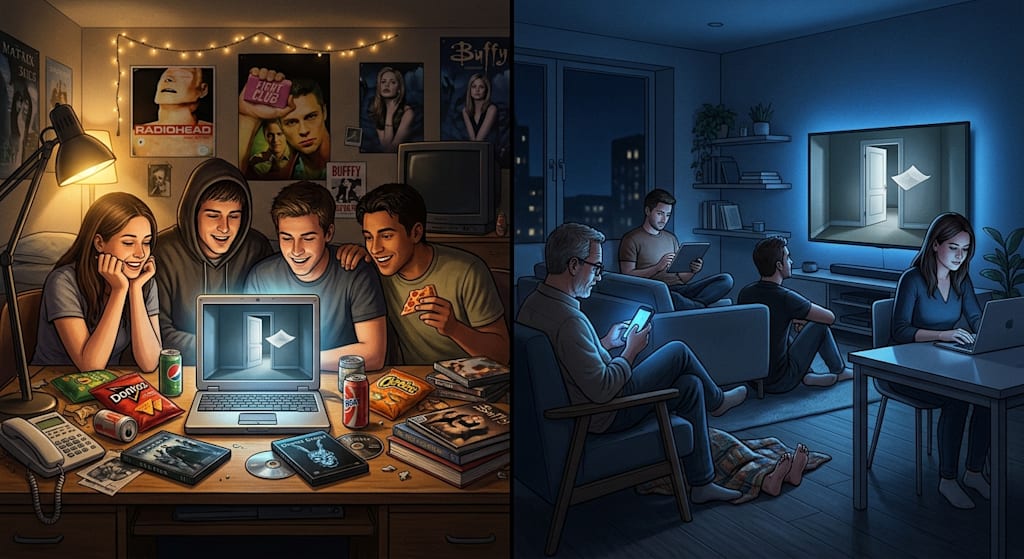
The first proof was an ending I can no longer name. The main character spent a whole season fighting. The person who should have been caught got away. The person who should have stayed left. The last shot was an empty room, the door open, wind turning a sheet of paper on the desk. I stared at the screen and thought, That’s it? No reunion dinner. No embrace. No “three years later” caption telling me everyone was happy. It ended the way most things end: without a dignified bow.
After more shows, I saw it wasn’t a fluke. Many Chinese dramas work toward a clean close. The villains get punished. The good characters finally get a break. The family sits around one table. Whatever was broken gets fixed, or at least acknowledged. It feels good, like climbing into a sun-dried quilt after a winter shower. American TV is not that quilt. It lets you lie down and then tells you the blanket is a foot too short. Your feet are cold. Figure it out.
The characters work the same way. They are not idealized good people who stay decent, stay right, and say the perfect thing at the perfect moment. They mess up. They get selfish. They slam the table and walk out when they should stay. I remember one character who could have cleared up a misunderstanding with one sentence. He didn’t say it. His pride spoke first. Another character kept saying, “I’m doing this for your own good,” while everything she did was about control. She didn’t see it. Watching her was infuriating. Thinking about it later was worse, because I know people like that. Sometimes I am people like that. American TV does not scrub its characters clean before serving them. It leaves the fingerprints on.
It also does not stay in the living room. It goes to workplaces where people get backed into corners and still have to smile. It follows young people who move to strange cities with one suitcase. It shows the strange distance between friends who want to get closer and are afraid of getting hurt. It has adventure and suspense. It has lives that look glamorous, lives that look like a mess, and lives that are hard to describe. You watch and then pause: this is how I felt last week at dinner with colleagues, when I could not find one thing to say.
Still, the plot is only half the memory.
Watching back then was different. Now you tap your phone and the show is there. Platforms are endless. Subtitles appear. If you get bored, you swipe away. Back then, you found DVDs or waited for a download. Then you waited for a fansub group to translate. Resources were not handed to you. You spent time. You spent effort. Sometimes you begged a favor. Because it was hard, watching felt serious.
The best part was watching together. Several of us in the dorm squeezed in front of one computer. The screen was small. Our heads almost touched. One of us watched the progress bar. Another shouted, “Nobody talk!” at the key moment. Someone else guessed what would happen next and got laughed at when the guess was wrong. When the episode ended, nobody left. We leaned back in chairs, on beds, on the floor, and talked. We argued about whether that character was right, whether the other one was too selfish, and what we would have done in that situation. Sometimes the talk turned into a fight. One person said, “He could have explained.” Another said, “If he explained, he wouldn’t be him.” Voices rose. Nobody convinced anybody. The next day at lunch, we picked the fight back up.
That joy did not come from the plot alone. Several people built it.
Now everyone has a phone, a tablet, a streaming account. You watch in the living room. I watch in the bedroom. My brother watches TV on the sofa. My sister curls up with a tablet. We watch alone. When it ends, it ends. Sometimes someone sends “this episode was okay” in a group chat. The other person sends an emoji. The conversation stops. Bullet comments say “spoiler ahead,” but a bullet comment is not the person sitting next to you. We lost the crowded excitement of waiting for the same twist at the same time. We lost the argument that ended with everyone going out for a late-night snack.
Looking back, American TV stayed in that generation’s memory for two reasons. One was the story: characters who felt real, plots that rose and fell, endings that did not avoid regret, and human nature that was not whitewashed. The other was the room around the screen: friends chasing the same show, guessing what came next, arguing about it, and turning a series into a shared experience.
The story ends. The screen goes dark. The crowded feeling of heads pressed together in front of one computer stays longer.
About the Creator
Jin
Writer of reamstories
https://reamstories.com/jin
Enjoyed the story? Support the Creator.
Subscribe for free to receive all their stories in your feed. You could also become a paid subscriber, letting them know you appreciate their work.
Comments
There are no comments for this story
Be the first to respond and start the conversation.