
Amazon’s $1 Raise: A Financial Gesture That Misses the Mark on Worker Sentiment
Despite a $1.5 billion investment in hourly pay and new perks, frontline employees remain skeptical that the adjustments address the true cost of living or the realities of warehouse labor.

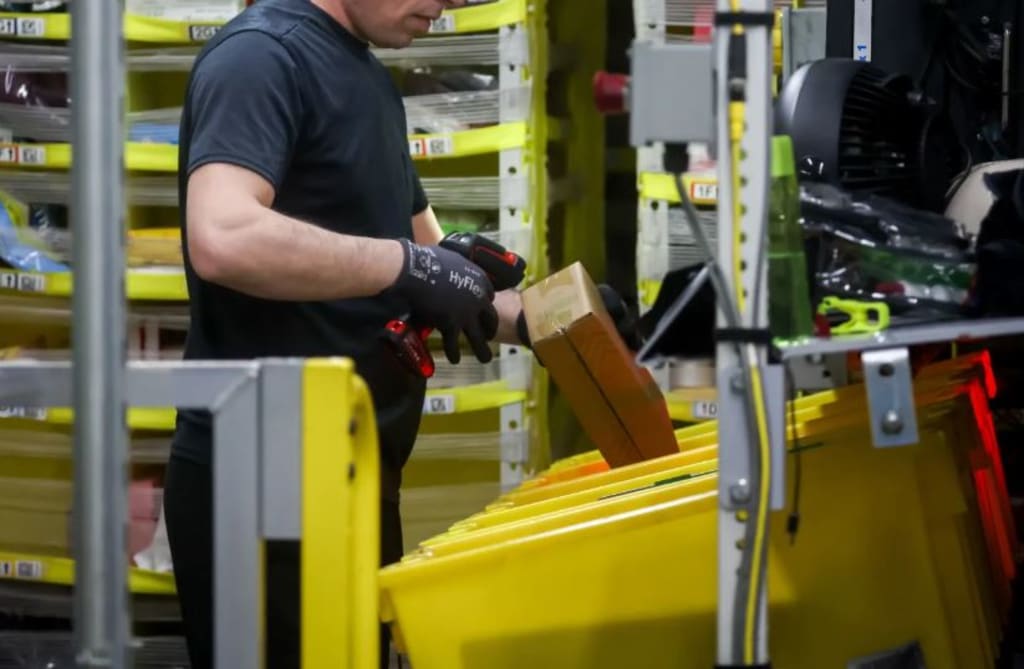
Amazon has announced a significant update to its compensation structure for U.S. core operations workers, raising the minimum starting pay to $20 per hour and increasing average hourly wages to nearly $24. The company frames this as a $1-per-hour raise for eligible employees, an investment totaling over $1.5 billion. Senior Vice President Udit Madan emphasized in a blog post that when combined with benefits, total compensation now exceeds $32 per hour. However, while the financial figures are substantial relative to Amazon’s $2.68 trillion market cap, the reception from the workforce suggests a profound disconnect between corporate metrics and employee reality. In an era where inflation has eroded purchasing power and housing costs have skyrocketed, a nominal wage increase is often viewed not as a reward, but as a belated correction that barely keeps pace with economic headwinds.
The announcement includes several new lifestyle benefits designed to offset daily expenses and integrate employees more deeply into the Amazon ecosystem. Workers will gain access to Day 1 Financial, a low-cost banking system aimed at reducing fees for unbanked or underbanked individuals, and membership in First Tech Federal Credit Union. Additionally, Amazon is introducing grocery discounts: 20% off in-store purchases at Whole Foods Market and 10% off online orders via Amazon Fresh. These perks join an existing suite of benefits that already includes free Prime memberships, prepaid education programs through Career Choice, and comprehensive healthcare coverage. On paper, the package appears comprehensive, aiming to reduce the friction of everyday life for hourly workers by leveraging Amazon’s vast internal infrastructure. Yet, this strategy also raises questions about whether such benefits serve primarily to retain workers within the company’s orbit rather than empowering them with external economic mobility.
Despite the glossy presentation, the response on social media platforms frequented by fulfillment center employees reveals deep-seated skepticism and fatigue. Rather than celebrating the wage bump, many workers view it through the lens of stagnation and unmet expectations. The Whole Foods discount, intended as a premium perk, was met with biting irony; one worker noted that even with 20% off, prices would still approximate those of a standard grocery store, highlighting the persistent affordability gap. This sentiment underscores a broader frustration: nominal wage increases often fail to keep pace with the rising cost of housing, food, and transportation in the regions where Amazon facilities operate. For many, the "raise" feels less like a bonus and more like a maintenance adjustment that doesn't account for years of suppressed wage growth during the pandemic era.
Furthermore, the timing and scale of the raise invite scrutiny regarding labor relations and unionization efforts. While $1.5 billion sounds immense, it represents merely 0.06% of Amazon’s market capitalization, suggesting the increase is financially negligible for the corporation despite being marketed as a major investment. Critics argue that this spending is strategically timed to coincide with heightened organizing activity at warehouses across the country, serving as a preemptive measure to dampen enthusiasm for collective bargaining. For workers navigating physically demanding roles with high turnover rates, strict productivity quotas, and safety concerns, a $1 hourly adjustment may feel more like a retention tactic than a genuine commitment to economic dignity. The addition of banking and grocery perks, while practically useful, does not address core grievances around workplace autonomy, mandatory overtime, and the intense surveillance that defines modern logistics work.
Ultimately, Amazon’s latest compensation update illustrates the complex challenge of valuing frontline labor in a post-pandemic economy where the social contract between employer and employee is being renegotiated. Financial incentives alone cannot bridge the gap between executive narratives of "industry-leading" pay and the lived experience of workers who must stretch every dollar to survive. Until wage growth aligns meaningfully with both inflation and the physical and emotional demands of the job, raises, no matter how well-packaged with discounts and banking access will likely be received as necessary operational adjustments rather than transformative victories. As Amazon continues to expand its footprint, the true measure of its success will not be found in market cap percentages or benefit brochures, but in whether its workforce feels genuinely valued beyond their utility as cogs in a global supply chain.
About the Creator
Mark Lim
Hi I am mark an automotive student and a car, tech and food enthusiast ! Im gonna try and post daily & hope you enjoy what I write and do share my page with people you know. I would gladly appreciate it! Cheers
Enjoyed the story? Support the Creator.
Subscribe for free to receive all their stories in your feed. You could also become a paid subscriber, letting them know you appreciate their work.
Comments
There are no comments for this story
Be the first to respond and start the conversation.