
Aircraft Fairings Market: The Hidden Technology Behind Aircraft Efficiency
How aerodynamic design is helping aircraft fly farther, consume less fuel, and improve performance
Hook Intro
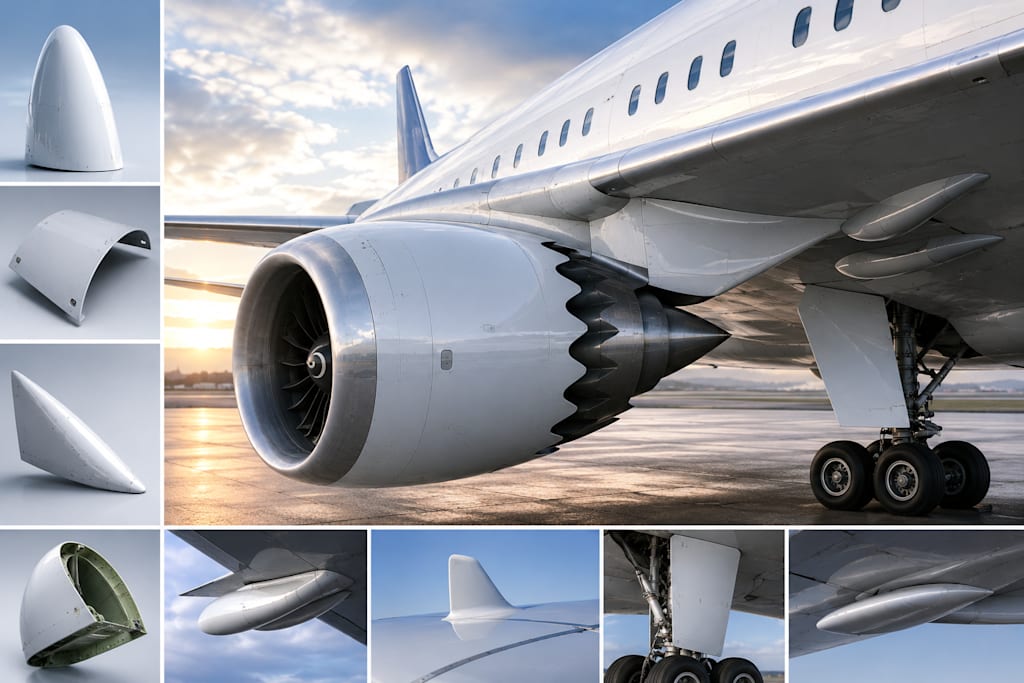
They sit quietly along the aircraft's body, wings, engines, and landing gear, blending seamlessly into the overall design. Yet these components play a critical role in every flight, reducing drag, improving fuel efficiency, and enhancing aerodynamic performance.
These structures are known as aircraft fairings. While often overlooked, they have become increasingly important as airlines and aircraft manufacturers pursue lighter, more efficient, and more sustainable aircraft. At the center of this evolution is the Aircraft Fairings Market, where advanced materials and innovative designs are helping shape the future of aviation.
Why Aircraft Fairings Matter Today
Modern aviation faces constant pressure to improve fuel efficiency, lower operating costs, and reduce emissions.
Aircraft fairings are aerodynamic coverings that smooth airflow around various aircraft components, including wing joints, landing gear systems, engines, and fuselage sections. By minimizing air resistance, they help aircraft consume less fuel while improving overall flight performance.
As airlines seek greater efficiency and aircraft manufacturers develop next-generation aircraft, demand for advanced fairing systems continues to rise. According to Mordor Intelligence, the Aircraft Fairings Market size is expanding steadily as commercial aviation production increases and new aircraft programs prioritize lightweight aerodynamic structures.
Understanding Aircraft Fairings Market Size and Share
The Aircraft Fairings Market size is growing alongside rising aircraft deliveries, fleet modernization initiatives, and increasing demand for fuel-efficient aircraft.
Commercial aircraft account for the largest share of demand, supported by strong production backlogs from major aircraft manufacturers. Every new aircraft requires multiple fairing systems to optimize airflow and protect critical components.
The Aircraft Fairings Market share remains heavily influenced by commercial aviation, although military aircraft, unmanned aerial vehicles (UAVs), and emerging air mobility platforms are creating new opportunities for manufacturers. North America currently leads the market, while Asia Pacific is emerging as the fastest-growing region due to expanding aerospace manufacturing capabilities and growing air travel demand.
Aircraft Fairings Market Trends Driving the Industry
Several Aircraft Fairings Market trends are shaping the future of aerospace engineering.
Advanced composite materials are replacing traditional metal structures to reduce aircraft weight.
Carbon-fiber reinforced polymers are becoming increasingly popular because of their strength-to-weight advantages.
Thermoplastic composites are gaining attention for faster production cycles and improved recyclability.
Additive manufacturing and 3D printing technologies are enabling more complex and lightweight fairing designs.
UAV and eVTOL aircraft development is creating demand for customized aerodynamic components.
These innovations are helping aircraft manufacturers improve performance while meeting increasingly stringent sustainability goals.
Why Aerospace Manufacturers Are Investing in Fairing Technology
Every kilogram removed from an aircraft contributes to lower fuel consumption over its operational lifetime.
This is why manufacturers continue investing in lightweight fairing solutions that improve aerodynamic efficiency without compromising structural integrity. Advanced fairings also protect critical aircraft systems from environmental exposure, reducing maintenance requirements and extending component lifespan.
For airlines, these benefits translate into lower operating costs and improved profitability. For aircraft manufacturers, fairing innovation provides another pathway toward achieving fuel efficiency targets and reducing emissions.
This ongoing focus strengthens the broader Aircraft Fairings Market analysis, where aerodynamic optimization remains a key competitive advantage.
Challenges Facing the Industry
Despite strong growth prospects, the industry faces several challenges.
Developing and certifying new aerospace components requires significant investment, extensive testing, and strict regulatory approval processes. The aerospace sector also faces fluctuations in raw material costs, particularly for advanced composite materials.
Supply chain constraints and aircraft production delays can further affect demand patterns for fairing manufacturers. At the same time, companies must continually innovate to meet evolving performance requirements across commercial, military, and emerging aviation platforms.
Aircraft Fairings Market Forecast and the Road Ahead
The Aircraft Fairings Market forecast remains positive as global air travel continues to recover and aircraft manufacturers work through substantial production backlogs.
Future growth will be supported by increased adoption of composite materials, expanding commercial aircraft deliveries, and the emergence of next-generation aviation platforms such as UAVs and electric vertical takeoff and landing (eVTOL) aircraft. Advanced manufacturing technologies are also expected to improve production efficiency and reduce development timelines.
As aviation moves toward greater efficiency and sustainability, aircraft fairings will remain a critical component of modern aircraft design.
Final Thought
Passengers may never notice aircraft fairings, but the aviation industry certainly does.
From improving fuel efficiency to enabling innovative aircraft designs, these aerodynamic structures play a vital role in modern flight. As airlines and manufacturers continue pursuing lighter, smarter, and more sustainable aircraft, fairing technology will remain an essential contributor to the future of aviation.
About the Creator
Enjoyed the story? Support the Creator.
Subscribe for free to receive all their stories in your feed.
Comments
There are no comments for this story
Be the first to respond and start the conversation.