
Aircraft Engines Market: The Power Behind Global Aviation
How next-generation propulsion technologies are shaping the future of commercial, military, and sustainable aviation
Hook Intro
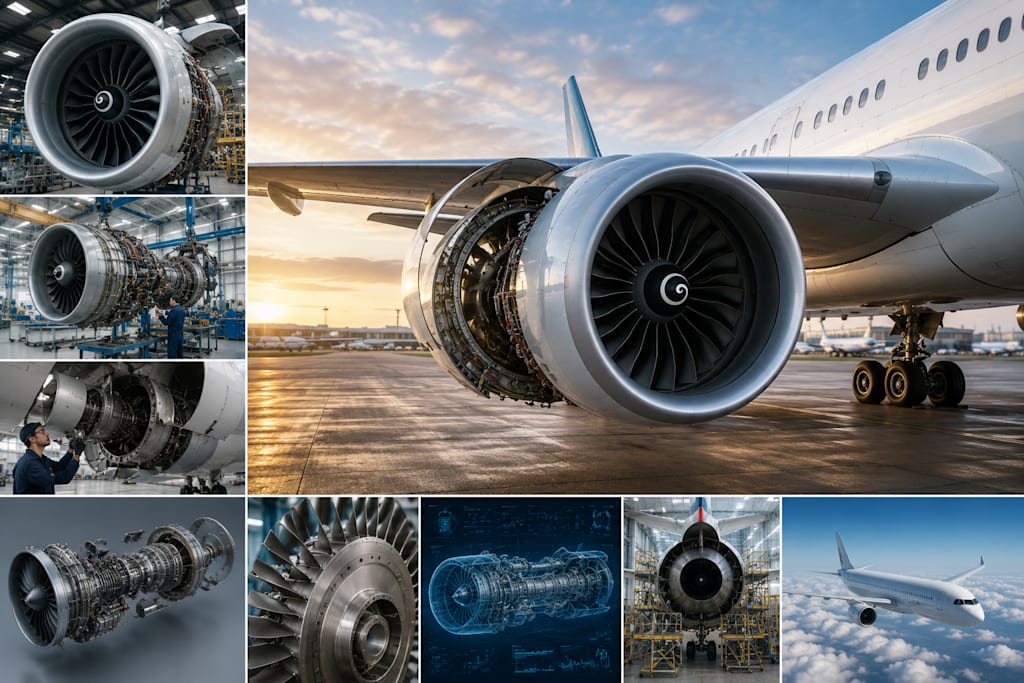
Every flight begins with a powerful force hidden beneath the wing. As passengers settle into their seats and the aircraft accelerates down the runway, the engines generate the thrust needed to lift hundreds of tons into the sky.
While aircraft designs continue to evolve, the engine remains the heart of aviation performance. From fuel efficiency and operating costs to range and environmental impact, aircraft engines influence nearly every aspect of flight. Today, the Aircraft Engines Market is undergoing a new phase of transformation as manufacturers focus on efficiency, sustainability, and advanced propulsion technologies.
Why Aircraft Engines Matter Today
The aviation industry is recovering from years of disruption while simultaneously preparing for the next generation of air travel. Airlines are expanding fleets, governments are modernizing military aircraft, and manufacturers are investing heavily in cleaner propulsion systems.
Aircraft engines play a critical role in improving fuel efficiency, reducing emissions, increasing reliability, and lowering operating costs. Modern engine technologies are helping airlines meet environmental goals while supporting growing passenger and cargo demand.
According to Mordor Intelligence, the Aircraft Engines Industry is projected to grow from USD 109.41 billion in 2026 to USD 129.69 billion by 2031, registering a CAGR of 3.46% during the forecast period. Growth is being driven by rising aircraft production, fleet modernization programs, and increasing demand for fuel-efficient engines.
Understanding Aircraft Engines Market Size and Share
The Aircraft Engines Market size is expanding as airlines continue placing new aircraft orders and replacing aging fleets with more efficient models. Commercial aviation remains the largest contributor to demand, supported by growing passenger traffic and increasing aircraft deliveries worldwide.
Turbofan engines dominate the industry, accounting for 64.67% of the market. Their superior fuel efficiency and performance make them the preferred choice for modern commercial aircraft. Meanwhile, hybrid-electric propulsion systems are emerging as one of the fastest-growing segments as the industry seeks lower-emission alternatives.
The Aircraft Engines Market share is led by Asia-Pacific, which accounts for 33.19% of global revenue. Rising air travel demand, expanding airline fleets, and growing aircraft procurement activities across countries such as China and India continue to support regional growth.
Aircraft Engines Market Trends Driving the Industry
Several Aircraft Engines Market trends are transforming aviation propulsion.
Fuel-efficient turbofan engines are becoming the standard for new aircraft programs.
Sustainable Aviation Fuel (SAF) compatibility is becoming a key focus for engine manufacturers.
Hybrid-electric propulsion technologies are attracting increasing investments.
Advanced materials are helping reduce engine weight while improving durability.
Digital monitoring and predictive maintenance systems are enhancing engine reliability and operational efficiency.
These innovations are helping airlines lower fuel consumption while improving overall fleet performance.
Why Airlines and Manufacturers Are Investing in Advanced Engines
Fuel remains one of the largest operating expenses for airlines. Even small improvements in engine efficiency can generate substantial cost savings over the life of an aircraft.
New-generation engines offer lower fuel burn, reduced maintenance requirements, and lower emissions compared to older platforms. As a result, airlines are prioritizing aircraft equipped with the latest propulsion technologies.
This trend continues to strengthen the broader Aircraft Engines Market analysis, where demand is increasingly linked to efficiency, sustainability, and long-term operating economics.
Military operators are also investing in advanced engine technologies to improve aircraft performance, mission capability, and operational readiness.
Challenges Facing the Industry
Despite positive growth prospects, the industry faces several challenges. Supply chain disruptions continue to impact engine production and delivery schedules across the aviation sector.
Manufacturers are also navigating complex certification requirements while developing next-generation propulsion technologies. Additionally, the transition toward sustainable aviation and alternative propulsion systems requires significant research and development investments.
Growing pressure to reduce aviation emissions is creating additional challenges as manufacturers balance performance, cost, and environmental objectives.
Aircraft Engines Market Forecast and the Road Ahead
The Aircraft Engines Market forecast points toward steady expansion as global aviation activity increases and fleet modernization programs continue.
Future growth will be supported by rising commercial aircraft deliveries, expanding defense aviation programs, and increasing adoption of sustainable aviation technologies. Hybrid-electric propulsion systems and advanced engine architectures are expected to play a growing role in future aircraft development.
As the aviation industry moves toward greater efficiency and sustainability, engine manufacturers will remain at the center of innovation. The next generation of aircraft engines will not only power aircraft but also help shape the future of global air transportation.
Final Thought
Aircraft may capture attention with their design and technology, but engines remain the force that makes flight possible.
From commercial airliners and military aircraft to future hybrid-electric platforms, aircraft engines continue to push the boundaries of performance, efficiency, and innovation.
About the Creator
Enjoyed the story? Support the Creator.
Subscribe for free to receive all their stories in your feed.
Comments
There are no comments for this story
Be the first to respond and start the conversation.