
AI Is Quietly Rebuilding Global Supply Chains
AI Is Quietly Rebuilding Global Supply Chains
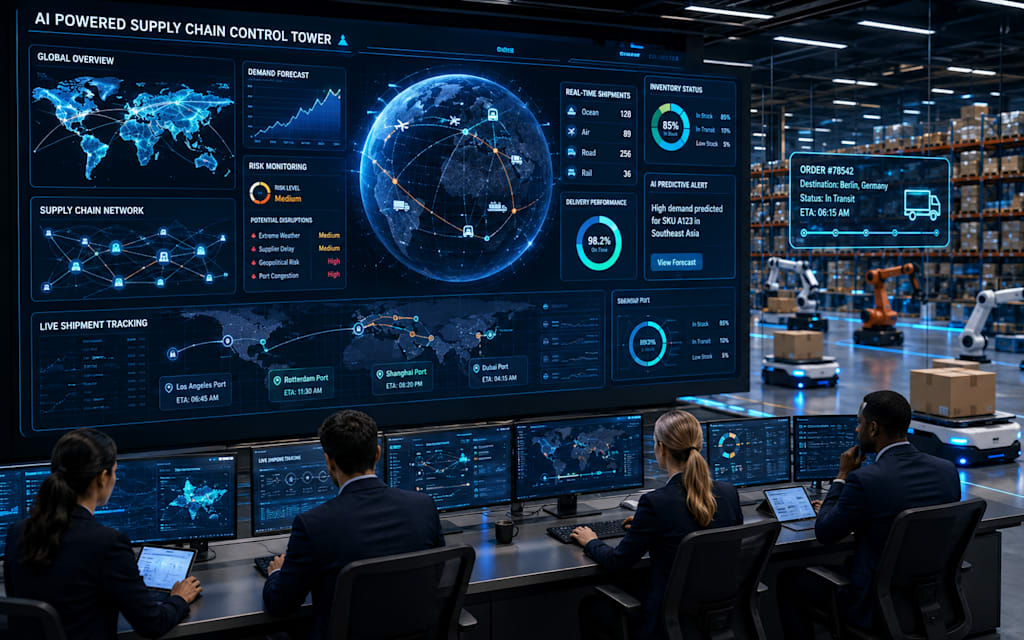
At 3:17 AM, a shipment of medical components sat stranded at a crowded port thousands of miles away. No alarms rang. No headlines appeared. But inside a supply chain command center, an artificial intelligence system had already predicted the disruption 48 hours earlier.
That single prediction saved millions.
For decades, supply chains operated like giant domino chains — fragile, reactive, and painfully slow to adapt. One weather event, political disruption, or factory shutdown could ripple across industries overnight. Now, businesses are turning to AI not just to react faster, but to anticipate chaos before humans even notice it forming.
The race isn’t about replacing workers with machines. It’s about survival in a world where delays, shortages, and rising costs can destroy customer trust in days.
The AI supply chain market size is projected to rise from USD 7.67 billion in 2025 to USD 10.29 billion in 2026, eventually reaching USD 44.7 billion by 2031 at a CAGR of 34.12% during 2026–2031. That kind of growth signals more than a passing technology trend. It reveals a structural shift in how global commerce functions.
The End of Reactive Supply Chains
For years, most supply chains operated on hindsight.
Managers looked at spreadsheets from last week. Warehouses reordered inventory after products started disappearing. Retailers responded to demand spikes only after shelves emptied. The system worked — until the world became too unpredictable.
Then came shipping bottlenecks, labor shortages, geopolitical tensions, and unpredictable consumer behavior. Suddenly, “business as usual” stopped existing.
This is where AI changed the conversation.
Modern supply chain AI systems process enormous streams of live information simultaneously: weather reports, shipping patterns, warehouse inventory, customer demand signals, fuel prices, and even social sentiment. Instead of waiting for problems to happen, algorithms identify patterns humans would likely miss.
Imagine a retailer preparing for a seasonal sales rush. Traditional forecasting might rely on last year’s numbers. AI models, however, analyze regional buying habits, current online searches, economic trends, and transportation conditions in real time. The result is smarter inventory planning with fewer shortages and less waste.
That shift is becoming one of the defining artificial intelligence supply chain market trends shaping industries worldwide.
📦 Why companies are adopting AI in supply chains faster than expected:
- Predicting delivery disruptions before they happen
- Reducing warehouse inefficiencies
- Improving inventory forecasting accuracy
- Lowering transportation costs
- Detecting supplier risks early
- Automating repetitive logistics decisions
- Enhancing customer delivery experiences
But technology alone isn’t the full story.
Behind every AI dashboard is growing pressure from consumers who now expect near-instant delivery, transparent tracking, and zero delays. One late shipment can become a viral complaint within hours. Businesses no longer compete only on price. They compete on speed, reliability, and adaptability.
That pressure is fueling rapid artificial intelligence supply chain market growth across retail, manufacturing, healthcare, automotive, and e-commerce sectors.
And the companies adapting fastest may gain a long-term advantage that becomes difficult to reverse.
From Warehouses to Predictions: AI’s New Role
Walk into a modern fulfillment center today, and it feels less like an industrial warehouse and more like a technology ecosystem.
Robots glide between shelves. Cameras scan inventory automatically. Algorithms reroute deliveries based on traffic conditions in real time. AI-powered systems calculate how to reduce empty truck miles to save fuel and improve efficiency.
But perhaps the most powerful change is invisible.
Predictive intelligence is becoming the backbone of modern logistics.
Instead of asking, “What happened?” businesses now ask, “What’s about to happen next?”
This predictive approach is reshaping the broader artificial intelligence supply chain Industry. Companies are investing heavily in systems that provide early-warning signals for disruptions, supplier instability, and shifting demand patterns.
Even smaller businesses are entering the space. Cloud-based AI platforms now allow mid-sized companies to access tools once reserved for massive global corporations. That accessibility is expanding the overall artificial intelligence supply chain market share across different business sizes and industries.
At the same time, concerns remain.
Some workers worry automation could reduce traditional logistics jobs. Others question whether companies may become too dependent on algorithmic decision-making. Cybersecurity risks also continue to grow as supply chains become more digitally connected.
Yet despite those concerns, momentum continues building.
The broader artificial intelligence supply chain market forecast suggests AI-driven logistics will become increasingly central to global trade over the next decade. Companies delaying adoption may struggle to compete with organizations operating faster, leaner, and more predictively.
And perhaps that’s the most fascinating part of this transformation:
Most consumers never notice it happening.
Packages arrive on time. Shelves stay stocked. Delays quietly disappear before becoming visible. Behind the scenes, AI systems are making millions of tiny operational decisions every day — decisions shaping how products move across oceans, highways, warehouses, and cities.
The future of supply chains may not look dramatic from the outside.
But underneath, a silent technological revolution is already rewriting the rules of global commerce.
So here’s the real question:
If artificial intelligence can predict disruptions before humans even recognize them, how long before AI becomes the most important decision-maker in the entire supply chain?
About the Creator
Enjoyed the story? Support the Creator.
Subscribe for free to receive all their stories in your feed.
Comments
There are no comments for this story
Be the first to respond and start the conversation.