
A Warning from Isokolo: Don't Let Political Rivalries Derail the Ethiope State Dream
The National Secretary of the Ethiope State Creation Committee cautions Urhobo leaders against using the agitation to settle personal scores, warning that division could jeopardize the collective aspiration for a new state.

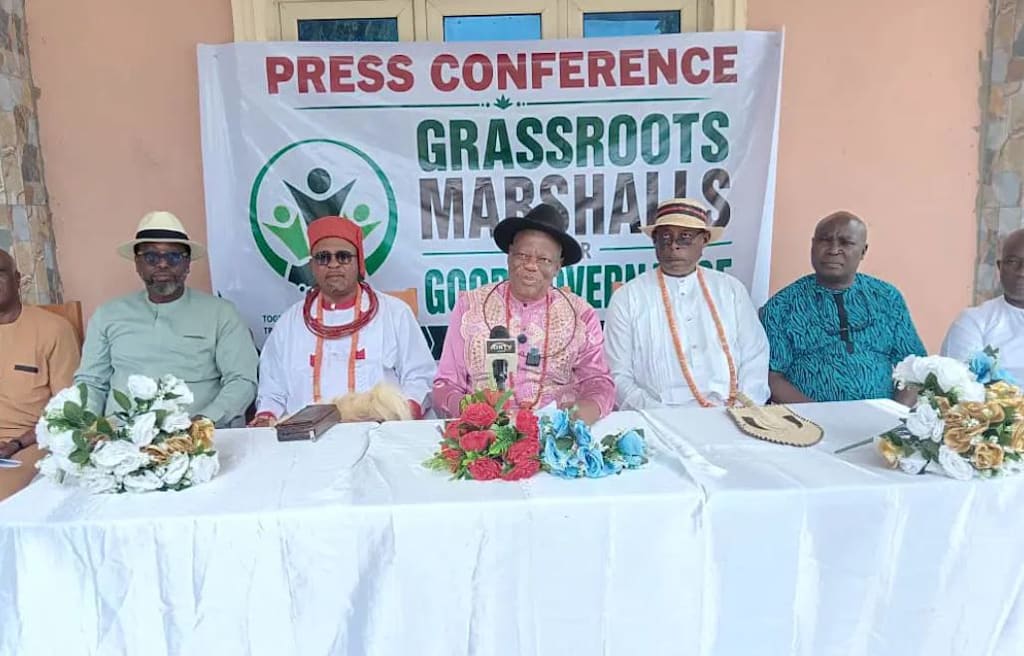
The National Secretary of the Ethiope State Creation Committee, Engr. (Chief) Anthony Ochuko Onyokoko, has issued a stern warning to Urhobo political gladiators against hijacking the agitation for the creation of Ethiope State to settle political scores or attack individuals. Speaking at a press conference on Saturday at Isokolo, Ethiope East Local Government Area of Delta State, Onyokoko cautioned that such conduct could derail the collective aspiration of the Urhobo Nation.
Onyokoko, who is also Patron of Grassroots Marshall for Good Governance, addressed what he described as recent and sustained attacks on Senator Ede Dafinone. His remarks come at a critical juncture in the long-running campaign for the creation of Ethiope State, a cause that has united Urhobo leaders across political divides for decades.
A Collective Aspiration, Not a Personal Agenda
The agitation for Ethiope State must remain above partisan politics, Onyokoko declared. While individuals were entitled to disagree with Dafinone or question his actions, such disagreements must not degenerate into personal attacks, political persecution or denigration.
“Ethiope State is a collective aspiration of the Urhobo people. It does not belong to any individual, political party or organisation. It belongs to all Urhobo sons and daughters,” Onyokoko declared. “Whatever our political differences, they must never become greater than our common interest. We cannot successfully pursue a common state while fighting one another. Our strength lies in our unity.”
His words echo a sentiment that has been expressed by Urhobo leaders for generations: that the creation of a state for the Urhobo people is not a partisan issue but a matter of identity, equity, and justice.
A Warning Against Political Exploitation
Onyokoko cautioned politicians seeking elective offices ahead of the 2027 elections against using the state-creation agitation to advance personal ambitions, urging them to campaign on their records, policies and programmes rather than hide behind a collective cause.
“No one should use the name of Urhobo Nation to push his own political aspirations and agenda,” he warned. “No one is more Urhobo than any other person, and Urhobo interests must supersede every individual’s political aspiration.”
His warning reflects a broader concern that the state-creation movement could be co-opted by politicians seeking to gain an advantage in the 2027 elections. The Ethiope State agitation has been a rallying point for Urhobo unity, and there is a risk that partisan rivalries could undermine that unity.
The Path to Statehood: Unity and Cooperation
According to Onyokoko, the movement requires the collective support of traditional rulers, political and religious leaders, professionals, youths, women, community leaders and Urhobo people in the diaspora. He stressed that the creation of Ethiope State would require legislative engagement, political negotiations, consensus-building and cooperation among elected representatives.
While distancing himself from personal attacks against Dafinone, Onyokoko acknowledged the right of stakeholders to hold the senator accountable. “We may question his action, disagree with it, seek explanations and place our position before the public. We must also recognise that we are all entitled to our own views on how to achieve our agitation for a State for the Urhobo people,” he said.
“We must therefore distinguish between holding our Senator accountable and turning disagreement into personal or partisan political attacks. Accountability should not become denigration.”
He also rejected the suggestion that disagreement with Dafinone automatically gave the Ethiope State Creation Committee the authority to demand an apology from him on behalf of the entire Urhobo Nation. “The Urhobo Nation is larger than any individual or committee. Unless there is a clear collective mandate, we should be careful about speaking in the name of the entire Nation,” Onyokoko said.
The Senator's Role in the Legislative Process
Onyokoko specifically noted that Dafinone, as the duly elected senator representing Delta Central Senatorial District, could remain relevant to the legislative process required to actualise Ethiope State. “Senator Ede Dafinone remains the duly elected Senator representing Delta Central Senatorial District. At this critical stage of our agitation, we may still require his legislative engagement and cooperation,” he said.
“We may disagree without becoming enemies. We may criticise without insulting. We may correct without denigrating.”
This is a crucial point. The creation of a new state requires legislative approval at the federal level, and having a united delegation of representatives from the area is essential. Division among Urhobo leaders could weaken the case for Ethiope State and undermine the legislative effort.
A Lesson from History
Onyokoko warned that Urhobo leaders must learn from the circumstances surrounding the creation of Delta State in 1991, particularly the disagreements that, in his view, contributed to the emergence of Asaba as the state capital.
“The circumstances surrounding the location of the capital of Delta State in Asaba following the creation of the State in 1991 should remind us of the consequences of division at critical moments,” he said. “We must not repeat such mistakes. History teaches us that a divided people can lose even when their cause is just.”
This historical reference is significant. The creation of Delta State in 1991 was a major milestone for the Urhobo people, but the decision to locate the capital in Asaba rather than a Urhobo-majority town remains a source of grievance for many. Onyokoko's warning suggests that division among Urhobo leaders could once again lead to outcomes that fall short of the people's aspirations.
A Non-Partisan Movement
Onyokoko insisted that the Ethiope State Creation Committee was established as a non-partisan platform and must remain so, regardless of the political affiliations of its members. “From the inception of the Ethiope State Creation Committee, we agreed that the movement should remain non-partisan,” Onyokoko said. “Ethiope State must never become an instrument for promoting or opposing the political ambition of any individual. Ethiope State must remain above individual political contests.”
He said political parties and alliances would change, but the collective interests and identity of the Urhobo people would endure, urging all political actors to subordinate personal ambitions to the broader interest of the nation.
A Call for Unity
Reiterating his position, Onyokoko said he supported the committee's right to respond to legitimate criticisms but rejected the use of the agitation as a platform for partisan attacks. “This is not about taking sides in anybody's political contest. It is about protecting the unity, integrity and non-partisan character of the Ethiope State Creation Movement,” he said.
“This is the time for unity, not acrimony; respect, not denigration; and non-partisanship, not political rivalry. Ethiope State must come first as that is the wish of every son and daughter of Urhobo Nation.”
“Above all, let us continue to practise Politics Without Bitterness.”
The agitation for Ethiope State is one of the most enduring political movements in Nigeria's South-South region. For decades, Urhobo leaders have argued that the creation of a state for the Urhobo people would address historical marginalization, bring government closer to the people, and promote development.
But the path to statehood is long and fraught with political challenges. It requires the support of the National Assembly, the approval of the President, and a successful referendum. Most importantly, it requires unity among the Urhobo people.
Onyokoko's warning is a timely reminder that the campaign for Ethiope State must remain above partisan politics. If Urhobo leaders allow their personal ambitions or political rivalries to divide them, they risk losing the very prize they have sought for so long.
The circus of Nigerian politics is always evolving. But for the Urhobo Nation, the goal remains clear: the creation of Ethiope State. Whether they achieve it will depend on their ability to remain united in purpose, even as they may differ in approach.
About the Creator
Mark Lim
Hi I am mark an automotive student and a car, tech and food enthusiast ! Im gonna try and post daily & hope you enjoy what I write and do share my page with people you know. I would gladly appreciate it! Cheers
Enjoyed the story? Support the Creator.
Subscribe for free to receive all their stories in your feed.
Comments
There are no comments for this story
Be the first to respond and start the conversation.