
A Tribute to Phil Scheffler by Jeff Fager
Remembering the standards, candor, and lasting influence of one of 60 Minutes’ defining producers.
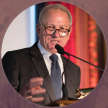

When I joined 60 Minutes, it was just after the 20th anniversary of the broadcast. About a month after arriving, I went in to see Phil. I remember it like it was yesterday. I took a deep breath and entered his office.
I told him I had been at CBS News for several years, had covered the world, had been based overseas for a lot of it, and that I had always thought coming to 60 Minutes would be a promotion. So I had been looking for a raise.
He looked up with a serious and relatively scary scowl and said, "Then why don't you start looking for another job?"
I backed out of his office as if it had never happened.
We used to joke that his gruff exterior masked his prickly interior.
I grew to love being around Phil and came to appreciate his importance to our broadcast.
In 1968, he didn't want to join 60 Minutes because he worried Don would make it too soft. But he joined three years later — you will hear him talk about why in one of the tapes we will show this morning. Don wanted the broadcast to be harder, and as a sign of his confidence in Phil, he made him the senior producer, replacing Palmer Williams, who retired in 1980. It was a huge appointment, and it happened at a time when 60 Minutes was starting to get traction and drawing huge audiences.
Phil was a great hire, and an important one for Don. For more than two decades, he made sure we all lived up to the standards and practices of CBS News — accuracy and fairness in particular. He used to push us to include more about the other side of a story. "It won't hurt your story," he'd say. "It will only make it better."
And pushing back at Don — a theme you will hear a lot about today — that was Phil. He was the conscience of the place. His trademark phrase was: "You can't do that, Don."
Phil had influence in many other areas as well. He never held back and was a big part of why 60 Minutes has always been a place where you speak your mind, in the interest of making the story better. It is what we loved about him and what we miss about him. He didn't know how to sugarcoat anything. And he never took himself too seriously.
He really cared about what we did, and nothing, nothing, kept him from saying what he thought.
After he retired, Phil never stopped coming by, and it wasn't for the reason he would tell us, that he had run out of pens and stationery. It was to talk about the stories: the ones he liked and the ones he didn't. He liked to spend time with Bill Owens in particular, telling him, "I know what you are going through." Bill tried to get him to take his old job back, but Phil was happy being free.
He always seemed at peace with his departure, which was rare and refreshing.
The thing I will remember most about Phil was that he cared about producer rights. He was our leader.
Phil was part of the reason Don outlawed meetings. It was because of a meeting of all the producers that Phil helped organize with the great Joe Wershba, about how they weren't getting enough credit, and how their names should be put on the graphic, the book, as we call it, behind the correspondent, that Bob Carujo made. Don crashed the meeting, and there was a lot of shouting, and Don stormed out, saying that was the last meeting they would ever have at 60 Minutes.
But they got their names in the book.
I used to call Phil the master sergeant of the CBS News producer union, and that made him smile. He was always looking out for us.
We have a couple of tapes to show today. Phil did some on-camera work in the early days — it is pretty funny to watch now.
[Tape 1]
I can tell you one thing: he would have had all of us fired if we had ever staged anything.
We have another tape today, and there is a lot more to it because it is Phil, in his own words, from interviews and from the PBS documentary 90 Minutes on 60 Minutes. It is great to hear his voice.
[Tape 2]
As you can see from the program today, there are several speakers, all of them from 60 Minutes, and some of whom became close personal friends. But after we printed the program, we heard from a childhood pal who went through elementary school with Phil and then Bronx Science. His name is Peter Haas. Peter?
About the Creator
Jeff Fager
Jeff Fager spent close to four decades at CBS News, developing a career that moved from early newsroom duties to leading the organization.
Portfolio 1: jeff-fager.com
Portfolio 2: jefffager.co
Enjoyed the story? Support the Creator.
Subscribe for free to receive all their stories in your feed.
Comments
There are no comments for this story
Be the first to respond and start the conversation.