
A Small Packaging Change Can Create a New Buying Habit
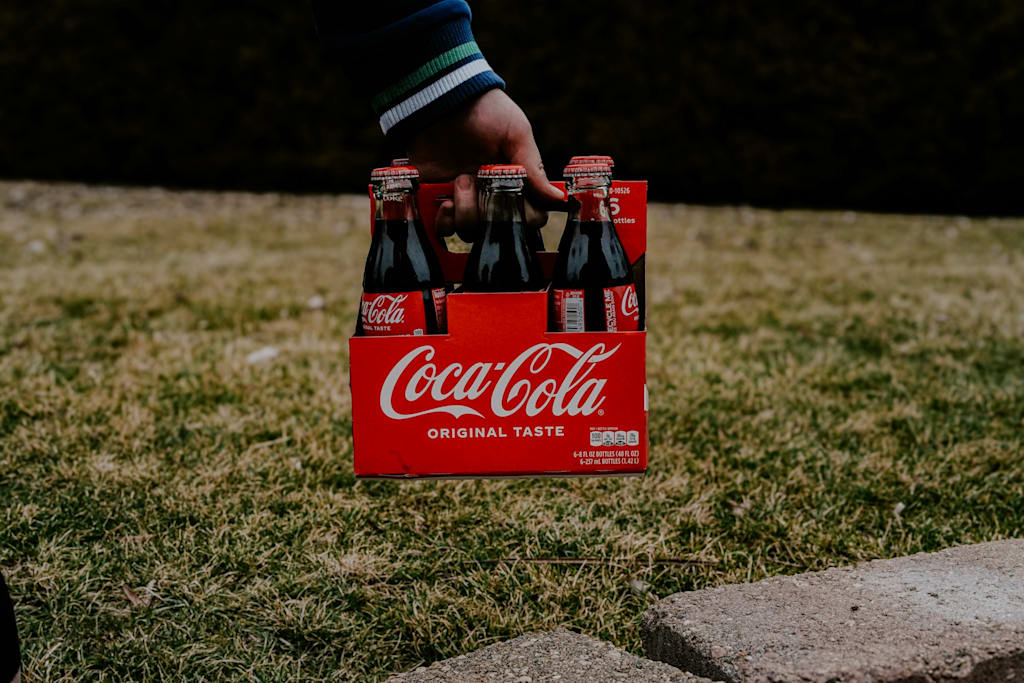
In 1923, Coca-Cola introduced a six-bottle cardboard carrier that made it easier for customers to buy several bottles at once and take them home. That simple package helped turn Coca-Cola from a drink people bought one bottle at a time into something they could keep at home and drink later.
In 1923, Coca-Cola already had a bottle people recognized.
Getting several of those bottles home was another matter.
Buying one drink for immediate consumption was simple. Carrying multiple glass bottles was awkward. Yet Coca-Cola saw an opportunity developing beyond soda fountains and individual purchases: more people were able to keep drinks cold at home.
The company and its bottlers responded with something remarkably ordinary.
A cardboard box with a handle.
The Coca-Cola system introduced a six-bottle carrier in 1923. The company says the package was designed specifically to make it easier for consumers to take several bottles home as home refrigeration became more available. The carton was patented the following year.
Today, carrying six drinks at once hardly looks like innovation.
At the time, the package helped remove a small obstacle standing between Coca-Cola and a different kind of purchase.
Instead of buying one bottle to drink now, a customer could take six home for later.
The product had not changed.
The purchase had.
Coca-Cola was learning to travel
Coca-Cola began at a soda fountain in Atlanta in 1886. Large-scale bottling came later, after entrepreneurs secured broad rights to bottle and sell the drink in 1899.
Bottling had already changed where Coke could be consumed.
A fountain tied the drink to a particular counter. A bottle could leave.
That created possibilities, but it also created another practical question. If consumers were going to drink Coca-Cola at home, they needed a convenient way to carry enough of it there.
The timing mattered.
Household refrigeration was beginning a long transition. Many American homes in the 1920s still relied on iceboxes rather than electric refrigerators, but methods for keeping food and drinks cold at home were improving. The Smithsonian's National Museum of American History notes that electric refrigeration was still expensive and developing during the decade; the first refrigerator to become widely popular in American homes arrived in 1927.
Coca-Cola was already thinking about what that change could mean for drinking habits.
The company says the six-pack was created to encourage consumers to take contour bottles home and drink Coca-Cola more often as home refrigeration expanded.
That makes the carton more interesting than it first appears.
It did not simply protect six bottles.
It made a different behavior easier.
The package changed the size of the purchase
Packaging usually looks secondary to the product inside it.
The drink matters. The bottle matters. The carton looks like something that disappears once the customer gets home.
But the six-pack changed the transaction before anyone opened a bottle.
A customer no longer had to think only in units of one.
Six bottles could become one purchase.
That matters because the way a product is packaged can influence what feels normal to buy.
One bottle suggests immediate consumption.
A carrier filled with six suggests storage.
It says there will be another bottle tomorrow.
And another after that.
Coca-Cola even described the carton at the time as a home package. According to the company, bottlers supplied the cartons at retail locations and expected customers to reuse them several times. Adoption was initially slow, and Coca-Cola later had to push the concept more actively before it became widely accepted.
That slow start is an important part of the story.
A useful innovation does not always produce an immediate change in customer behavior.
People already know how to buy the old way.
Stores already operate around the old way.
A new package may have to teach customers what it is for.
Eventually, the idea spread beyond Coca-Cola. The company says competitors adopted similar carriers, and the beer industry began embracing the format in the late 1930s.
Something that had begun as a way of carrying Coca-Cola bottles became an ordinary way of buying beverages.
Convenience can create a different occasion
There is a broader business lesson hiding inside the cardboard.
Companies often try to create growth by changing the product.
A new flavor.
A new feature.
A better formula.
A newer model.
But sometimes the barrier is not the product itself.
It is what the customer has to do to buy, transport, store, open, use, refill, or reorder it.
Remove one of those small inconveniences and the same product can fit into a different part of the customer's life.
The six-pack made Coca-Cola easier to bring into the home in quantity.
That meant the drink no longer had to depend as heavily on the moment when someone happened to be standing near a soda fountain or buying a single bottle.
The broader movement toward bottled consumption became significant. Coca-Cola says that by 1928, the volume it sold in bottles exceeded fountain sales for the first time.
The six-pack was only one piece of that larger shift. Bottling, refrigeration, distribution, coolers and advertising all mattered.
But the carton solved one very specific problem inside the shift.
It made taking several bottles home easier.
Small friction can hide a large opportunity
The same pattern appears in businesses far removed from soft drinks.
A product may already be good enough.
Customers may already want it.
The opportunity may be hiding in something that feels almost too mundane to deserve strategic attention.
How difficult is it to carry?
How many can someone buy at once?
Can it be stored easily?
Does ordering another require too many steps?
Does the package encourage one occasion or several?
Those details can change behavior because customers experience the whole process, not just the product itself.
Coca-Cola's six-pack did not require inventing another beverage.
It changed the unit customers could conveniently take home.
A hundred years later, the cardboard carrier is so ordinary that it is easy to overlook what it once represented.
That may be the best sign that the idea worked.
The package disappeared into everyday life, and the buying habit stayed.
About the Creator
Enjoyed the story? Support the Creator.
Subscribe for free to receive all their stories in your feed.
Comments
There are no comments for this story
Be the first to respond and start the conversation.