
A Listener's Guide to Music Genres and Styles
From classical to hip-hop — what defines every major style, and how to recognize it by ear.
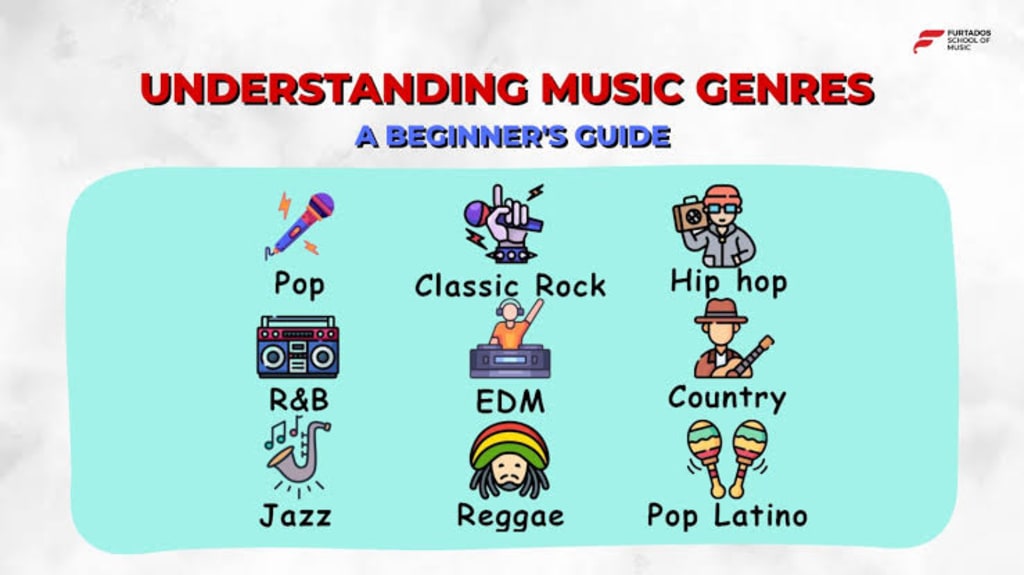
Music is one of those things almost everyone loves but few people can neatly define. We know a song the moment it hits us — a thumping bassline, a mournful fiddle, a rapid-fire verse — yet putting words to why it sounds the way it does is harder. That's where genres come in. They're not rigid boxes so much as a shared vocabulary: a way of describing where a sound came from, what instruments shape it, and the feeling it's reaching for.
This guide walks through the major families of music, what makes each one tick, and how to recognize them by ear. Think of it less as a textbook and more as a map for your next listening session.
What Actually Defines a Genre?
Before diving in, it helps to know what we're listening for. A genre usually comes down to a handful of ingredients:
Rhythm and tempo — the heartbeat. A waltz, a reggae groove, and a drum-and-bass track feel completely different before a single melody appears.
Instrumentation — the tools. Distorted electric guitars say one thing; a string quartet says another.
Structure — the architecture. Pop leans on verse-chorus repetition; jazz leaves wide room for improvisation.
Origins and culture — the roots. Genres carry the history of the communities that created them, which is why two songs with similar instruments can still belong to different worlds.
No genre is pure. Almost everything you love is a blend, and the most interesting music tends to live in the seams between styles.
Classical
The oldest continuous tradition in Western music, classical spans roughly a thousand years and several distinct eras — Baroque (think Bach's intricate counterpoint), Classical (Mozart's elegant balance), Romantic (Beethoven and Tchaikovsky's sweeping emotion), and the experimental modern period. Tubidy Mp3
What sets it apart is scale and notation. Compositions are written down in detail and performed by anything from a solo pianist to a hundred-piece orchestra. There's usually no improvisation, and the emotional arc is carried by dynamics — the swell from a whisper to a roar — rather than by a vocalist.
How to spot it: Acoustic, orchestral instruments. Long-form pieces with movements. No drum kit, no electric guitars, no chorus you can sing along to.
Jazz
Born in early-20th-century New Orleans out of blues and ragtime, jazz is the sound of conversation. Its defining feature is improvisation — musicians take turns "soloing," inventing melodies on the spot over a shared chord progression.
Jazz contains multitudes: the breezy swing of the big-band era, the cerebral complexity of bebop, the smoky calm of cool jazz, and the boundary-shattering chaos of free jazz. Common threads are syncopated rhythms (accents landing where you don't expect them) and "swing" — that loping, off-the-grid feel.
How to spot it: Walking basslines, brushed drums, saxophone or trumpet leads, and the sense that the players are reacting to each other in real time.
Blues
If jazz is the conversation, blues is the confession. Emerging from African American communities in the Deep South in the late 1800s, the blues built much of the foundation that rock, jazz, and R&B stand on.
Its signature is the "blue note" — a slightly bent, flattened pitch that gives the music its aching quality — and the twelve-bar structure, a repeating chord pattern that countless songs share. Lyrically, blues is famously about hardship: love lost, money gone, roads traveled.
How to spot it: Call-and-response between voice and guitar, bent notes, and that unmistakable sense of melancholy carried lightly.
Rock
Rock exploded in the 1950s when blues, country, and R&B collided, and for decades it was the center of gravity in popular music. At its core: electric guitars, bass, drums, and a vocalist, usually built around a strong backbeat.
The family tree is enormous — the raw energy of classic rock, the loud-quiet dynamics of grunge, the polish of arena rock, the rebellion of punk, the introspection of indie. What unites them is attitude and amplification.
How to spot it: Guitar-driven, drum-anchored, verse-chorus songs with energy you can feel in your chest.
Metal
Metal split off from rock and turned everything up — the distortion, the speed, the intensity. It's defined by heavily distorted "power chords," thunderous double-kick drumming, and often dark or fantastical themes.
Subgenres get specific: the galloping riffs of heavy metal, the technical precision of thrash, the guttural extremity of death metal, the atmospheric gloom of doom and black metal. Underneath the volume there's often serious musicianship and craft.
How to spot it: Down-tuned, distorted guitars, aggressive drumming, and vocals that range from soaring highs to deep growls.
Pop
Pop is less a sound than a goal: maximum accessibility. It's engineered to be catchy, polished, and immediate, drawing freely from whatever other genres are popular at the moment. That's why pop in the '80s, 2000s, and today can sound wildly different while serving the same purpose.
The constants are a memorable hook, a tight verse-chorus structure, and clean production. Pop is where trends crystallize and where the biggest artists in the world tend to live.
How to spot it: A chorus that lodges in your head on first listen, radio-friendly length, and a sound built around the vocal.
Hip-Hop and Rap
Born in 1970s New York from block parties and DJ culture, hip-hop reshaped popular music more than any other genre of the last fifty years. It's built on two pillars: the beat (often sampled or programmed, anchored by drums) and the rap (rhythmic, rhymed vocals delivered as spoken poetry).
It spans the boom-bap grit of the '90s, the lush production of Southern trap, conscious lyricism, and party anthems. Beyond the music, hip-hop is a culture encompassing DJing, breakdancing, and visual art.
How to spot it: Spoken-rhythmic vocals over a looped beat, heavy emphasis on lyrics and wordplay, and a groove built for the body.
R&B and Soul
Rhythm and blues evolved from blues and gospel into a genre centered on emotion and vocal prowess. Soul added church-rooted intensity; modern R&B added smooth, electronic-leaning production.
The common thread is the voice — expressive, melismatic, often the entire point of the song. Lyrically it lives in the territory of love, desire, and heartbreak, delivered with warmth and grit.
How to spot it: Soulful, acrobatic vocals, groove-based rhythm sections, and a polished, intimate feel.
Electronic and EDM
Electronic music is made primarily with synthesizers, drum machines, and computers rather than traditional instruments. It's a sprawling category: the hypnotic repetition of techno and house, the bass-heavy drops of dubstep, the euphoric builds of trance, and the experimental textures of ambient.
The defining trait is production-as-instrument — the producer shapes sound itself, sculpting timbres and rhythms that no acoustic instrument could make. Much of it is built for the dance floor, organized around tension and release.
How to spot it: Programmed beats, synthesized melodies, repetitive grooves designed to build and drop.
Country and Folk
Country grew from the folk traditions of rural America, blending Appalachian ballads, blues, and gospel. Its instruments — acoustic guitar, fiddle, banjo, pedal steel — and its storytelling are central. Country prizes a clear narrative: songs about home, heartbreak, and ordinary life.
Folk, its close cousin, is even more rooted in acoustic simplicity and oral tradition, often carrying social or political weight. Both value authenticity and lyrics over flash.
How to spot it: Acoustic, twangy instrumentation, plainspoken vocals, and stories you could follow like a short film.
Reggae
Reggae emerged in Jamaica in the 1960s, instantly recognizable by its rhythm: the emphasis lands on the off-beat, giving it that relaxed, swaying "skank." Basslines are deep and prominent, tempos are unhurried, and the mood is often spiritual or politically conscious.
It grew from earlier Jamaican styles like ska and rocksteady and went on to influence everything from punk to hip-hop.
How to spot it: Off-beat guitar chops, a fat rolling bassline, laid-back tempo, and an unmistakable groove.
World and Regional Music
Beyond these widely exported genres lies a vast universe of regional traditions — Indian classical ragas, Latin styles like salsa and bossa nova, West African highlife, Middle Eastern maqam, Bollywood film music, K-pop, and countless others. Each carries its own scales, rhythms, and instruments, and many are now blending with global pop to create entirely new hybrids.
This is where the map keeps expanding. Some of the most exciting music today comes from artists fusing local traditions with international sounds.
How to Use Genres (Without Letting Them Box You In)
Genres are useful for finding your way around, but they're a starting point, not a verdict. The artists who matter most often ignore the lines entirely — a rapper sampling jazz, a pop star borrowing from country, a metal band writing a string arrangement.
So treat this guide as a doorway. Pick a genre that intrigues you, follow its key artists, then notice where they pull from and who they influenced. That thread will lead you somewhere unexpected — which is, in the end, the whole point of listening.
About the Creator
Enjoyed the story? Support the Creator.
Subscribe for free to receive all their stories in your feed.
Comments
There are no comments for this story
Be the first to respond and start the conversation.