
A Complete Guide To Hybrid Solar Systems For Small Homes Vs Large Homes In Australia
Hybrid Solar Systems for Small vs Large Homes in Australia

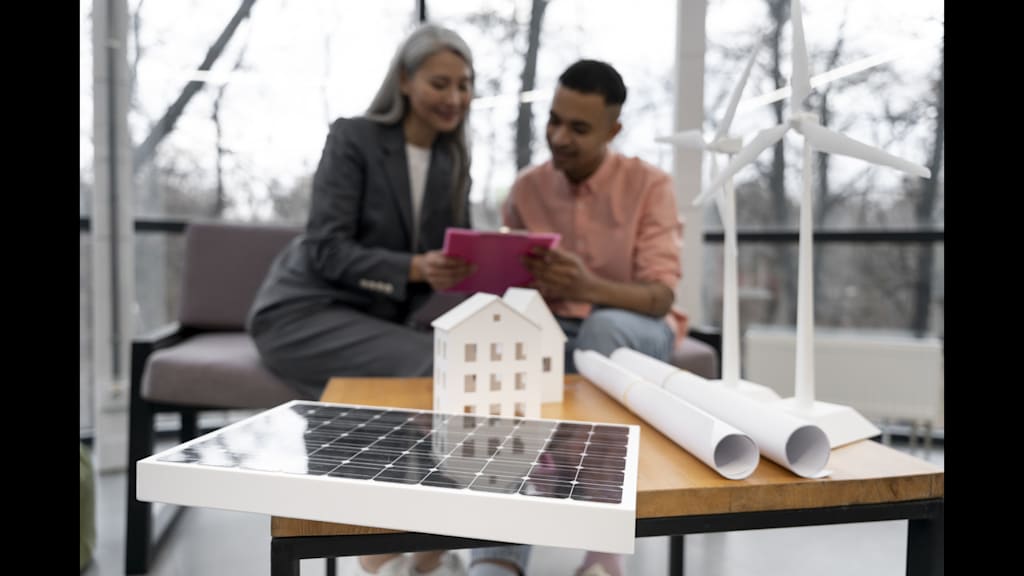
Electricity prices aren’t just rising in Australia, they’re reshaping how homeowners think about energy. Whether you live in a compact urban home or a sprawling family property, the question is no longer if you should switch to solar, but what type of system suits your lifestyle best. That’s where hybrid solar systems come into play, offering flexibility, storage, and control over your energy usage.
But here’s the catch: the ideal system for a small home isn’t necessarily the right fit for a large one. Let’s break down how hybrid solar systems in Australia differ for homes of various sizes and how to make the smartest choice.
What Is a Hybrid Solar System?
A hybrid solar system combines traditional solar panels with battery storage and grid connectivity. This means you can generate electricity during the day, store excess energy for later use, and still rely on the grid when needed.
Unlike standard grid-tied systems, hybrid setups give homeowners greater independence and resilience, especially during peak pricing periods or outages.
Energy Needs: Small Homes vs Large Homes
The biggest difference between small and large homes lies in energy consumption.
Small Homes
Smaller households such as apartments, townhouses, or couples’ homes typically use less electricity. Their energy needs are often limited to essentials like lighting, appliances, and occasional air conditioning.
• Average daily usage: 8–15 kWh
• Fewer occupants = lower demand
• Easier to offset usage with a modest system
Large Homes
Larger homes, especially those with families, pools, multiple air conditioners, or home offices, consume significantly more energy.
• Average daily usage: 20 to 40+ kWh
• Higher peak demand
• Greater need for storage capacity
This difference directly impacts the size, cost, and configuration of a hybrid system.
System Size and Configuration
For Small Homes
A smaller hybrid system is usually sufficient. These systems are designed to meet moderate energy demands without overinvestment.
Typical setup:
• 3kW to 5kW solar panel system
• Small battery (5–10 kWh)
• Lower upfront cost
This setup allows small homeowners to cover most of their daily usage while storing enough energy for evening consumption.
For Large Homes
Larger homes require more robust systems to keep up with higher consumption levels.
Typical setup:
• 6kW to 13kW+ solar panel system
• Larger battery storage (10–20+ kWh)
• Advanced energy management systems
These systems are designed to power multiple appliances simultaneously and store enough energy to reduce reliance on the grid.
Cost Comparison
Cost is often the deciding factor for homeowners considering solar.
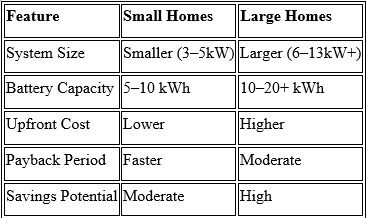
While small homes benefit from lower initial costs, large homes often achieve greater long-term savings due to higher energy offset.
Efficiency and Energy Usage
Efficiency isn’t just about system size, it’s about how well your system matches your energy habits.
Small Homes
• Easier to achieve high efficiency
• Less energy waste
• Faster return on investment
Large Homes
• Efficiency depends on system design
• Requires careful load management
• Greater opportunity for optimisation
In both cases, proper system design is key to unlocking the full benefits of hybrid solar systems.
Battery Storage: How Much Do You Really Need?
Battery storage is what sets hybrid systems apart. It allows you to store excess solar energy and use it when the sun isn’t shining.
Small Homes
• Smaller batteries are usually enough
• Ideal for evening and night usage
• Lower cost for storage
Large Homes
• Larger batteries are essential
• Supports heavy nighttime usage
• Provides backup during outages
For larger households, investing in sufficient battery capacity can significantly reduce reliance on the grid.
Space Considerations
Not every home has the same roof space or installation flexibility.
Small Homes
• Limited roof space
• May require high-efficiency panels
• Compact system design
Large Homes
• More roof space available
• Easier to install larger systems
• More flexibility in panel placement
This is where customisation becomes important, ensuring your system fits your property without compromising performance.
Financial Benefits and ROI
The benefits of hybrid solar systems go beyond just lowering electricity bills.
Small Homes
• Lower upfront investment
• Faster payback period
• Ideal for budget-conscious homeowners
Large Homes
• Higher savings over time
• Greater energy independence
• Increased property value
Although larger systems cost more initially, they often deliver stronger long-term financial returns.
Backup Power and Energy Security
Power outages are becoming more common across parts of Australia, making backup power a valuable feature.
Small Homes
• Basic backup for essential appliances
• Limited duration depending on battery size
Large Homes
• Can power multiple systems during outages
• Longer backup duration with larger batteries
Hybrid systems provide peace of mind, especially for households that rely heavily on uninterrupted power.
Environmental Impact
Both small and large homes contribute to reducing carbon emissions by switching to solar.
• Small homes: Lower overall footprint, easier to achieve net-zero energy
• Large homes: Greater impact due to higher energy offset
In either case, choosing solar supports Australia’s transition towards cleaner energy.
Choosing the Right System for Your Home
When deciding between system sizes, consider the following:
• Your daily energy usage
• Number of occupants
• Future energy needs (e.g., EVs, home offices)
• Budget and financing options
• Available roof space
There’s no one-size-fits-all solution! There is only the system that best aligns with your lifestyle.
Final Thoughts
Whether you own a compact home or a large family property, solar energy offers a practical path towards lower bills and greater energy independence. The key is choosing a system that matches your specific needs rather than simply opting for the biggest or cheapest option.
From efficient setups for smaller households to high-capacity solutions for energy-intensive homes, the flexibility of hybrid solar systems in Australia ensures there’s a suitable option for everyone. By understanding your energy consumption and planning accordingly, you can maximise both savings and performance.
If you’re considering making the switch, working with experienced providers like Certified Energy Solutions can help you design and install a system tailored to your home, ensuring you get the most out of your investment while enjoying the long-term advantages of clean, reliable energy.
About the Creator
Sarah
With an experience of 10 years into blogging I have realised that writing is not just stitching words. It's about connecting the dots of millions & millions of unspoken words in the most creative manner possible.
Enjoyed the story? Support the Creator.
Subscribe for free to receive all their stories in your feed.
Comments
There are no comments for this story
Be the first to respond and start the conversation.