
A Company Can Lose More by Defending a Bad Product Than by Abandoning It
Samsung tried to save the Galaxy Note7 by replacing defective phones. When some replacement devices developed problems too, keeping the product alive became the bigger risk.
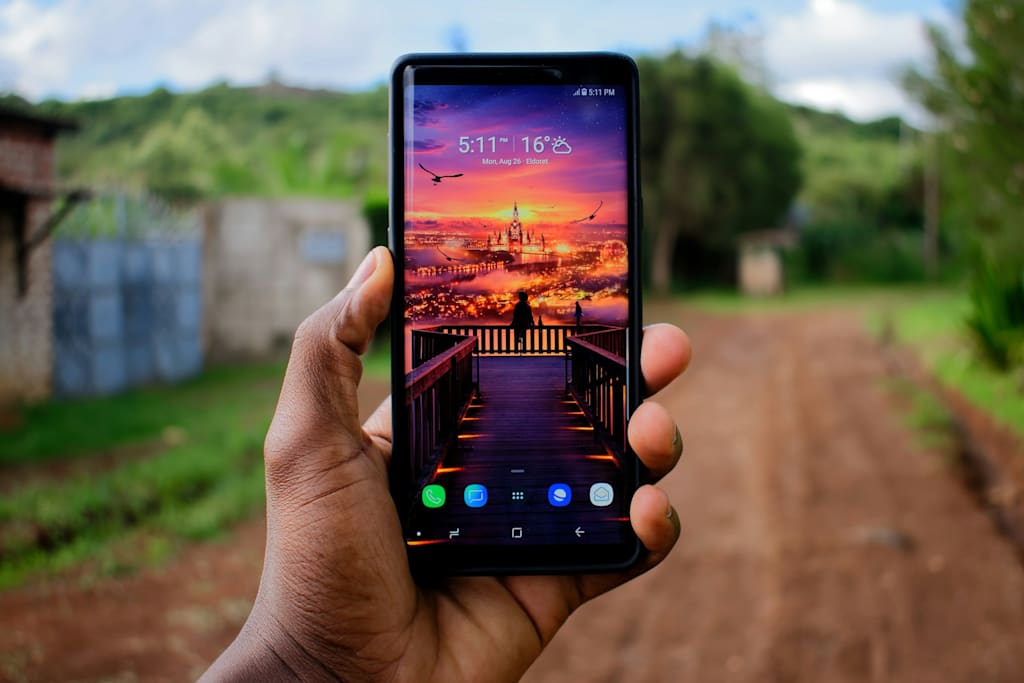
In September 2016, Samsung had a plan for saving one of its most important new phones.
The Galaxy Note7 had been on sale only a short time when reports began appearing of batteries overheating and catching fire.
Samsung investigated and said it had identified a battery-cell problem. By September 2, the company had received 35 reports globally. It stopped sales and announced that existing customers would receive new Note7 devices as replacements.
The response was costly and disruptive, but the logic was understandable.
The product itself did not have to disappear.
Replace the affected phones. Correct the battery problem. Put safer devices back into customers' hands. Continue selling the Note7.
For a company that had spent years developing a flagship phone, that looked like a way to protect both customers and the product.
Then reports began appearing about the replacements.
The solution Samsung had created to save the Note7 was no longer enough.
The replacement was supposed to end the problem
Samsung moved quickly after the first reports.
In the United States, it created an exchange program that allowed customers to replace their Note7 with a new Note7 or switch to another Samsung phone. By mid-September, replacement devices were being sent to stores as part of a formal recall conducted with the U.S. Consumer Product Safety Commission.
For customers, that offered a clear path forward.
Turn in the phone that might be unsafe.
Receive a corrected one.
For Samsung, it preserved the possibility that the Note7 could remain on the market.
That distinction mattered.
A recall does not necessarily mean the end of a product. Manufacturers recall cars, appliances, food, electronics, and many other products when a specific problem can be identified and corrected.
Samsung was trying to do exactly that.
But in early October, questions emerged about whether some replacement Note7 phones were also overheating.
On October 7, Samsung acknowledged reports involving replacement devices and said it was investigating them closely with the CPSC.
Three days later, the situation changed completely.
Samsung asked carriers and retailers around the world to stop selling and exchanging the Note7. It told customers with both original and replacement devices to power them down.
On October 11, the company announced that production had stopped.
The attempt to save the phone was over.
The second problem changed the decision
The first recall involved a defective product.
Problems with replacement devices created something more difficult.
The replacement program itself was supposed to restore confidence.
Once customers were being told that even replacement Note7 phones should be turned off, Samsung could no longer ask them to trust another version of the same solution.
The U.S. Consumer Product Safety Commission eventually expanded the recall to include all original and replacement Note7 devices sold or exchanged in the country. It said about 1.9 million phones were covered by the expanded recall.
By that point, Samsung had received 96 U.S. reports of Note7 batteries overheating, including 23 reports that arrived after the first recall. The CPSC also listed 13 reports of burns and 47 reports of property damage.
The company had already invested in development, manufacturing, marketing, distribution, exchanges, and replacement phones.
Ending production meant accepting that much of that effort would not be recovered.
Continuing would have meant something else.
More phones in customers' hands.
More uncertainty over safety.
More retailers and carriers carrying the burden of exchanges.
And more opportunities for the crisis to continue.
At some point, what Samsung had already spent was no longer the most important number.
What it might lose by continuing had become more important.
Stopping was expensive too
Abandoning the Note7 did not make the financial cost disappear.
Samsung revised its third-quarter earnings guidance after stopping sales, exchanges, and production. It cut its expected operating profit for the quarter from about 7.8 trillion won to about 5.2 trillion won.
A few days later, the company estimated that lost Note7 sales would have an additional negative effect of roughly the mid-3 trillion won range on operating profit across the fourth quarter of 2016 and the first quarter of 2017.
Those were enormous consequences.
But the financial hit did not mean Samsung should have kept selling the phone to protect what had already been invested.
That is the uncomfortable part of decisions like this.
A company can reach a point where every available option is expensive.
The choice is no longer between losing money and avoiding a loss.
It is between accepting a large loss now and risking a larger problem later.
For smaller businesses, the situation rarely involves millions of smartphones and a global safety recall.
But the underlying decision can look familiar.
A restaurant keeps an unpopular concept because the renovation was expensive.
A software company continues supporting a failing product because years of development went into it.
A manufacturer keeps repairing a troublesome model because shutting the line down feels like admitting that the investment was wasted.
A founder keeps funding a project because stopping would make earlier spending feel pointless.
The money already spent becomes emotionally difficult to separate from the decision about what should happen next.
But customers do not experience a company's sunk costs.
They experience the product that remains in front of them.
Samsung had to fix more than the phone
After ending the Note7, Samsung spent months investigating what had happened.
The company later said nearly 700 engineers worked on the investigation, testing more than 200,000 devices and 30,000 batteries. It identified separate defects affecting the batteries used in the original and replacement devices.
The company also changed its safety processes.
In January 2017, Samsung introduced an eight-point battery safety check involving durability tests, X-rays, charge-and-discharge testing, visual inspections, and other measures. It also created additional safety protocols and brought outside battery experts into an advisory group.
That response matters because abandoning a bad product is only part of the decision.
Stopping prevents the current problem from continuing.
Learning from it is what reduces the chance of repeating it.
Samsung could not recover the Note7.
It could use the failure to change how the next phones were built and tested.
That created a more useful path forward than continuing to spend energy proving that the Note7 could still be saved.
Sometimes stopping protects what comes next
Businesses are often praised for persistence.
Stay with the idea.
Fix the problem.
Keep going.
Those instincts can be valuable when the underlying product is sound and the problem can genuinely be corrected.
But persistence becomes dangerous when the goal shifts from solving the customer's problem to defending the company's previous decisions.
The Note7 began as a flagship Samsung wanted to keep on the market.
The first recall was an attempt to do that.
Once replacement phones also became part of the safety problem, the calculation changed.
Samsung could keep defending the product because so much had already gone into it.
Or it could accept that the product itself had become the risk.
On October 11, 2016, the production line stopped.
The Note7 did not survive.
Samsung did.
Sometimes that is the more important product decision.
About the Creator
Enjoyed the story? Support the Creator.
Subscribe for free to receive all their stories in your feed.
Comments
There are no comments for this story
Be the first to respond and start the conversation.