
A Clearer Way to Hear: The Rise of Smart Bluetooth Hearing Aids
Discover how personalized settings, noise reduction, and wireless connectivity can create a more comfortable listening experience for everyday life.

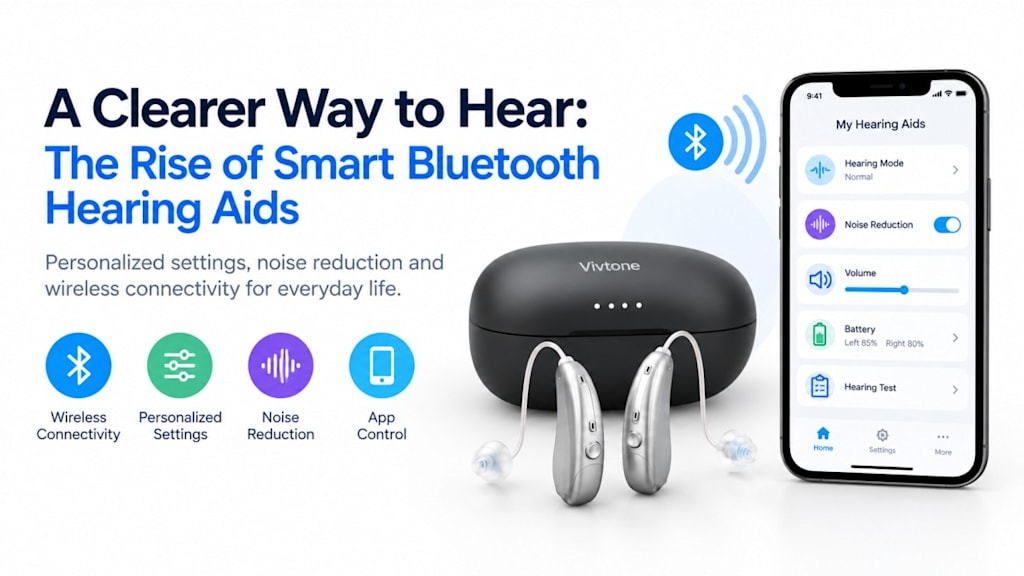
Hearing technology has changed considerably over the past few years. What was once seen as a simple device for making sounds louder has developed into something much more connected and adaptable. Modern hearing aids can work with smartphones, respond to different listening environments, and give users more control over how they hear the world around them.
For many people, the biggest benefit is not the technology itself but the difference it can make during ordinary moments. A conversation over breakfast, a phone call with a friend, or listening to music can feel much easier when hearing support works naturally with everyday life.
Changing Hearing Technology
Traditional hearing aids primarily focused on amplifying sounds. While amplification remains an important part of hearing support, modern devices can do much more. Digital processing allows them to manage different sounds and provide a more personalized listening experience.
Smart Bluetooth hearing aids are part of this shift. They combine hearing support with wireless connectivity and smartphone controls, making it possible to manage certain settings without constantly handling the device itself.
This approach is particularly useful for people who move between different environments throughout the day. The ideal listening experience in a quiet bedroom may not be the same as the one needed in a busy café or during a family gathering.
Modern hearing technology recognizes this difference and gives users more flexibility.
Smarter Everyday Listening
One of the most noticeable improvements is the ability to personalize the hearing experience. Instead of relying entirely on a fixed setting, users can often make adjustments based on their preferences and surroundings.
Some devices work with companion smartphone applications that provide access to volume controls, listening modes, battery information, and other features. Having these controls in one familiar place can make the technology easier to manage.
Personalization also matters because hearing needs are not identical from person to person. Two people with similar levels of hearing difficulty may still have different preferences when it comes to volume, speech clarity, or background sound.
A device that gives users some control over these factors can feel much more practical in everyday use.
In App Hearing Tests
Another useful development is the in app self test. Instead of making every adjustment manually, some hearing systems guide users through a simple assessment using a smartphone application.
The purpose is to help create settings that better match an individual's hearing preferences. The process may involve listening to different sounds and responding to what can or cannot be heard comfortably.
This can make personalization more accessible, especially for people who prefer using their smartphones rather than dealing with complicated physical controls.
However, an app based hearing test has limits. It should not be treated as a complete substitute for professional hearing care. Anyone experiencing sudden hearing changes, significant difficulty understanding speech, discomfort, ringing in the ears, or other concerning symptoms should seek appropriate professional advice.
For everyday personalization, though, an in app system can provide an additional layer of convenience.
Reducing Background Noise
Background noise can make conversations difficult even when someone can hear reasonably well in quiet surroundings. A restaurant is a good example. Several conversations may be happening nearby, dishes may be moving around, and music or kitchen noise can fill the room.
When all of these sounds compete for attention, understanding one person's voice can require much more concentration.
This is where OTC hearing aids with noise reduction technology becomes useful. Modern hearing aids can process incoming sounds and help reduce the impact of certain unwanted background noise.
The goal is not to remove every sound from the environment. Natural environmental awareness remains important. Instead, noise reduction is intended to make the overall listening experience more manageable.
For someone who frequently attends social events or spends time in busy environments, this can make an important difference. Being able to focus more easily on a conversation can reduce frustration and make social situations feel more comfortable.
Connecting With Your Phone
Bluetooth has also changed what people can expect from hearing aids. A compatible device can connect wirelessly with a smartphone, allowing certain types of audio to be delivered directly through the hearing aids.
Phone calls are one of the most practical uses. Rather than trying to find the perfect position for holding a phone against the ear, users with compatible equipment may be able to hear call audio through their hearing devices.
Music and podcasts can also become part of the experience. Someone can listen to audio from a smartphone without necessarily switching to another pair of headphones.
This makes hearing aids more integrated into daily technology. Instead of being something used only during conversations, they can become part of a person's normal digital routine.
Choosing the Right Features
With so many options available, it can be tempting to choose a hearing aid simply because it has the longest feature list. That is not always the best approach.
Comfort should be near the top of the list. A hearing aid needs to fit comfortably if it is going to be worn regularly. Battery performance is another important consideration, particularly for users who expect to wear their devices throughout the day.
Bluetooth compatibility is worth checking if phone calls and music are important parts of your routine. The quality and usability of the accompanying smartphone application can matter too.
Noise reduction, personalization, and simple controls may be more valuable than unnecessary features that you are unlikely to use.
It is also important to understand what level and type of hearing difficulty the device is intended to support. Product specifications should be reviewed carefully before making a purchase.
The Appeal of OTC Hearing Aids
Over the counter hearing aids have introduced another option for adults seeking hearing support. They are designed to make certain hearing assistance products more accessible without requiring the traditional purchasing process associated with prescription hearing aids.
For eligible users, the ability to buy OTC hearing aids online can also make comparison shopping more convenient. People can review specifications, examine available features, compare prices, and learn about warranties from home.
However, online convenience should not replace careful research. Before purchasing, look at the intended hearing range, adjustment options, battery system, app compatibility, return policy, warranty, and available customer support.
A product may look attractive because of its price or feature list, but those details only matter if the device is comfortable and appropriate for your needs.
Everyday Benefits
The real value of modern hearing aids can be seen in ordinary situations.
Imagine being able to follow a conversation at the dinner table without repeatedly asking someone to repeat themselves. Think about answering a phone call without struggling to hear every word. For music lovers, being able to enjoy familiar songs through connected hearing devices can bring another dimension to everyday listening.
These moments may seem small, but they can have a meaningful effect on confidence and communication.
Good hearing technology should fit into life rather than make life revolve around the technology. Features such as wireless connectivity, noise reduction, and personalized controls are valuable because they can make hearing support more convenient without adding unnecessary complexity.
A More Connected Future
Hearing aids are becoming increasingly connected to the technology people already use. Smartphones, wireless audio, rechargeable batteries, and intelligent sound processing are gradually becoming part of the modern hearing experience.
That does not mean every person needs every available feature. The best choice depends on individual hearing needs, lifestyle, comfort, budget, and personal preferences.
For someone who wants greater control over their listening experience, a Bluetooth hearing aid with an in app self test and noise reduction can provide a useful combination of modern features.
The most important consideration is ultimately simple: choose hearing technology that helps you stay connected to the sounds and people that matter most. When the device is comfortable, easy to manage, and suited to everyday needs, modern hearing support can become a natural part of daily life rather than something that constantly demands attention.
About the Creator
MUHAMMAD SHAFIE
Muhammad Shafie is a writer and blogger passionate about digital culture, tech, and storytelling. Through insightful articles and reflections, they explore the fusion of innovation and creativity in today’s ever-changing world.
Enjoyed the story? Support the Creator.
Subscribe for free to receive all their stories in your feed.
Comments
There are no comments for this story
Be the first to respond and start the conversation.