
A Beginner's Guide to Air Compressors
An air compressor is a fundamental tool in many industries, and understanding its basics can be crucial when considering an air compressor rental.
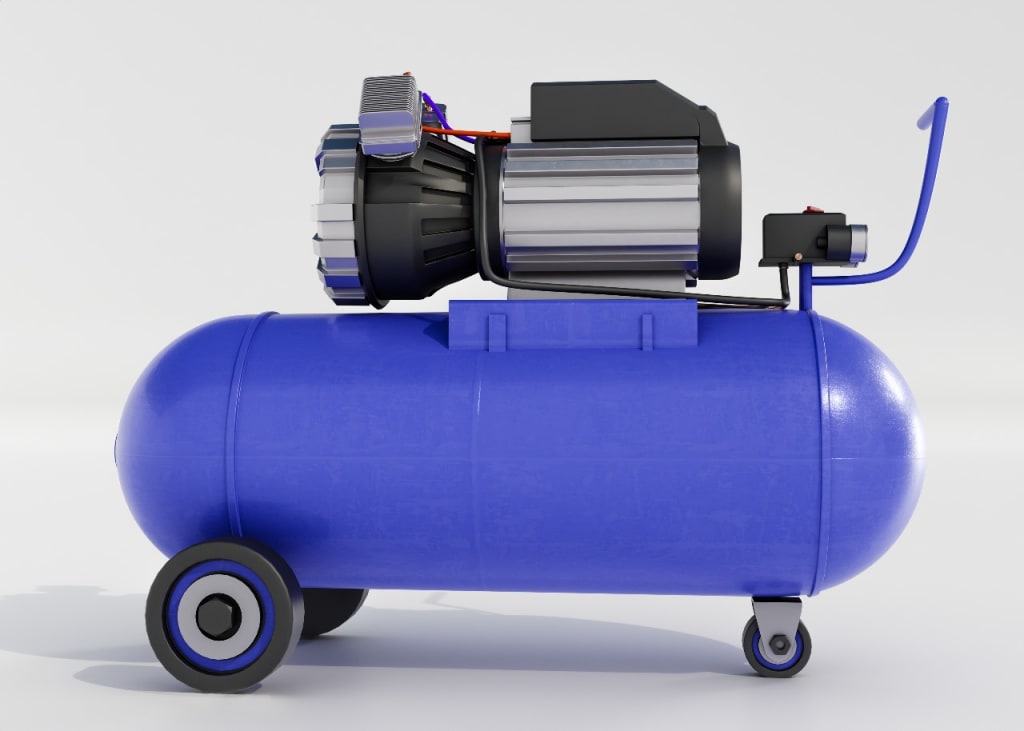
Understanding the complex world of tools and machinery can often seem daunting. However, gaining a basic understanding of these devices can greatly benefit you, especially when it comes to something as versatile and widely used as an air compressor.
Understanding the Concept of an Air Compressor
At its core, an air compressor is a mechanical unit that elevates the pressure of air by shrinking its volume. The operation is relatively straightforward. The compressor draws in significant amounts of air and confines it to a limited space, thereby compressing the air and amplifying its pressure. This entire process revolves around reducing the volume of air to increase its pressure - a fundamental law of gases known as Boyle's law. Once compressed, the air is funneled into a storage tank, essentially creating a reserve of high-pressure air. This stored air is subsequently tapped for various tasks, such as powering pneumatic tools or inflating objects. It's this ability to store potential energy as compressed air and release it on demand that underlines the usefulness and adaptability of air compressors in different applications.
How Does an Air Compressor Work?
The functionality of an air compressor hinges on the principle of Boyle's law, an essential law in the realm of gases. This law indicates that when the volume of a gas decreases, its pressure elevates proportionally. In practical terms, the process of compression enhances the pressure of the air.
The heart of an air compressor is a piston which operates in a cyclic up and down motion within a cylinder. As the piston descends, it creates a vacuum that draws in air from the surrounding environment. Conversely, when the piston ascends, the captured air within the cylinder is subjected to compression. The result is a volume of air with significantly increased pressure.
Following compression, the air is forced out of the cylinder and into a storage tank. This occurs via a one-way valve that ensures the high-pressure air can enter the tank but cannot escape back into the cylinder. The tank serves as a reservoir, holding the pressurized air until it is required for use. This operating mechanism forms the basis of an air compressor's function, providing a continuous supply of pressurized air for various applications.
Different Types of Air Compressors
Air compressors are categorized into three main types: reciprocating, rotary screw, and centrifugal. Reciprocating compressors are the most commonly seen type, working through the action of pistons powered by a crankshaft, which subsequently delivers high-pressure air. On the other hand, rotary screw compressors function differently. They consist of two intermeshed rotating helical screws that work together to compress the air into a reduced volume. Centrifugal compressors operate on another principle altogether, using an impeller to speed up and then slow down the air. The resulting change in velocity effectively amplifies the air pressure. Each of these types has its unique pros and cons, and the choice between them often depends on the specific requirements of the task at hand. Therefore, when considering an air compressor rental, understanding these differences can help you select the most appropriate unit for your needs.
Uses and Benefits of Air Compressors
Air compressors are a versatile tool utilized in numerous sectors. For example, in the construction and automotive realms, air compressors power pneumatic equipment such as jackhammers and wrenches, as well as paint sprayers. Within the manufacturing sector, air compressors are integral in product assembly. The healthcare industry also benefits from their use, as they supply sterilized, compressed air to life-saving ventilators. Even at home, they can be used for various tasks, such as inflating vehicle tires or pool inflatables. Air compressors offer numerous advantages, including enhanced productivity, flexibility, and cost-effectiveness. They can also be customized to cater to specific tasks, providing high-pressure air according to the requirements of the job at hand. In short, air compressors' wide range of applications coupled with their adaptability and cost-efficiency make them an invaluable tool in many industries and applications.
Guide to Air Compressor Rental
Opting to rent an air compressor can be an economical choice, especially for infrequent use or single projects. It's key, however, to thoroughly understand the nature of your project before deciding on the type and size of the compressor needed. Take into account important specifications such as the compressor's CFM (Cubic Feet per Minute) rating and PSI (Pounds per Square Inch) rating, as these will dictate the capabilities of the unit. The choice of power source is a crucial factor to take into account. Will you have access to a reliable electrical source, or will a gasoline-powered compressor be more suitable for your project? Additionally, it's vital to ascertain that the rental company offers a comprehensive maintenance service. This should include regular inspections and any necessary repairs or replacements during your rental period. Taking these considerations into account can help ensure your air compressor rental meets your project needs while also providing cost-effective value.
Essential Tips for Air Compressor Maintenance
To ensure an air compressor operates at its full potential and longevity, it is essential to adhere to regular maintenance routines. Begin by keeping a close eye on the air filter, as this plays a crucial role in preventing contaminants from damaging the compressor. Replacing the air filter periodically guarantees clean air intake, enhancing the compressor's performance and lifespan. Equally important is the maintenance of the compressor's mechanical parts. Lubricating the moving components mitigates the wear and tear caused by friction, thus prolonging the compressor's functionality. Also, keep an eye out for any dust or grime that could compromise the compressor's efficiency and clean the machine regularly.
Pay particular attention to the hoses, which are crucial conduits for the high-pressure air. Any signs of degradation could lead to leaks, undermining the compressor's performance. Replace these hoses immediately when any signs of wear become apparent.
In the case of air compressor rental, the rental company should ideally provide a maintenance schedule. It's wise to ensure they also offer robust support services, including routine inspections and the provision of any necessary repairs or replacement parts throughout the rental period. This ensures that your rented air compressor remains in prime condition, ready to perform optimally whenever required.
Rely on National Dispatching for High-Quality Air Compressor Rentals
When it comes to renting air compressors, National Dispatching has got you covered. We recognize that each project comes with unique requirements, and our state-of-the-art equipment is crafted to meet them. We provide a range of well-maintained air compressors, pneumatic tools, and other essential construction equipment available for rent at competitive rates with flexible terms.
About the Creator
Enjoyed the story? Support the Creator.
Subscribe for free to receive all their stories in your feed.
Comments