
7 Effective Fitness Habits That Deliver Long-Term Results Naturally
Discover 7 effective fitness habits that support long-term results, improve strength, boost energy, and help you build a sustainable healthy lifestyle.

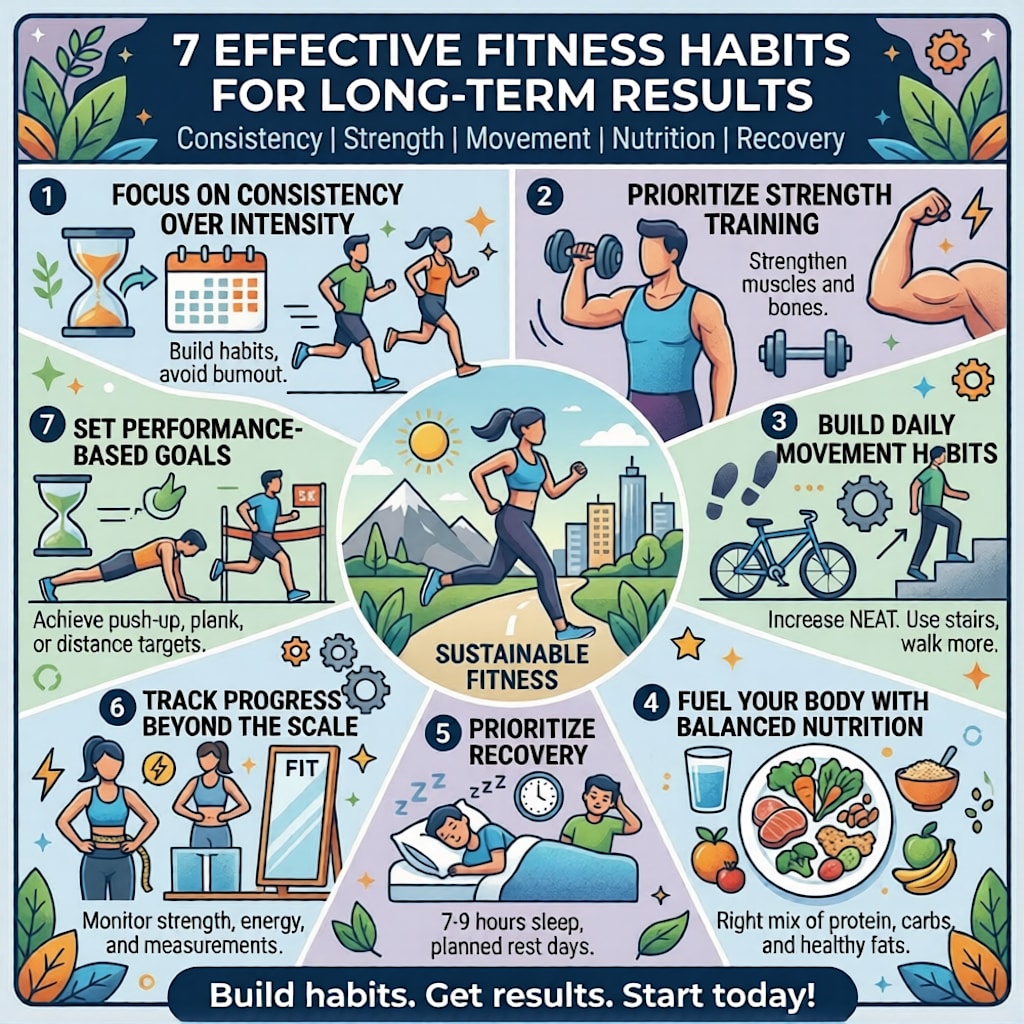
7 Effective Fitness Habits That Deliver Long-Term Results
When people think about fitness, they often imagine strict workout plans, exhausting gym sessions, and dramatic body transformations. But real, sustainable fitness is built on small habits practiced consistently over time, not short bursts of extreme effort.
Whether your goal is weight loss, muscle gain, improved endurance, or better overall health, long-term progress comes from developing smart fitness habits that support your lifestyle.
Here are seven effective fitness habits that can help you achieve lasting results without burnout.
1. Focus on Consistency Over Intensity
One of the biggest mistakes beginners make is doing too much too soon. While motivation can spark a fitness journey, consistency is what drives real transformation.
Working out moderately four to five times per week is more effective than pushing yourself through intense workouts for a few days and then quitting from exhaustion.
Why It Works:
- Builds sustainable routines
- Reduces injury risk
- Encourages long-term adherence
- Improves physical adaptation over time
A manageable routine that fits your schedule will always outperform an unrealistic “perfect” plan.
2. Prioritize Strength Training
Many people focus only on cardio for fat loss, but strength training is essential for improving body composition and overall fitness.
Benefits of strength training include:
- Increased muscle mass
- Higher resting metabolism
- Better bone density
- Improved posture
- Enhanced athletic performance
You do not need heavy weights to begin. Bodyweight exercises such as squats, push-ups, and lunges can be highly effective.
3. Include Daily Movement Beyond Workouts
A 45-minute gym session is valuable, but your daily movement outside the gym matters just as much.
This is often referred to as NEAT (Non-Exercise Activity Thermogenesis) - the calories burned through everyday activity like walking, standing, cleaning, or taking stairs.
Ways to increase daily movement:
- Walk after meals
- Use stairs instead of elevators
- Stand and stretch every hour
- Park farther away from entrances
These small habits can significantly support fat loss and cardiovascular health.
4. Fuel Your Body With Balanced Nutrition
Exercise alone cannot compensate for poor nutrition. A balanced diet supports recovery, performance, and body composition.
Key nutritional principles include:
- Prioritize lean protein for muscle repair
- Eat complex carbohydrates for energy
- Include healthy fats for hormone support
- Consume fruits and vegetables for micronutrients
Avoid viewing food as “good” or “bad.” Instead, focus on building meals around nutrient-dense whole foods most of the time.
5. Make Recovery a Priority
Progress happens during recovery - not just during workouts.
Without proper recovery, your body cannot rebuild muscle, regulate hormones, or adapt to training stress effectively.
Important recovery habits include:
- Sleeping 7–9 hours per night
- Staying hydrated
- Taking rest days
- Stretching or mobility work
- Managing stress levels
Overtraining can slow progress and increase injury risk, so recovery should be treated as part of the fitness plan.
6. Track Progress Beyond the Scale
Body weight alone is not an accurate measure of fitness progress.
The scale can fluctuate due to:
- Water retention
- Hormonal changes
- Muscle gain
- Digestion
Better progress indicators include:
- Strength improvements
- Body measurements
- Progress photos
- Energy levels
- Endurance gains
- How clothes fit
Tracking multiple forms of progress provides a more realistic view of your transformation.
7. Set Performance-Based Goals
Many people focus only on appearance goals, which can lead to frustration and inconsistent motivation.
Instead, set goals based on performance, such as:
- Doing 10 push-ups
- Running 5 kilometers
- Squatting your bodyweight
- Holding a plank for 2 minutes
Performance goals create measurable milestones and often improve body composition naturally as a byproduct.
Common Fitness Mistakes to Avoid
To maximize results, avoid these common pitfalls:
Skipping Warm-Ups
Warm-ups prepare your muscles and joints for exercise while reducing injury risk.
Program Hopping
Switching workouts every few days prevents progressive overload and consistency.
Underestimating Recovery
More is not always better. Rest supports growth.
Unrealistic Expectations
Meaningful fitness progress takes time and patience.
Final Thoughts
Fitness is not about perfection, it is about building habits you can maintain for life.
By focusing on consistency, strength training, movement, nutrition, recovery, & performance - based goals, you create a sustainable approach that supports long-term health and physical progress.
Remember - the best fitness routine is the one you can stick with consistently.
Start small, stay patient, and trust the process. Long-term results come from repeated daily effort - not overnight transformation.
About the Creator
Donna Steven
Hi, I’m Donna Steven. I write for 'Ant and Bees' where I share simple and practical tips related to fitness, weight loss, and a healthy lifestyle. My goal is to help people build habits and achieve real results naturally.
Enjoyed the story? Support the Creator.
Subscribe for free to receive all their stories in your feed.
Comments
There are no comments for this story
Be the first to respond and start the conversation.