
7 Different Types of Electrical Wire and Cable
A Comprehensive Guide to the Various Types of Electrical Wires and Cables.

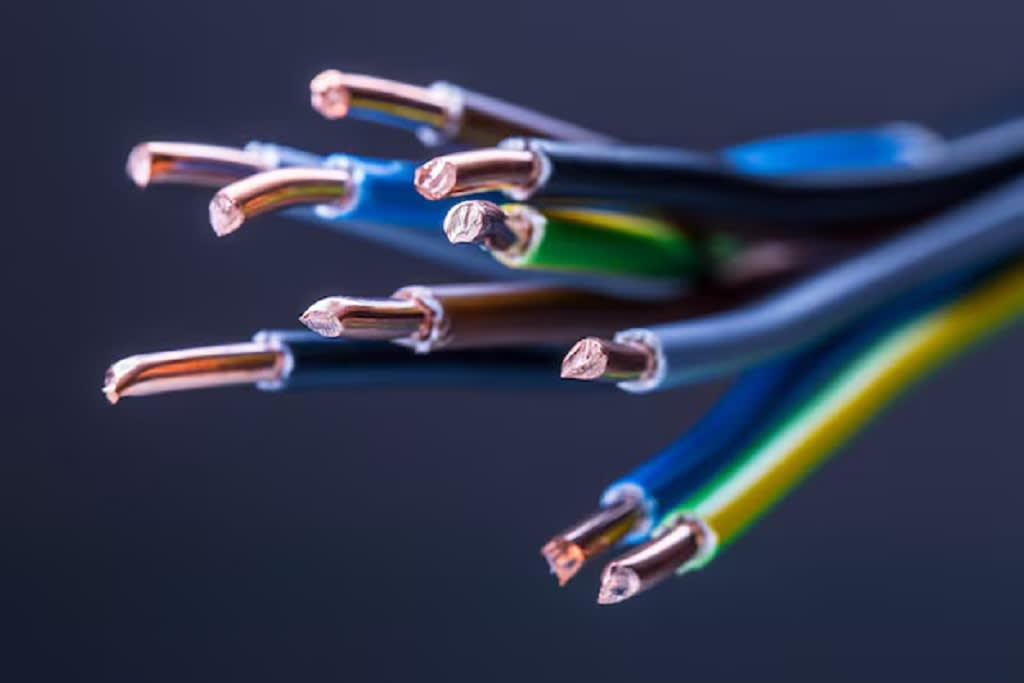
Cabling and circuitry carry out a variety of incredible techniques in industrial settings up. From powering electric motors to regulating instrumentation to connecting with other machines, they're the secret to success in several projects.
Due to the fact that commercial applications have so many one-of-a-kind considerations, the cable vendor typically has to fix the buyer on the best kind for them. Also the project engineer sometimes requires a nudge in the ideal direction if they're not a circuitry whiz. Wires & cables for electronics play a critical function in guaranteeing trusted connectivity and efficiency across different commercial and digital applications, aiding engineers select one of the most ideal electrical wiring remedies.
To spec the right kind of electrical wire and cable for your commercial project, learn the seven essential classifications you may encounter.
7 Types of Electrical Wires and Cables
There are virtually more ways to categorize cables and wires than you can count. Allow's stick with these common terms, as they might most affect the end result of your project:
- Single-conductor
- Multiconductor
- Twisted pair
- Ethernet
- Coaxial
- Fiber-optic
- Ribbon
Single-Conductor Cables
A single-conductor (or single-core) cable is simply that an adaptable wire with one steel conductor in the center and insulation surrounding it.
The name, nonetheless, is kind of a technicality. Yes, single-conductor cables can exist as a lone wire for basing or the favorable leg of a low-voltage system. Nevertheless, it prevails to pack several of them into a more complex cord harness. Each wire within the assembly may bring a special electrical signal.
Utilizing single conductor cables decreases the thickness of the setting up. The installer can fan out bundles, making directing easier in tight spaces. The absence of an outer jacketing layer further increases their adaptability due to the fact that they can bend at tighter distances.
That slimmer design comes at a performance cost. Single-conductor industrial cables have actually limited abrasion resistance and high susceptibility to electrical noise (unless you add securing). While single-conductor cables function well in prototyping and growth, a multiconductor cable is the more secure choice in atmospheres with mechanical threats and prospective cross talk.
UL (Underwriters Laboratories) prices a big variety of cables for commercial usage. Popular UL-approved single-conductor cables consist of:
- UL 1061
- UL 1569
- UL 1015
All three are functional in temperature levels up to 105 °C at voltages of 300V+.
Multiconductor Cables
A multiconductor (multicore) cable is a single item that incorporates greater than one wire anywhere from two to 60. The maker spins, wraps, or otherwise binds the strands with each other.
Compared to their single-conductor relatives, multiconductor cables have numerous advantages for commercial users:
- Greater mechanical toughness
- Easier to bend
- Put together cabling is neater & much more space-efficient
One example of their benefit is that a number of "legs" can be organized into a main "trunk." As an example, an appliance cable might pack 2 major power wires and two low-voltage wires into a solitary, UL 2517-friendly package.
Customizability is nitty-gritty for multiconductors - you can tweak the precise kind and positioning of shielding to please design needs. The scale and cable lay are also configurable for the variety of circuits you require. Because the cable consists of multiple strands, there's a limit to the density of each cable. Aerospace wires & cables are especially engineered to endure extreme ecological conditions, using high performance, longevity, and integrity in air travel, spacecraft, and protection applications.
Popular UL-listed multiconductor cables consist of:
- UL 2464
- UL 2517
- UL 2725
Twisted Pair Cables
Twisted pair cabling is a kind of cable package that carries out a special feat: It makes electromagnetic interference (EMI) disappear. The mastermind behind twisted pair cables is none apart from Alexander Graham Bell.
EMI is just one of the largest challenges to cord performance, often stemming from cross talk between neighboring components or radiation from unshielded cables. Twisted pair cables cancel out these outside resources.
Typical applications include:
- Telecommunications
- Sound engineering
- Theaters
- Data centers
Commercial-grade twisted pair cables been available in solid or stranded construction. It's also feasible to shield the cord for extra sound protection. In custom multiconductor cables, you can personalize the gauge and shielding for every twisted pair in the setting up.
Ethernet Cables
You might understand this kind as feline, classification, network, or LAN cabling.
Industrial pet cat cables are just like commercial-grade versions in terms of information price. Where industrial Ethernet cables differ from business and domestic options is the inclusion of expanded temperature buttons and rugged ports for durable tasks.
Applications for Ethernet cables consist of:
- Computers
- Network devices (modems, routers, services, & buttons)
- Automated machinery
They can be strong or stranded building and construction. Stranded is usually the option when you plan to reveal the wire to regular flexing and turning (i.e. a robotic arm on a production line).
Coaxial Cables
Coaxial cables obtain their name from their physical style: a signal-carrying channel bordered by a concentric network along the very same axis.
These cables are great in industrial setups for high-frequency applications. They offer excellent shielding and signal stability for transmitting:
- Data
- Video
- Sound
Coaxial cables can low-loss transmission of electrical signals. This makes them sensible options for:.
- Cable TV
- Broadband net
- Radio transmitters & receivers
The construction of a coaxial cable starts with a familiar format: The innermost channel is commonly a copper wire, surrounded by insulation. The outer channel functions as a ground, normally copper mesh. A second insulation layer borders the external and internal networks.
Shields are generally copper, however you can include silver plating for added conductivity or button to aluminum foil to save cash in low-risk applications. The conductor is typically strong copper, however you can additionally try stranded copper (for additional bend resistance) or copper-plated steel (for even more strength). Coaxial cable assemblies are developed to boost signal transmission performance, providing exceptional protecting and longevity for applications in telecommunications, broadcasting, and high-frequency electronic systems.
Common Types And Uses Of Coaxial Cable Consist Of:
- DS3 - Telecom & networking applications, offering high-speed information transmission over cross countries.
- DS4/NA - Long-distance fiber carrying of broadcast radio & television, in addition to central offices.
- RG11 - For special and long-distance signal transmission in television & camera applications. Poor versatility for tight-fit applications.
- RG59 - Heritage option for television, video, & other A/V technology requiring a 75-ohm cable. Helpful for short- and medium-length links.
- RG6 - An evolution of the RG59, it has a thicker conductor and frequency transmission capacity. Frequently sold with F-pin adapters.
You can additionally boost the number of conductors to change the capability.
Triaxial cable have a third conductor and an added shield for defense. Quadraxial cables include 2 cable on the same axis and 2 turned with each other, supplying sound suppression in applications below 50 MHz. Finally, twinaxial cables resemble coaxial cables, however feature 2 conductors twisted with each other as a low-priced service for short-range, high-speed differential signaling.
Fiber-Optic Cables
Fiber-optic cables make use of light signals to transmit data over long distances at ultra-high speeds. Nearly universally, they offer higher working temperature levels than various other cable kinds.
Fiber-optic options are optimal for industrial applications that call for high transmission capacity and immunity to electro-magnetic disturbance. Today's designers are figuring out more and more ways to utilize them:
- Military
- Datacom
- Transportation
- Oil, gas, & mining
Fiber-optics are gaining popularity for factors go beyond speed and distance:
- Low weight
- Versatility
- Can print & precut them for formats with multiple breakout factors
Ribbon Cables
A ribbon (also known as flat or multiplanar) wire is a series of single-conductor wires with high fiber thickness. They're attached side-by-side, giving the illusion of a ribbon. However, it has yet an additional name zip-wire since it's feasible to separate the conductors from the ribbon. Unlike various other types of electrical cable, the wires do not go inside a single jacket; they rather receive their very own insulation.
It could sound like hocus-pocus, but the special layout of ribbon cables is useful in several means:.
- Conserves space
- Less time to preparation & install
- Signal integrity
The organized format simplifies cable management, reducing the threat of tangling and misidentification. Their noise-resistance top qualities make them ideal for sending sensitive signals over fars away without endangering data precision. High temperature wires are developed to withstand extreme warmth conditions, guaranteeing trustworthy performance and security popular industrial, aerospace, and vehicle applications.
Like with any wire kind, there are drawbacks to ribbon cables:
- Only bends along its longitudinal axis
- Jacketing can be weak
From hefty devices to clinical electronic devices, multiconductor cables are often the starting factor for commercial builds. But there's more we really did not also have area to cover - armored wires, thermocouple cables, and much more. PTFE sleeves give excellent insulation, warmth resistance, and chemical security, making them a necessary selection for securing wires in high-performance industrial and electronic applications.
About the Creator
FLU-TEF WIRES & CABLES PVT. LTD.
FLU-TEF WIRES & CABLES PVT. LTD. is a leading manufacturer of high voltage wires and high temperature wires in Ahmedabad, India. We provide a wide range of high voltage wires and high temperature wires at the best price.
Enjoyed the story? Support the Creator.
Subscribe for free to receive all their stories in your feed.
Comments