
6 Ways Health Caregiving Is Quietly Transforming Lives
Inside the rise of the Health Caregiving Market and the future of human-centered care
### The Moment Care Becomes Personal
It often begins with something small.
A missed step. A forgotten name. A quiet hesitation before standing up.
Moments that seem insignificant at first—but slowly begin to change everything.
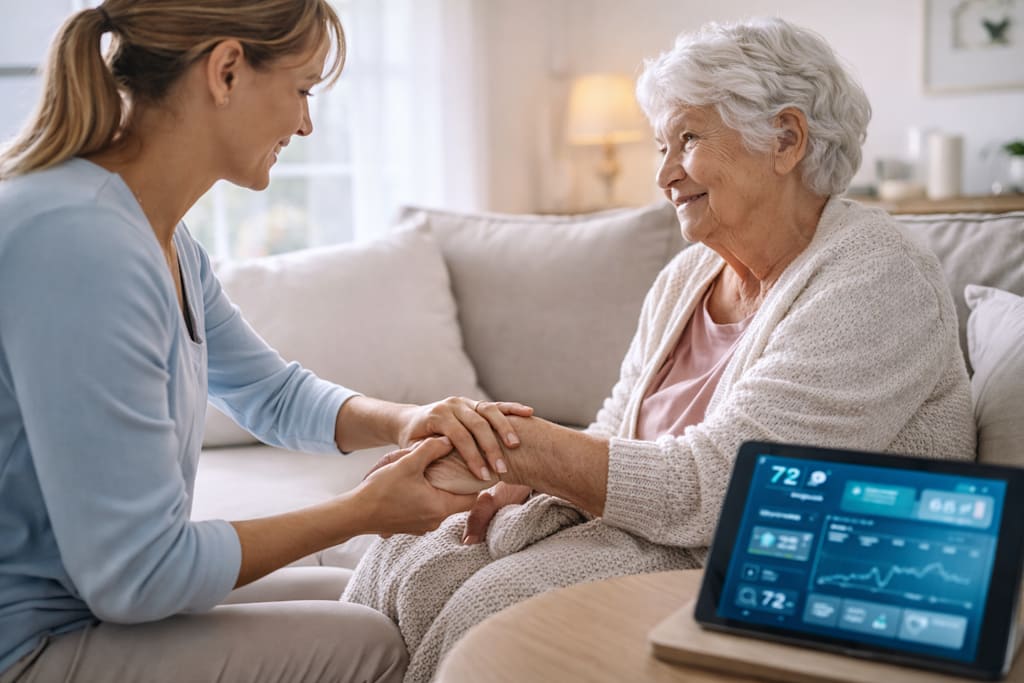
Across homes worldwide, families are stepping into roles they never formally trained for. They become caregivers—not by profession, but by necessity. And in those moments, care becomes deeply personal.
But today, caregiving is no longer just a human effort. It’s being reshaped by technology, awareness, and a rapidly evolving support system.
---
### The Growing Need for Care
As populations age and chronic conditions rise, caregiving is becoming one of the most critical aspects of healthcare.
People are increasingly searching:
* What is caregiving in healthcare?
* How can technology support caregivers?
* Challenges faced by family caregivers
* Future of home-based care solutions
These AI-driven queries reflect a global shift—care is moving beyond hospitals and into homes.
According to Mordor Intelligence, the health caregiving market size in 2026 is estimated at USD 256.3 billion, growing from 2025 value of USD 228.91 billion with 2031 projections showing USD 451.27 billion, growing at 11.97% CAGR over 2026-2031, driven by the rising elderly population, increasing prevalence of chronic diseases, and growing demand for home-based healthcare services.
This growth represents more than numbers—it reflects a societal change in how we approach care.
---
### When Caregiving Meets Technology
Traditionally, caregiving relied heavily on physical presence and manual effort. While these remain essential, technology is now enhancing how care is delivered.
Modern caregiving solutions include:
* **Remote health monitoring devices**
* **Medication management apps**
* **AI-powered virtual assistants**
* **Telehealth platforms for consultations**
These tools are not replacing caregivers—they are supporting them.
They provide:
* Real-time health insights
* Timely reminders and alerts
* Better coordination with healthcare providers
In a role that can often feel overwhelming, this support makes a meaningful difference.
---
### The Emotional Reality Behind the Role
Caregiving is not just a task—it’s an emotional journey.
It involves:
* Balancing personal responsibilities with care duties
* Managing stress and uncertainty
* Navigating complex healthcare decisions
For many caregivers, the challenge is not just physical—it’s mental and emotional.
Technology, when used effectively, can help ease this burden.
By providing clarity, structure, and support, it allows caregivers to focus on what truly matters: connection.
---
### Why the Market Is Growing Rapidly
The expansion of the Health Caregiving Market is driven by several key factors:
* **Aging global population** requiring long-term care
* **Increase in chronic illnesses** such as diabetes and heart disease
* **Shift toward home-based healthcare models**
* **Advancements in digital health technologies**
Healthcare systems are evolving, and caregiving is becoming a central component of that evolution.
It’s no longer just about treatment—it’s about ongoing support.
---
### Real-Life Impact Across Communities
The impact of caregiving solutions is being felt across diverse communities:
**Elderly Individuals**
Gaining independence while receiving necessary support.
**Families**
Finding balance between caregiving and daily life.
**Healthcare Providers**
Improving patient outcomes through continuous monitoring.
**Rural Areas**
Accessing care through digital platforms where physical services are limited.
These changes are not just improving efficiency—they are improving lives.
---
### Challenges That Still Exist
Despite its growth, the Health Caregiving Market faces important challenges:
* **Limited access to technology** in certain regions
* **High costs of advanced caregiving solutions**
* **Lack of training for caregivers**
* **Emotional burnout and stress**
These challenges highlight the need for a holistic approach—one that combines technology, education, and community support.
---
### The Future of Caregiving
The future of caregiving is both promising and complex.
Emerging trends include:
* **AI-driven predictive care** to anticipate health issues
* **Wearable devices** for continuous monitoring
* **Smart home integration** for safer living environments
* **Community-based support networks**
These innovations are not just enhancing care—they are redefining it.
The goal is clear: make caregiving more sustainable, effective, and humane.
---
### A Shift Toward Human-Centered Care
At its core, the Health Caregiving Market reflects a shift toward human-centered healthcare.
It recognizes that:
* Care doesn’t end after treatment
* Support is just as important as intervention
* Emotional well-being is part of overall health
This perspective is reshaping how we think about healthcare systems.
---
### The Quiet Strength of Caregivers
Caregivers often work behind the scenes.
They don’t seek recognition. They don’t expect applause.
But their impact is profound.
They provide comfort, stability, and support during some of life’s most challenging moments.
And now, with the help of technology, they are becoming even more empowered.
---
### Why This Matters More Than Ever
As the demand for caregiving continues to rise, the need for effective solutions becomes increasingly urgent.
The Health Caregiving Market represents:
* A response to changing demographics
* A commitment to better quality of life
* A recognition of caregiving as a critical component of healthcare
It’s not just about meeting demand—it’s about meeting it with compassion and innovation.
---
### The Bigger Picture: Care Beyond Clinics
Healthcare is no longer confined to hospitals and clinics.
It is happening in living rooms, kitchens, and bedrooms.
It is happening through conversations, connections, and continuous support.
Caregiving is at the heart of this transformation.
---
### Your Turn to Reflect
If caregiving is becoming one of the most important aspects of healthcare, how can society better support those who give so much of themselves every day?
And what role should technology play in balancing efficiency with empathy?
About the Creator
Enjoyed the story? Support the Creator.
Subscribe for free to receive all their stories in your feed.
Comments
There are no comments for this story
Be the first to respond and start the conversation.