
5 Essential Foods to Avoid After a Root Canal for Faster Healing
Discover the essential foods to avoid after a root canal to speed up healing and prevent discomfort.

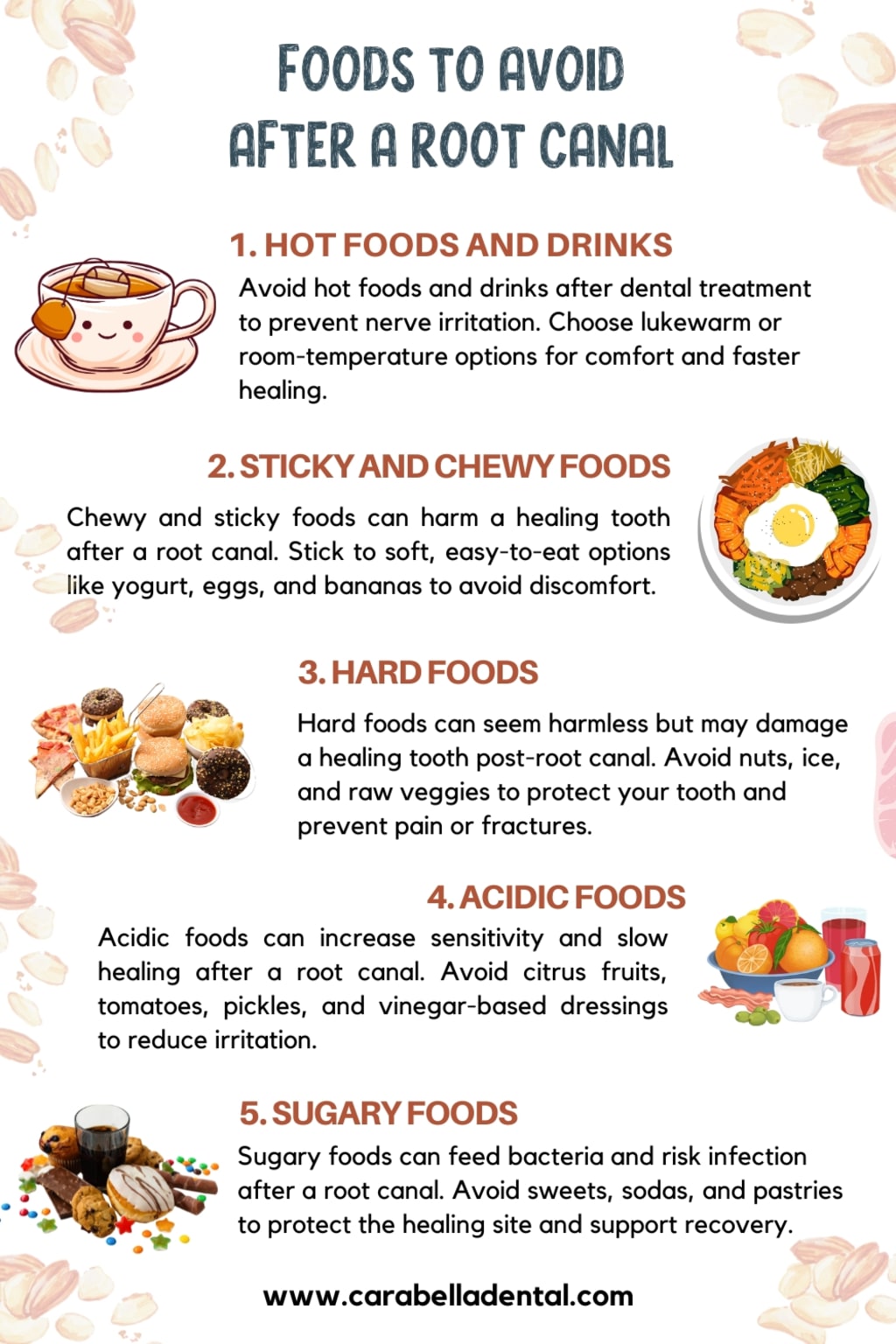
A root canal is a common dental procedure that helps save a tooth from infection or decay. While it can relieve pain and restore function, proper care during the recovery period is essential for a smooth healing process. One important aspect of recovery is your diet. Certain foods can cause discomfort, slow down healing, or even harm the treated area. In this post, we’ll discuss the foods to avoid after a root canal to help ensure a quicker, more comfortable recovery.
Why Diet Matters After a Root Canal
After a root canal, your treated tooth may still be sensitive for a while, and the surrounding gums could be tender. The primary objective is to protect the tooth, reduce discomfort, and prevent further complications. Eating the wrong foods can irritate the tooth, damage temporary fillings, or introduce bacteria that could lead to infection. By avoiding certain foods, you can promote healing and help the tooth restore its full function more quickly.
1. Hot Foods and Drinks
Hot foods and beverages, like coffee, tea, or hot soups, should be avoided immediately after a root canal. The nerves in the treated tooth are often still healing, and hot items can irritate them, causing unnecessary pain and discomfort. In addition, heat can affect the temporary fillings or crowns placed on the tooth, potentially compromising the restoration. Stick to lukewarm or room-temperature drinks and meals until your tooth fully heals.
2. Sticky and Chewy Foods
Sticky and chewy foods, such as chewing gum, caramel, taffy, or dried fruits, are another type of food to avoid. These foods can get stuck in the treated area, which may cause further irritation or dislodge temporary fillings. Sticky textures also require significant pressure to chew, which could cause pain or even crack the treated tooth if it’s still sensitive. Instead, opt for softer, more manageable foods, such as yogurt, scrambled eggs, or mashed potatoes, that don’t put unnecessary strain on your healing tooth.
3. Hard Foods
Hard foods, such as nuts, raw vegetables (like carrots or celery), hard candies, and ice cubes, should be avoided after a root canal. Chewing on hard items can cause significant stress on a recently treated tooth. The pressure might crack the tooth, break the filling, or lead to further complications. These foods can also aggravate any existing tenderness or sensitivity. Stick to soft, well-cooked vegetables, fruits that don’t require heavy chewing, or soft grains, such as mashed sweet potatoes, ripe bananas, or oatmeal.
4. Acidic Foods
Acidic foods and beverages, including citrus fruits like oranges, lemons, or grapefruits, tomatoes, pickles, and vinegar-based dressings, can irritate the treated area and slow down healing. The acidity can heighten sensitivity in the tooth and cause a burning sensation, making it more uncomfortable. Acidic foods can also weaken the enamel and interfere with the healing process, potentially leaving the treated tooth more vulnerable. Instead, try milder, non-acidic fruits such as bananas, pears, or apples. Oil-based dressings or yogurt-based sauces are also good alternatives.
5. Sugary Foods and Drinks
Sugary foods and drinks, including candies, cakes, sodas, sweetened teas, and juices, can increase the risk of developing an infection or cavity in the treated tooth. Sugar feeds bacteria in the mouth, encouraging the growth of harmful microorganisms that can contribute to plaque buildup and infection. Sugary snacks can also irritate the surrounding tissues, making the area more sensitive. It’s important to limit or avoid sugar consumption during the recovery period. Opt for unsweetened drinks like herbal tea or infused water, and choose fresh fruits or unsweetened yogurt as snacks.
Choosing the right foods after a root canal is key to ensuring a smooth and fast recovery. By avoiding hot, sticky, hard, acidic, and sugary foods, you reduce the risk of irritation, infection, and discomfort. Eating soft, easy-to-chew foods will help protect the treated tooth and promote healing. Always follow your dentist’s aftercare instructions and take the time to allow your tooth to fully recover.
By making mindful food choices and taking proper care of your teeth, you’ll be back to eating normally and pain-free in no time.
About the Creator
Dr. Bella Nguyen
Dr. Bella strives to make dentistry approachable and enjoyable. At Carabella Dental in Alexandria, she offers personalized care and supports Liberty's Promise to help young immigrants achieve their dreams.
Enjoyed the story? Support the Creator.
Subscribe for free to receive all their stories in your feed.
Comments
There are no comments for this story
Be the first to respond and start the conversation.