
3D Printing Reinvented? The Rise of Liquid Printing
How a niche innovation is reshaping speed, scale, and imagination in manufacturing
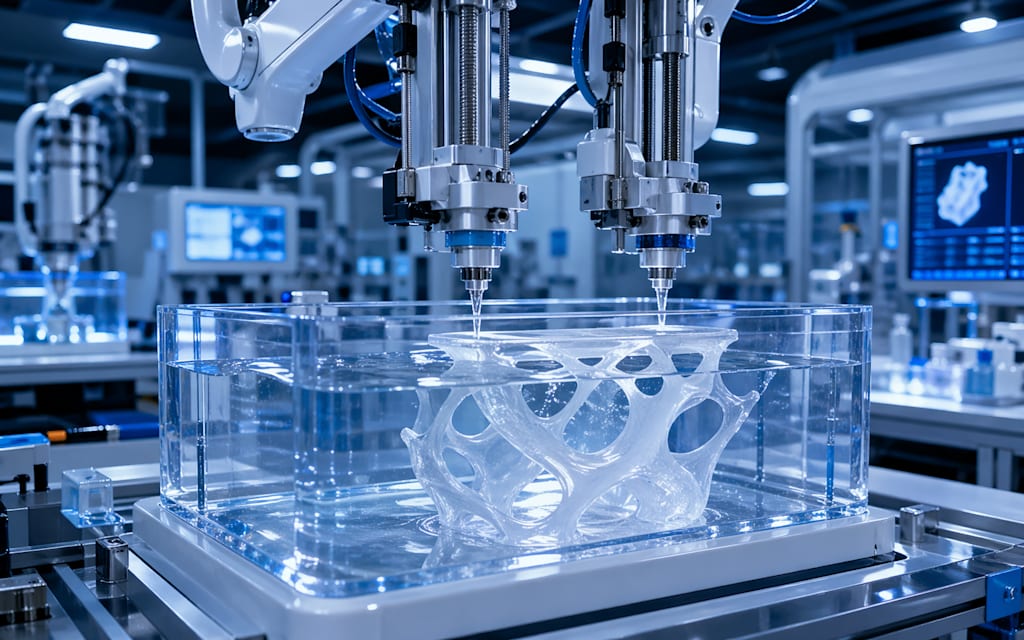
The object didn’t rise layer by layer. It appeared—as if pulled from thin air—emerging smoothly from a pool of gel. No noise, no rigid stacking, no time-consuming pauses. Just motion, fluid and uninterrupted.
For decades, 3D printing has been defined by its limitations as much as its possibilities. But what if the next breakthrough doesn’t build upward—but flows into existence? That’s where the rapid liquid printing industry begins to rewrite the narrative, turning imagination into reality at speeds once thought impossible.
The Shift from Layers to Liquid
Traditional 3D printing has always followed a predictable rhythm: layer, pause, layer, repeat. It’s effective, but slow—and often restrictive when it comes to large-scale or flexible designs.
Enter the rapid liquid printing market, where objects are formed by injecting material into a gel suspension. This method allows designers to bypass gravity constraints, enabling the creation of soft, complex structures in minutes instead of hours.
According to Mordor Intelligence, the rapid liquid printing market size in 2026 is estimated at USD 49.04 million, growing from USD 41.22 million in 2025, with projections reaching USD 116.91 million by 2031. That’s a remarkable 18.97% CAGR over 2026–2031—clear evidence of accelerating adoption.
But this isn’t just about numbers. It’s about a shift in how we think about manufacturing.
Why it matters:
- Faster production cycles
- Reduced material waste
- Greater design freedom
- Ability to create soft, flexible, and large-scale objects
These advantages are driving the rapid liquid printing market growth, positioning it as one of the most intriguing innovations in advanced manufacturing.
Real-World Impact: Where Innovation Meets Application
Imagine a hospital that can print customized medical supports in minutes. Or a furniture designer crafting ergonomic pieces without molds or assembly lines. These aren’t distant possibilities—they’re unfolding now.
The rapid liquid printing market trends highlight strong adoption across sectors like healthcare, automotive, and consumer goods. The technology excels in producing items that require flexibility and durability—qualities that traditional 3D printing struggles to balance.
Key applications shaping the industry:
- Medical devices and wearable supports
- Automotive components with flexible geometries
- Furniture and interior design elements
- Industrial prototyping at scale
This diversity of use cases is expanding the rapid liquid printing market share, as more industries recognize its potential to cut costs and unlock new design possibilities.
The Technology Behind the Magic
At its core, rapid liquid printing relies on a simple yet powerful idea: printing within a supportive medium. Instead of building objects in open air, material is extruded into a gel that holds it in place as it forms.
This eliminates the need for support structures and allows for continuous, uninterrupted printing. The result? Faster production and smoother finishes.
For businesses exploring AI-driven manufacturing or automation, queries like:
- “What is rapid liquid printing and how does it work?”
- “Benefits of rapid liquid printing vs traditional 3D printing”
- “Future of rapid liquid printing industry applications”
are becoming increasingly common—and relevant.
The Road Ahead: Forecasting a Fluid Future
The rapid liquid printing market forecast paints a compelling picture. With projections reaching USD 116.91 million by 2031, the industry is moving from experimental to essential.
So what’s fueling this momentum?
Drivers of growth include:
- Increasing demand for customized production
- Advancements in material science
- Integration with AI and automation technologies
- Growing need for sustainable manufacturing solutions
However, challenges remain. High initial costs, limited awareness, and the need for specialized materials could slow adoption in some regions. Yet, as technology matures, these barriers are expected to diminish.
A New Era of Making Things
There’s something almost poetic about watching an object emerge from liquid—formed not by rigid steps, but by continuous motion. It feels less like manufacturing and more like creation.
The rapid liquid printing industry is still in its early chapters, but its impact is already being felt. It challenges conventions, accelerates possibilities, and invites us to rethink what production can look like in a world driven by speed and customization.
And perhaps that’s the real story here—not just a new technology, but a new mindset.
Final Thought
If objects can now be printed in seconds, shaped by fluid instead of form…
What else are we about to reinvent?
About the Creator
Enjoyed the story? Support the Creator.
Subscribe for free to receive all their stories in your feed.
Comments
There are no comments for this story
Be the first to respond and start the conversation.