
Valeriya Obal on Warsaw Real Estate, Motherhood and Migration
How does Valeriya Obal balance commercial real estate, children’s technology education, and family life after relocating from Kyiv to Warsaw?

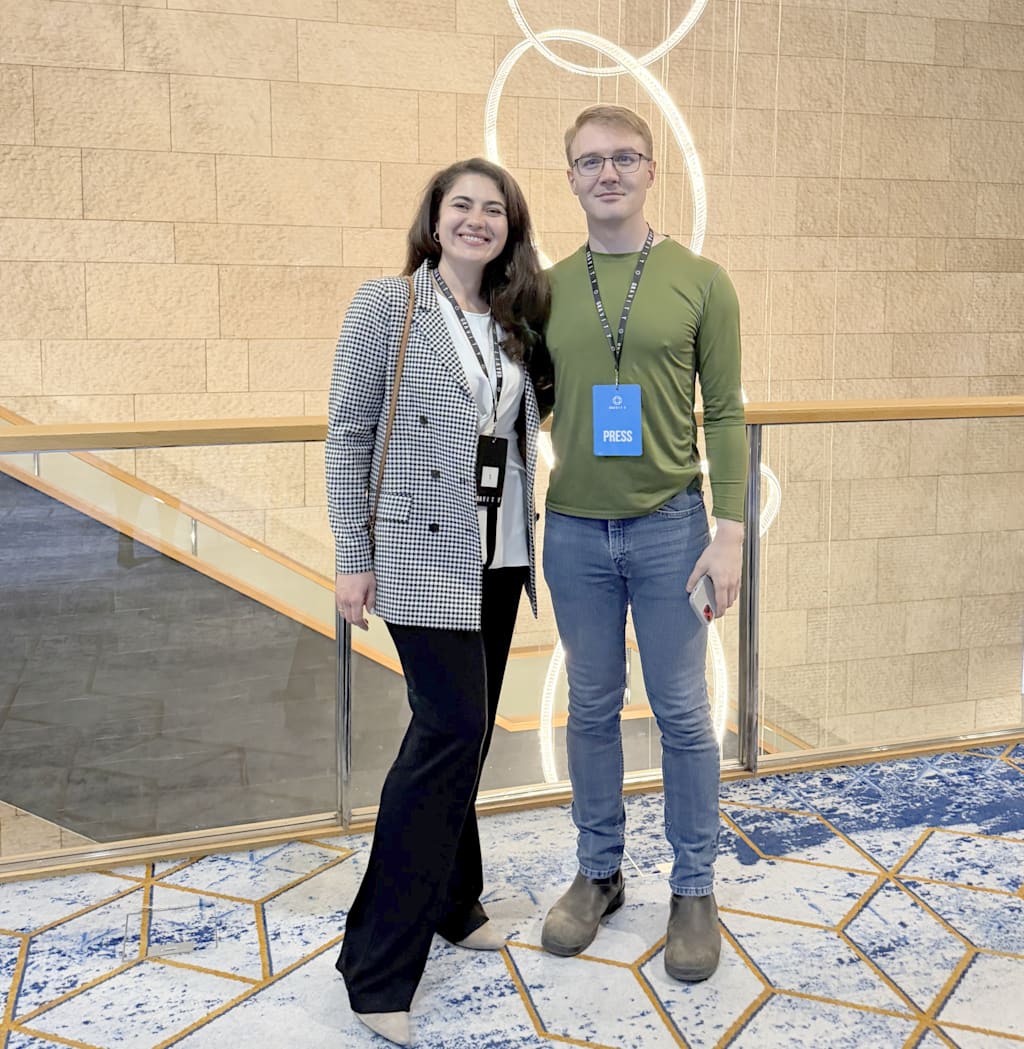
Valeriya Obal is a Ukrainian real estate specialist and entrepreneur based in Warsaw. Originally from Kyiv, she works in commercial property leasing, investment transactions, and corporate relocation. She also runs a children’s technology school. Her professional interests connect business development, digital education, and the practical challenges of rebuilding life abroad.
Valeriya Obal speaks with Scott Douglas Jacobsen about commercial real estate in Warsaw, children’s technology education, and relocating from Kyiv during Russia’s full-scale invasion. She discusses maintaining ties to Ukraine, balancing entrepreneurship with motherhood, and how marriage, family support, and reliable communication shape her approach to work and personal life.
Scott Douglas Jacobsen: Could you introduce yourself and describe your professional work in Warsaw?
Valeriya Obal: My name is Valeriya Obal, and I am a real estate specialist. My colleagues call me the “Warsaw Real Estate Queen.” Why? I don't know, but people say a nickname helps others remember you.
I also run an IT school for children. We teach children ages 4 to 17, helping them build skills for the future. They begin with LEGO programming and progress through different levels, eventually learning languages such as Python and JavaScript.
In real estate, I specialize in commercial property. I work with large IT, artificial intelligence, and iGaming companies, particularly on rentals and leases. I also work on capital market transactions when companies want to buy or sell property.
Jacobsen: Where in Ukraine are you from?
Obal: I am from Kyiv.
Jacobsen: Which district?
Obal: Pechersk.
Jacobsen: Pechersk? I have lived there for most of the year.
Obal: Near the Palace of Culture and Concerts, a little farther down from central Pechersk. Closer to Ocean Plaza, near the Holosiivskyi district. For us, the centre was not the best place to live with children.
Jacobsen: Why did you decide to leave, and what was the transition like?
Obal: I had connections with Poland for many years before the full-scale invasion. My father had Polish roots, which helped me obtain legal residence here.
My sister and her husband lived here, as did my husband’s brother. We already had a community. It is always easier to live somewhere when you have people to talk to and turn to for support.
We left Kyiv when the full-scale invasion began in 2022, but we returned. For two years, we lived between Ukraine and Poland. That was the most difficult period: travelling alone with two children, spending around 12 hours on the road each way, apart from the border crossing, and dealing with the bombardment.
Our children, especially my older son, had health problems. That is why we eventually decided to move.
I still travel to Kyiv about once a month because my mother is there. I also visit Khmelnytskyi, where my grandmother lives. I see what life in Kyiv is like, but my family is now based in Warsaw.
Jacobsen: I have noticed a pattern of older generations staying in their communities, whatever oblast, town, or village they live in. Part of it seems to be an attachment to home. Their investment is not only in a house; it is in their routines and community. Despite the difficulties, they do not want to leave. Do you see other reasons why people over 60 might stay?
Obal: Yes, I see that. We moved because we are younger, and my husband and I have professional skills. I am an economist with considerable corporate experience, so finding work was not especially difficult for me.
But home is still Kyiv. No other country can replace your home. That is why I keep going back. It restores that feeling of being at home before I return to Warsaw.
We chose Warsaw because it feels very similar to Kyiv. It is modern, calm, and welcoming. It is a nice place to live.
Jacobsen: How do you conduct your real estate business in Warsaw?
Obal: I work in commercial real estate. I no longer work in a corporate position because it takes too much of my time. I now run my own business and have a client base.
If I receive a request that is larger than I can handle independently, I seek support from major firms such as CBRE, Colliers, JLL, and Cushman & Wakefield. I have experience working with these companies. I also work with Engel & Völkers, another international company.
Depending on the request, I either handle it myself or work with their support. I contact developers and companies looking for offices or street-level retail premises.
I also help with company relocations. For example, if a company has 50 employees who need to relocate at once, I handle those requests too.
Jacobsen: You have two children, so you are a professional and a mother. Or a “professional mother.”
Obal: A professional mother.
Jacobsen: In my experience of Ukrainian culture, across Eastern Orthodox, Catholic, Jewish, and secular communities, there is a strong emphasis on family and traditional values.
Obal: Yes, principles.
Jacobsen: Foundational principles and family. Women approach parenthood in different circumstances. Some have always wanted children. Others feel pressure when their friends start families. Some experience an unplanned pregnancy, while others focus on education and their careers through their 20s before considering children in their 30s.
For women who want a family and a professional career, what would you recommend? Some have found a partner; others have not found someone who meets their expectations. How do they approach wanting both?
Obal: Work-life balance.
Jacobsen: Some women want to focus on a career; others want to stay at home. I think gender equality includes the freedom to choose, although those choices involve trade-offs. Others, like you, want both. That is a lot to manage. What would you recommend to them?
Obal: Yesterday, I was at my brother’s wedding, and I gave a toast. I told them that to build a happy life, you need a great deal of love. Life comes in waves, and love helps you swim through them. I don't know anyone whose life has only moved upward.
When difficulties come, family is your backup, your source of strength, and your support.
I come from a traditional family, where marriage and children were expected. But even if someone had told me 13 years ago, when I got married, that I could choose whether to marry or have children, I would still have chosen marriage.
It is something you can build that can support you throughout your life. Business can bring profits, but it can also bring substantial losses and a feeling of emptiness. For me, family brings support and fulfilment alongside everything I do in business.
Without my family, I could not do the work I do. I would be very tired, a very boring woman, and I would want to kill everyone!
Jacobsen: That sounds very Slavic.
Obal: A traditional Slavic family. My family helps me remain romantic and feminine.
Jacobsen: In my experience, some Ukrainian women also understand March 8, International Women’s Day, differently from people I have encountered in Canada. Equality matters, but here the day can also involve celebrating femininity. In Canada, I more often encounter an emphasis on equality.
Obal: Of course. I have been to Toronto.
Jacobsen: It is different.
Obal: Yes. One difference I noticed was that in some couples, the man paid for himself and the woman paid for herself, even though they were a family. I wondered how they divided things in the fridge: “This is my milk; this is your milk.” I found it funny, but I saw that.
Jacobsen: And here, if you are the husband, giving two black roses would be a bad move. You might be in trouble for a month.
One last question. I don't often get to speak with professional women who are also parents, and I think their perspective is valuable. Some women in their 30s want a family, have a career, and have not found a partner. They may be thinking of giving up on having children.
Should they keep looking? Consider in vitro fertilization (IVF). I do not think these subjects should be taboo. If people are concerned about birth rates, access to fertility treatment belongs in that conversation.
But what you are describing about family is also a partnership, a genuine partnership that serves as an anchor.
Obal: I am very traditional about this. I think a relationship is a gift from God. That is how I see it.
Jacobsen: What does your husband contribute to that partnership? What does his presence feel like emotionally? Is he an anchor?
Obal: For me, he is support.
Jacobsen: A feeling of safety as well?
Obal: Yes, safety and support. He helps me everywhere and always. I know that even if I were the worst person in the world, he would offer me a hand and say, “Stand up. Let us go together.”
Jacobsen: That brings to mind Oleksandr Usyk.
Obal: Yes.
Jacobsen: He has those famous expressions, “Don’t push the horses” and “I am feel. I am very feel.” I also remember a clip of him speaking to his wife during a press conference and saying, “This is my wife.” That gesture gets closer to what I mean about acknowledging your partner's importance.
Obal: My husband will interrupt a meeting to send me a message saying, “I cannot chat now,” or “I cannot call now.” He doesn't disappear for a week.
I know some women are in relationships like that, and I do not think it is good. Do not choose that. My husband is very good to me, and I am happy in this respect.
Jacobsen: Thank you very much for your time.
Scott Douglas Jacobsen is a blogger on Vocal with more than 200 publications on the platform. He is the Founder and Publisher of In-Sight Publishing (ISBN: 978–1–0692343; 978–1–0673505) and Editor-in-Chief of In-Sight: Interviews (ISSN: 2369–6885). He writes for International Policy Digest (ISSN: 2332–9416), The Humanist (Print: ISSN, 0018–7399; Online: ISSN, 2163–3576), Basic Income Earth Network (UK Registered Charity 1177066), Humanist Perspectives (ISSN: 1719–6337), A Further Inquiry (SubStack), Vocal, Medium, The Good Men Project, The New Enlightenment Project, The Washington Outsider, rabble.ca, and other media. His bibliography index can be found via the Jacobsen Bank at In-Sight Publishing, comprising more than 10,000 articles, interviews, and republications across more than 200 outlets. He has served in national and international leadership roles within humanist and media organizations, held several academic fellowships, and currently serves on several boards. He is a member in good standing in numerous media organizations, including the Canadian Association of Journalists, PEN Canada (CRA: 88916 2541 RR0001), Reporters Without Borders (SIREN: 343 684 221/SIRET: 343 684 221 00041/EIN: 20–0708028), and others.
Image Credit: Scott Douglas Jacobsen.
About the Creator
Scott Douglas Jacobsen
Scott Douglas Jacobsen is the publisher of In-Sight Publishing (ISBN: 978-1-0692343) and Editor-in-Chief of In-Sight: Interviews (ISSN: 2369-6885). He is a member in good standing of numerous media organizations.
Enjoyed the story? Support the Creator.
Subscribe for free to receive all their stories in your feed.
Comments
There are no comments for this story
Be the first to respond and start the conversation.