
The AI Interview That Changed My Career
After dozens of job rejections, one unexpected tool helped me identify the weaknesses that were holding me back and changed the way I approached my future.

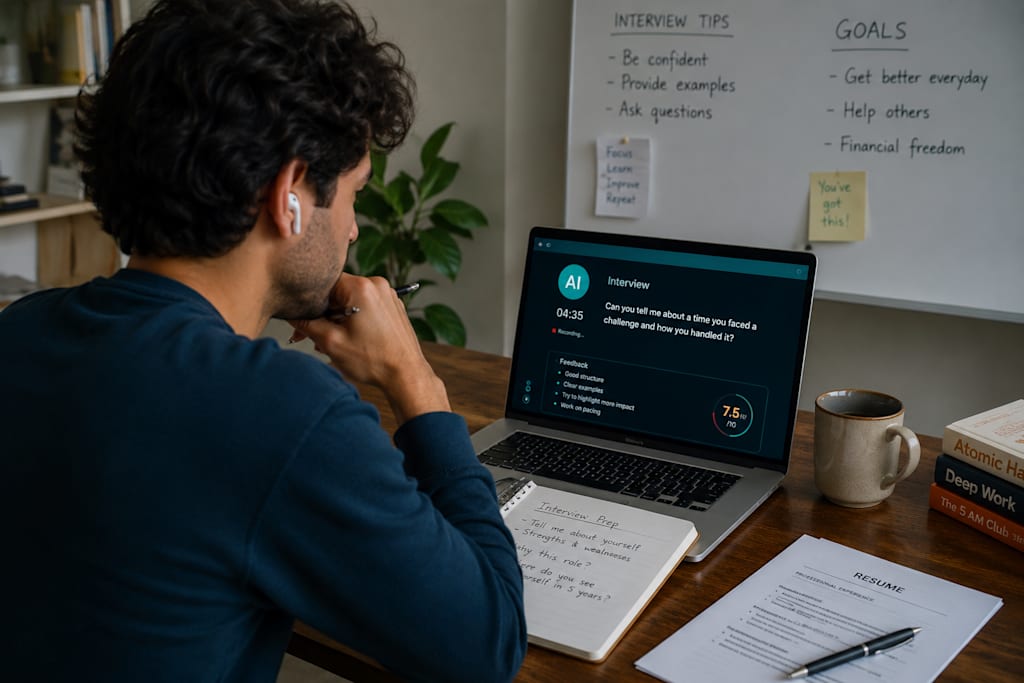
For nearly a year, my job search felt like an endless cycle of hope and disappointment.
I would spend hours tailoring my resume, researching companies, and submitting applications. Occasionally, I would receive an interview invitation, which felt like a small victory.
Then came the rejection emails.
Some arrived within days.
Others came after multiple interview rounds.
Most offered little explanation.
Thank you for your interest.
We've decided to move forward with another candidate.
We wish you success in your future endeavors.
The words became painfully familiar.
After more than thirty applications and numerous interviews, I started questioning everything.
Was my experience insufficient?
Was my resume weak?
Was I applying for the wrong positions?
The uncertainty became frustrating because nobody seemed willing or able to tell me exactly what I was doing wrong.
Every rejection felt like a puzzle with missing pieces.
Then one evening, while browsing career advice online, I came across a discussion about using artificial intelligence tools for interview preparation.
At first, I was skeptical.
I wasn't looking for shortcuts.
I certainly wasn't expecting technology to magically get me hired.
But I was curious.
If AI could analyze resumes, generate interview questions, and simulate conversations, perhaps it could provide feedback that I wasn't getting elsewhere.
With nothing to lose, I decided to try.
I began by entering a job description for a position I hoped to secure.
The AI generated a list of likely interview questions and asked me to respond as if I were speaking to an actual recruiter.
After answering several questions, I requested feedback.
What happened next surprised me.
The AI pointed out that many of my answers were technically correct but unnecessarily long.
Instead of communicating key points clearly, I often buried important information beneath excessive details.
I had never noticed this before.
Because I was focused on demonstrating knowledge, I wasn't paying enough attention to clarity.
The feedback continued.
The system identified moments where my responses sounded uncertain.
Certain phrases such as "I think," "maybe," and "probably" appeared frequently in my answers.
Although those words seemed harmless, they sometimes weakened otherwise strong statements.
The AI also highlighted another issue.
I spent too much time describing responsibilities and not enough time discussing results.
For example, instead of explaining how a project improved efficiency or solved a problem, I simply listed tasks I had completed.
That distinction turned out to be important.
Employers wanted evidence of impact, not just activity.
Over the following weeks, I practiced regularly.
Each session revealed new opportunities for improvement.
Sometimes the lessons had little to do with technical knowledge.
Instead, they focused on communication.
Structure.
Confidence.
Storytelling.
I learned how to answer behavioral questions more effectively.
I practiced explaining complex ideas in simpler language.
I became more comfortable discussing both successes and failures.
Most importantly, I started recognizing patterns in my own communication style.
The AI wasn't replacing human coaching.
It was helping me see things I had overlooked.
As my preparation improved, something else began to change.
My confidence increased.
Not because I had memorized perfect answers.
But because I understood my strengths more clearly and knew how to present them effectively.
Eventually, another interview opportunity arrived.
This time, the experience felt different.
When asked about previous projects, I focused on outcomes rather than tasks.
When discussing challenges, I shared specific examples and lessons learned.
When responding to difficult questions, I paused briefly before answering instead of rushing through my thoughts.
The conversation felt natural.
For the first time in months, I left an interview feeling genuinely satisfied with my performance.
A week later, I received a phone call.
The company wanted to offer me the position.
I was excited, of course.
But what surprised me most was what happened afterward.
The hiring manager shared feedback from the interview process.
Several team members had commented on my communication skills, confidence, and ability to explain complex situations clearly.
Ironically, those were the exact areas I had spent weeks improving.
That moment changed my perspective on both technology and career development.
Many people view artificial intelligence as a replacement for human effort.
My experience was the opposite.
The AI didn't get me the job.
It didn't attend the interview.
It didn't build my experience.
It simply provided insights that helped me become more aware of my weaknesses.
The real work still belonged to me.
I had to practice.
I had to improve.
I had to apply the feedback.
Technology became a tool, not a substitute.
Today, AI continues to evolve and influence countless industries.
Yet one lesson remains clear.
The greatest value of technology often isn't doing the work for us.
It's helping us see opportunities for growth that we might otherwise miss.
My career didn't change because artificial intelligence gave me all the answers.
It changed because it helped me ask better questions about myself.
And sometimes, that's exactly where meaningful progress begins.
About the Creator
Farooq Hashmi
Thanks For Reading! Subscribe To My Newsletters.
Storyteller, Love/Romance, Dark, Surrealism, Psychological, Nature, Mythical, Whimsical
Love You All❤️❤️❤️
Enjoyed the story? Support the Creator.
Subscribe for free to receive all their stories in your feed.
Comments
There are no comments for this story
Be the first to respond and start the conversation.