Thought Leaders
The Interview That Felt Like a Test
M Mehran The elevator ride to the 34th floor felt like a countdown. Each ding of the floors passing by made my heart thump louder. This wasn’t just any interview—it was the one that could define the next chapter of my life. I stepped out and found myself in a sleek, glass-walled lobby. The receptionist’s polite smile did little to calm my nerves. “You’re here for the 10 a.m. interview?” she asked. I nodded, my throat suddenly dry. She gestured toward the waiting area, where a few candidates sat quietly, scrolling on their phones or reviewing notes. I took a seat, clutching my portfolio like a lifeline. Around me, the other candidates radiated confidence. One of them even gave me a curt nod, the kind that said, you don’t belong here. I swallowed hard and tried to focus on my breathing. When my name was called, my legs carried me forward, but my mind was racing a hundred miles an hour. The interview room was stark—three chairs on one side of a polished wooden table, three men sitting behind it, expressions unreadable. They greeted me with nods, and I sat, trying to project calm I didn’t feel. “Why do you want this role?” the first interviewer asked. I hesitated. I knew the usual answers about passion and alignment with company values, but I wanted to stand out. “Because I’m tired of playing it safe,” I said. “I want a challenge that pushes me beyond what I think I’m capable of.” A brief silence followed. The second interviewer leaned forward. “Tell us about a time you failed.” My stomach twisted. I hadn’t expected that. I could give a generic corporate answer, but honesty felt heavier, more meaningful. “I once led a project that completely fell apart,” I said. “We missed deadlines, the client was unhappy, and I felt like I had let everyone down. But I learned how to communicate better, delegate tasks efficiently, and adapt under pressure. That failure taught me more than any success ever did.” The third interviewer’s eyes softened slightly. “Interesting. Most candidates avoid talking about failure.” I felt a small surge of confidence. Maybe being honest wasn’t a weakness—it was a strength. Then came the technical round, and my palms began to sweat again. Questions came fast and sharp. Some I knew; some I had to think through carefully. I could feel time slipping by, the clock ticking louder in my ears than any question. And then came the question that made me freeze: “Imagine you’re given a task outside your skill set, with an impossible deadline. What do you do?” I glanced at the panel, then took a deep breath. “I’d break it down, learn what I could along the way, and ask for guidance when necessary. I’ve learned that admitting what you don’t know isn’t weakness—it’s the first step to solving a problem.” Another pause. Then, unexpectedly, the first interviewer smiled. “You have a very different perspective. Most would claim they know everything and bluff through it.” By the end of the interview, I felt drained but strangely exhilarated. I had walked in nervous, unsure, and anxious. I walked out with a sense of accomplishment I hadn’t expected. I had faced the unknown and stayed true to myself. Three days later, the call came. I barely recognized the number, but I answered with a shaky, hopeful voice. “Congratulations,” said the HR manager on the other end. “We’d like to offer you the position.” Relief washed over me in waves, and I laughed out loud, startling a few people nearby. The interview that had terrified me, the questions that had made me question myself, had led to this moment. Sitting back that evening, I reflected on the experience. Interviews aren’t just about testing skills—they’re about revealing character, resilience, and honesty. They’re about showing you can handle pressure and still stand upright, even when the room seems designed to shake you down. That day, I realized something profound: sometimes, the interview isn’t just a gateway to a job—it’s a test of who you are when no one is looking. And if you can pass that test, everything else falls into place.
By Muhammad Mehranabout a year ago in Interview
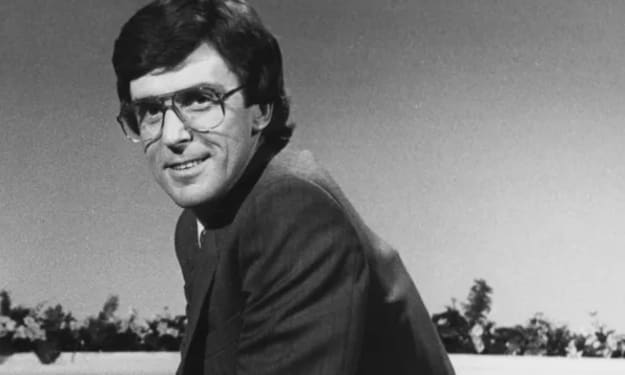
John Stapleton
John Stapleton: Celebrating a Broadcasting Legend and His Enduring Legacy For decades, John Stapleton was a fixture in British living rooms. As a co-host on iconic programmes like BBC's Breakfast Time and the consumer affairs show Watchdog alongside his wife, Lynn Faulds Wood, he became a trusted and familiar face. His straightforward presenting style and dedication to journalism made him a household name. However, recent online searches like "has john stapleton died" and "john stapleton death" have caused concern among his many fans. This article aims to separate fact from fiction and celebrate the life and career of this broadcasting veteran.
By KAMRAN AHMADabout a year ago in Interview
4EverAlive Labs: How Exceptional Service and Strategic Guidance Drove Success in South Florida
South Florida is rapidly emerging as a hub for innovation and entrepreneurship. Its strategic location, diverse population, and strong connections to Latin America create a fertile ground for startups and small businesses to thrive. Yet, succeeding in this competitive ecosystem requires more than a good product—it requires vision, strategic thinking, and trusted partnerships.
By South Florida Business Newsabout a year ago in Interview
Stephen Levi Carter on White Orchid Hospice's Inc. 5000 Recognition and Transforming End-of-Life Care in Texas
In a healthcare sector often challenged by workforce shortages, inflation, and systemic pressures, White Orchid Hospice LLC has achieved remarkable recognition by earning placement at No. 1,815 on the prestigious 2025 Inc. 5000 list of America's fastest-growing private companies, joining iconic brands like Microsoft, Under Armour, Patagonia, and Chobani in this exclusive entrepreneurial ranking. As a key leader at the Sugar Land-based organization, Stephen Levi Carter has been instrumental in the company's growth since its founding in 2015, helping establish White Orchid Hospice as a leading provider of palliative and hospice care across Houston, Corpus Christi, San Antonio, and surrounding Texas communities. The company's inclusion on this widely regarded ranking of entrepreneurial growth reflects not only exceptional business performance but also the organization's ability to navigate complex healthcare challenges while maintaining their mission of providing compassionate, patient-centered care during life's most delicate moments. With A+ accreditation from the Better Business Bureau underscoring their commitment to excellence, integrity, and trust in patient care, White Orchid Hospice has demonstrated that focusing on comfort, dignity, and holistic support for patients and families facing life-limiting illness can drive both meaningful impact and sustainable business growth. Under Gil's leadership and alongside CEO Stephen Levi Carter, the organization has become one of the fastest-growing hospice care providers in Texas by developing award-winning programs that prioritize family trust and community service while successfully scaling operations across multiple metropolitan areas. The Inc. 5000 recognition validates their approach of combining compassionate care delivery with strategic business practices, positioning White Orchid Hospice among entrepreneurial leaders who are both contributing to economic growth and improving quality of life for patients nationwide during some of the most challenging periods in recent healthcare history.
By Oliver Jones Jr.about a year ago in Interview
Is Your Brand Telling the Wrong Story? Here's How to Tell If It's Costing You Clients
The numbers made no sense. A software company with a great product, happy customers, and a professional website was still losing clients. The marketing director tried new ads, website changes, even expensive consultants. But visitors left without buying.
By Sam Martinabout a year ago in Interview
Crafting Legacies: Washington J. Calvache Durand on the Responsibility of Brand Storytelling
In an era saturated with information, where attention spans dwindle and authenticity is paramount, the ability to tell a compelling and true brand story has become the cornerstone of business success. At the forefront of this critical evolution stands Washington J. Calvache Durand, founder of Built by Washington and a distinguished Business Media Specialist, Producer, and Strategist whose 15 years of experience have positioned him as a leading voice in purpose-driven communication. His work, spanning content production, business development, and strategic messaging, is dedicated to helping entrepreneurs and communities forge impactful media that not only educates but truly inspires.
By Lisa Rosenbergabout a year ago in Interview
How Igor Finkelshtein Built a Legacy by Solving Everyday Problems
When people talk about legacy, they often think in terms of global scale, billion-dollar exits, or breakthrough technologies. But my experience has shown me something different: legacy is built quietly, through the consistent solving of everyday problems.
By Igor Finkelshteinabout a year ago in Interview
Unscripted SEO Interview With Former CNN Anchor & Journalist Katie Wagner
Jeremy Rivera: Hello, I'm Jeremy Rivera, your Unscripted SEO podcast host. I'm here with Katie Wagner, who's going to introduce herself, her company, and what makes her an expert in her field.
By Jeremy Riveraabout a year ago in Interview
Can Yağız Talks Upcoming Art Show, Inspiration and Art Career
Conceptual artist Can Yağız is set to present his artworks at the upcoming group exhibition, “Conceptual Romance,” opening at the Ely Center of Contemporary Art (ECOCA) on September 14, 2025. The exhibition, curated by Jared Quinton, Emily Hall Tremaine Associate Curator of Contemporary Art at the Wadsworth Atheneum Museum of Art, marks ECOCA's 10-year anniversary and will feature 23 select artists, including Yağız.
By Lisa Rosenbergabout a year ago in Interview