Podcast
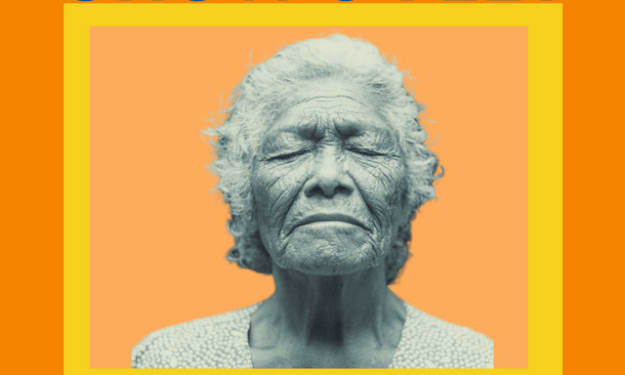
Crow's Feet Podcast: Life As We Age
Travel Tips & Understanding Aging Programming in any media for senior citizens is an ongoing punchline for many. Let’s be honest, there’s something to it. How else could NCIS be on TV for 23 seasons? Or Fox News be popular. Its average viewer is 64 years old, sitting in the recliner absorbing the sabotaged escalator at the U.N. theory or the Big Lie that cost the network ($787 million) about the 2020 election.
By Frank Racioppiabout a year ago in Interview
We Regret To Inform You
Podcasts about success dominate the podcasting industry with their "yellow brick road" theory of achieving success. These podcasts may detail the steps to success -- like wake up at 4 AM and do 500 squats -- or these shows interview successful people who provide their roadmap to success. Then there are those who attempt to beguile you with the notion that the only way to achieve success is by signing up for their specific service. You know -- "Only $29.99 per month, and you can use our trademarked Success App to be like Elon Musk within a year."
By Frank Racioppiabout a year ago in Interview
Eurowaves Celebrates International Podcast Day
The Ultimate Guide to European Podcasting Events Today is International Podcast Day. It’s also Orange Shirt Day, which promotes awareness about the Indian residential school system still impacting Native American communities in the United States and Canada. It’s also National Love People Day, which asks us to lift others up through the profound power of unconditional love. (NOTE: Good luck with that one!). And it is National Mud Pack Day, which gives us all permission to get muddy. Step in mud! Play with mud! Put mud on your face! (Note: I am writing this with a mud pack on!).
By Frank Racioppiabout a year ago in Interview
Wild Willie’s Soul Impact:
When Wild Willie grabs the mic, it’s more than a podcast—it’s a force. As the creator and host of Soul Impact: How Music Saved Us, the award-winning show on The Scene Projects network, Wild Willie has carved his own lane with storytelling that refuses to play it safe. His mission is bold, his delivery unapologetic: to prove music isn’t just background noise—it’s a lifeline.
By Independent Indie Artist Radarabout a year ago in Interview
Willie Thornton: The Voice Behind Soul Impact
Willie Thornton is not just a name—it’s a movement. As the creator and host of Soul Impact: How Music Saved Us, an award-winning podcast under The Scene Projects network, Willie has carved out a lane that’s uniquely his. His work is electric, raw, and deeply human, taking listeners on a ride through stories of resilience, transformation, and hope. At its core, the show is about survival, about thriving, and about how music—something so universal—can become a lifeline when the world feels like it’s caving in.
By The Blacksheepkid Collective by: El Pablo 1xabout a year ago in Interview
Better Call Daddy Podcast
Interview podcasts are becoming the default for podcasting. Networks load up their roster of shows with celebrities who interview guests. They then attempt their magic trick of deception, marketing these formulaic shows as something new and exciting.
By Frank Racioppiabout a year ago in Interview
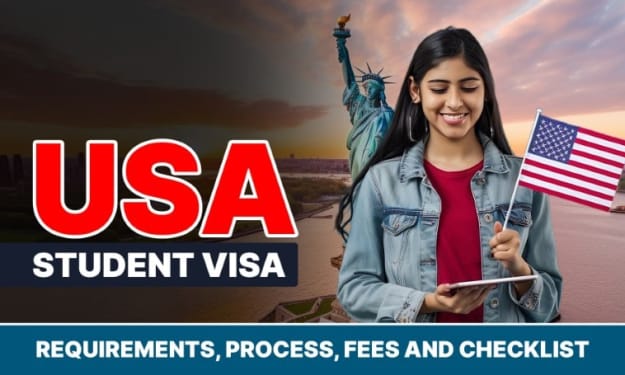
Student Visa Interview | USA Trainers | US University 🇺🇸 | Study in the USA Interview
Studying in the United States of America has always been a dream for millions of students around the world. The USA is home to some of the best universities, advanced research opportunities, and a vibrant student culture that attracts learners from every continent. But before entering this world of opportunities, every international student must pass through an important step: the U.S. student visa interview. For many students, this interview becomes a moment of anxiety and fear. However, with the right preparation, training, and mindset, it can be a smooth process. In this article, we will explore everything about the student visa interview, the role of USA trainers, the importance of US universities, and how to prepare effectively to fulfill your Study in the USA dream. --- 1. Understanding the Student Visa Interview The student visa interview is usually conducted at the U.S. embassy or consulate in your country. This interview decides whether you will be granted a visa to study in America. The officer is not only checking your documents but also your confidence, honesty, and future plans. The most common type of student visa is the F-1 Visa, which is required for full-time academic studies at a U.S. university or college. The purpose of the interview is to confirm that: You are a genuine student. You can financially support your education. You plan to return to your home country after your studies. The questions may look simple, but they carry deep meaning. The way you answer them shows your intentions, your planning, and your seriousness about studying abroad. --- 2. Common Questions in the Interview Here are some examples of questions you may face in the U.S. student visa interview: 1. Why do you want to study in the USA? The officer wants to know why you chose the United States instead of another country. 2. Which university have you applied to, and why? They want to see if you have researched your chosen institution. 3. What will you study? Be clear about your chosen field and how it relates to your future. 4. How will you pay for your education? You must show proof of financial stability through bank statements, scholarships, or sponsors. 5. Do you plan to return to your home country after graduation? A very important question. Always explain your long-term plans clearly. The answers should always be honest, simple, and confident. Any hesitation may create doubt in the officer’s mind. --- 3. The Role of USA Trainers Many students feel nervous because they don’t know how to face the interview. This is where USA trainers and visa consultants play a big role. These trainers prepare students with: Mock Interviews: Practicing real questions in a simulated environment. Communication Skills: Teaching students to answer with confidence. Document Guidance: Helping prepare all required financial and educational documents. Body Language Training: Showing how to sit, smile, and speak politely. A good USA trainer helps reduce fear and increase confidence. Students who take proper training often find the real interview much easier than expected. --- 4. Importance of Choosing the Right US University When preparing for your interview, the choice of university matters a lot. The visa officer will ask why you selected that particular institution. If you cannot explain properly, it may weaken your case. Top U.S. universities such as Harvard, MIT, Stanford, UCLA, and NYU are well-known globally. But even if you choose a smaller or less famous university, you must know: What programs they offer. How their teaching style fits your career goals. Why that location is suitable for you. If you clearly explain your reasons, it shows the officer that you are serious and committed to your education.
By Sajid Skill's about a year ago in Interview
The Interview That Felt Like a Test of Survival
M Mehran I stepped into the building at exactly 9:59 a.m., just a minute before my scheduled interview. The lobby was eerily quiet, the kind of silence that makes you hyper-aware of every sound—your shoes squeaking, your own heartbeat, the soft hum of the air conditioning. I signed in at the reception desk and waited. The receptionist gave me a polite nod, but there was something in her eyes—a barely noticeable warning—that made my stomach tighten. I shook it off. I had prepared for this. I had studied every detail of the company, rehearsed every question, memorized every answer. Surely that was enough. When my name was called, I followed the young assistant down a narrow hallway to a room at the far end. The door opened slowly, and inside sat three people behind a long table. Their expressions were unreadable, almost cold. It felt less like an interview and more like a challenge I had unknowingly signed up for. “Good morning,” said the lead interviewer, his voice calm, precise, and oddly intimidating. “Take a seat.” I did, trying to appear confident. The first question was simple: Tell us about yourself. I gave the standard answer, rehearsed and polished, but it seemed to irritate one of the interviewers. The silence that followed felt heavier than words could carry. My palms were sweating; my throat was dry. Then came a curveball question that made my blood run cold: “Imagine your team is on the verge of failing a major project. You have one hour to turn it around. How do you do it?” I froze. Not because I didn’t know the answer, but because something in the room—perhaps their stare, perhaps the way the clock ticked—made it feel like a literal countdown. My mind raced. One hour…one hour… I took a deep breath and answered honestly. I described prioritizing tasks, communicating clearly, and motivating the team to focus on what could be salvaged. The panel listened silently, then nodded. The room felt slightly less oppressive, though I couldn’t tell if it was relief or merely anticipation of the next test. Questions became faster, sharper, almost interrogative. What’s your biggest weakness? How do you handle conflict? What would you do if you disagreed with a superior? I answered each one carefully, aware that a single misstep could ruin everything. Every word was measured; every pause calculated. Then came the final question, delivered with a cold smile: “You have been offered two projects. One is high-risk but could make a huge impact. The other is safe but unremarkable. Which do you choose?” I hesitated. Part of me wanted the safe answer, the one most candidates would give. But another part—the part that had survived setbacks, failures, and long nights of preparation—spoke for itself. “I take the high-risk project,” I said, my voice steady. “Because growth doesn’t come from playing it safe. Even if I fail, I will learn more than I ever would by avoiding challenges.” The interviewers remained silent for a long moment. Then, slowly, the lead interviewer leaned back and said, “You understand the stakes. Most candidates don’t.” The interview ended abruptly. I shook hands, trying to mask the adrenaline still coursing through my veins. Walking out, I felt both exhausted and exhilarated, as though I had survived a test I didn’t fully understand. Three days later, the call came. My hands trembled as I answered. We’d like to offer you the position, said the HR manager. I exhaled a breath I didn’t realize I was holding. Relief, pride, and disbelief collided all at once. That interview had been more than a professional challenge—it had tested my composure, my honesty, and my ability to remain true under pressure. I realized then that some interviews aren’t just about skills or experience. They are about resilience, courage, and integrity. And if you can stand your ground, even when the stakes feel impossibly high, success isn’t just a possibility—it’s inevitable.
By Muhammad Mehranabout a year ago in Interview
The Interview That Changed My Perspective
M Mehran I remember the day vividly—not because it was special, but because it terrified me. I had spent weeks preparing for this interview. Every evening was filled with mock questions, endless research about the company, and pep talks in front of the mirror. I needed this opportunity—not just for a job, but for a chance to prove to myself that I could start over. The office smelled faintly of fresh paint and polished wood. The waiting room was quiet except for the low hum of a printer. I sat in the corner, resume in hand, heart pounding like a drum. Other candidates whispered to each other, sharing notes and smiles, but I barely noticed them. My focus was inward, rehearsing answers, imagining questions, and feeling a surge of self-doubt with each passing second. When my name was called, I stood, walked toward the interview room, and realized my palms were sweaty despite holding my folder tightly. Inside, three interviewers sat behind a long table, smiling politely. Their warmth eased me slightly, but my nerves remained. “Tell us about yourself,” the HR manager said. I paused. I could recite the typical corporate answer, but it wouldn’t capture why I was really here. I took a deep breath and began: “I grew up believing I had to follow a fixed path—school, college, job. But life hasn’t been linear for me. I’ve faced setbacks, moments when I doubted myself, and times when I wasn’t sure if I could continue. What I’ve learned is that perseverance, curiosity, and a willingness to learn from mistakes are what define me. And that’s what I bring with me today.” The room was silent for a moment, then the department head nodded. “Can you give us an example of a challenge you overcame?” I spoke about a project I had led that had initially failed. The team had made errors, deadlines were missed, and the client was unhappy. But instead of giving up, I organized meetings, communicated openly, and encouraged the team. We restructured the project, found solutions together, and eventually succeeded. It wasn’t a perfect outcome, but it was meaningful. The senior interviewer smiled faintly. “It takes courage to admit mistakes and take responsibility. Most people would have hidden them.” Questions continued—some technical, some situational—but the conversation shifted. Instead of memorized answers, I spoke honestly, sharing my struggles, my approach to learning, and my vision for growth. Each answer felt like a small act of self-affirmation. Then came the final question: “Why should we hire you?” I looked at them, searching for the right words. “Because I bring more than skills and experience. I bring commitment, empathy, and resilience. I won’t just work for a paycheck—I’ll contribute, learn, and grow alongside this team. I believe in giving my best, even when the outcome is uncertain. That’s who I am.” The interview ended with handshakes and smiles. I left the building, feeling lighter than when I arrived, as though the act of being honest, vulnerable, and real had already rewarded me. Two days later, an email arrived. We are pleased to offer you the position. I read it over and over, tears of relief and joy filling my eyes. But beyond the job offer, I realized the deeper lesson: interviews aren’t just about being the most qualified. They’re about showing who you truly are—your resilience, your honesty, your willingness to grow. That interview didn’t just change my career—it changed my perspective on life. I learned that authenticity matters more than perfection, and courage matters more than confidence. The experience reminded me that setbacks are not failures, but opportunities to learn and to show the world your true potential. Sometimes, the right opportunity doesn’t just knock—it tests you, challenges you, and demands that you be your real self. And if you rise to the occasion, you don’t just get a job—you gain confidence, growth, and a story worth telling.
By Muhammad Mehranabout a year ago in Interview
The Interview That Felt Like a Test
M Mehran The elevator ride to the 34th floor felt like a countdown. Each ding of the floors passing by made my heart thump louder. This wasn’t just any interview—it was the one that could define the next chapter of my life. I stepped out and found myself in a sleek, glass-walled lobby. The receptionist’s polite smile did little to calm my nerves. “You’re here for the 10 a.m. interview?” she asked. I nodded, my throat suddenly dry. She gestured toward the waiting area, where a few candidates sat quietly, scrolling on their phones or reviewing notes. I took a seat, clutching my portfolio like a lifeline. Around me, the other candidates radiated confidence. One of them even gave me a curt nod, the kind that said, you don’t belong here. I swallowed hard and tried to focus on my breathing. When my name was called, my legs carried me forward, but my mind was racing a hundred miles an hour. The interview room was stark—three chairs on one side of a polished wooden table, three men sitting behind it, expressions unreadable. They greeted me with nods, and I sat, trying to project calm I didn’t feel. “Why do you want this role?” the first interviewer asked. I hesitated. I knew the usual answers about passion and alignment with company values, but I wanted to stand out. “Because I’m tired of playing it safe,” I said. “I want a challenge that pushes me beyond what I think I’m capable of.” A brief silence followed. The second interviewer leaned forward. “Tell us about a time you failed.” My stomach twisted. I hadn’t expected that. I could give a generic corporate answer, but honesty felt heavier, more meaningful. “I once led a project that completely fell apart,” I said. “We missed deadlines, the client was unhappy, and I felt like I had let everyone down. But I learned how to communicate better, delegate tasks efficiently, and adapt under pressure. That failure taught me more than any success ever did.” The third interviewer’s eyes softened slightly. “Interesting. Most candidates avoid talking about failure.” I felt a small surge of confidence. Maybe being honest wasn’t a weakness—it was a strength. Then came the technical round, and my palms began to sweat again. Questions came fast and sharp. Some I knew; some I had to think through carefully. I could feel time slipping by, the clock ticking louder in my ears than any question. And then came the question that made me freeze: “Imagine you’re given a task outside your skill set, with an impossible deadline. What do you do?” I glanced at the panel, then took a deep breath. “I’d break it down, learn what I could along the way, and ask for guidance when necessary. I’ve learned that admitting what you don’t know isn’t weakness—it’s the first step to solving a problem.” Another pause. Then, unexpectedly, the first interviewer smiled. “You have a very different perspective. Most would claim they know everything and bluff through it.” By the end of the interview, I felt drained but strangely exhilarated. I had walked in nervous, unsure, and anxious. I walked out with a sense of accomplishment I hadn’t expected. I had faced the unknown and stayed true to myself. Three days later, the call came. I barely recognized the number, but I answered with a shaky, hopeful voice. “Congratulations,” said the HR manager on the other end. “We’d like to offer you the position.” Relief washed over me in waves, and I laughed out loud, startling a few people nearby. The interview that had terrified me, the questions that had made me question myself, had led to this moment. Sitting back that evening, I reflected on the experience. Interviews aren’t just about testing skills—they’re about revealing character, resilience, and honesty. They’re about showing you can handle pressure and still stand upright, even when the room seems designed to shake you down. That day, I realized something profound: sometimes, the interview isn’t just a gateway to a job—it’s a test of who you are when no one is looking. And if you can pass that test, everything else falls into place.
By Muhammad Mehranabout a year ago in Interview
Love Factually Podcast & Speke Feast 2025
Love Actually is a 2003 Christmas romantic comedy film written and directed by Richard Curtis. The film features an ensemble cast, including Liam Neeson, Hugh Grant, Colin Firth, Keira Knightley, and Laura Linney. The film delves into different aspects of love as shown through ten separate stories involving a variety of individuals, many of whom are interlinked as the plot progresses. The story begins six weeks before Christmas and is played out in a weekly countdown until the holiday, followed by an epilogue that takes place in the New Year.
By Frank Racioppiabout a year ago in Interview