Musicians
The Interview I Wasn’t Prepared For
M Mehran I have been through interviews before—phone screens, Zoom calls, panel rooms with too-bright lighting and too-fake smiles—but nothing prepared me for the one scheduled at 9:00 a.m. on a rainy Tuesday in November. It wasn’t the weather that made me nervous. It was the fact that this time, I needed the job. Not wanted. Needed. Rent was late. My savings account was a joke. My parents had already said the sentence no adult wants to hear: “Maybe you should come back home for a while.” So I ironed my only blazer, practiced answers I hoped sounded confident, and arrived thirty minutes early—because desperation is very punctual. The building surprised me. It wasn’t glass and metal like I imagined. Instead, it was small, quiet, almost old-fashioned, with a handwritten sign on the door: “Please ring once.” No logo. No receptionist. Just a bell. I hesitated, then pressed it. A woman in her sixties opened the door with a smile warm enough to melt the rain off my shoulders. “You’re early,” she said. “I—yes. I thought it would be better than being late.” “Sometimes,” she replied, “people arrive early because they don’t know where else to be.” I forced a laugh, pretending she was wrong. She wasn’t. --- The waiting room looked nothing like a corporate office. No motivational posters. No glossy magazines about success and productivity. Just shelves filled with books, many without titles on their spines. There were no other candidates. No background music. Only the soft ticking of a wall clock and the fast heartbeat inside my chest. After a moment, the woman returned. “We’re ready for you.” We? I followed her into a small room with two chairs and a single round table. No panel. No notepads. No laptop recording everything I said. Just one interviewer. He looked up from a folder when I entered—kind eyes, quiet face, the sort of person who didn’t need authority to be respected. “Thank you for coming,” he said. “Thank you for having me.” My voice sounded practiced, like something I borrowed instead of owned. He didn’t ask for my résumé. He didn’t ask about my strengths, weaknesses, or where I saw myself in five years. Instead, he asked: “Who taught you the meaning of work?” I froze. This was not in any list of common interview questions. “I… I’m not sure,” I said slowly. He nodded, as if uncertainty was the correct answer. “What brought you here today?” “I’m looking for a job.” “That’s what you need,” he said gently. “I’m asking what you’re searching for.” My throat tightened. I wanted to say stability. I wanted to say purpose. I wanted to say that I was tired of feeling like I was always catching up to everyone else. But all that came out was: “I don’t know anymore.” He didn’t write anything down. He didn’t look disappointed. He just sat with the silence like it wasn’t uncomfortable at all. --- Then he slid a blank card across the table. “On this card,” he said, “write one thing you stopped believing about yourself.” My hand hovered above the pen. I thought of who I used to be—someone who filled notebooks with ideas, someone who didn’t apologize for taking up space, someone who laughed without checking if it was appropriate. Somewhere between moving out, paying bills, and pretending not to be scared, I misplaced that version of myself. I wrote: “I stopped believing I was capable.” I expected him to take the card. He didn’t. “Keep it,” he said. “You’ll need it later.” --- The questions continued, but not the kind that measured skills. “Tell me about a time you failed and didn’t pretend it didn’t hurt.” “What do you wish people understood about you?” “When was the last time you did something for the first time?” Each question felt less like an interview and more like someone turning on lights in a room I had been sitting in for years without realizing it was dark. Somewhere between the third and fourth question, I stopped trying to sound impressive. I started sounding like myself. I talked about fear, and how it often wears the mask of being “realistic.” I talked about dreams I folded into smaller shapes until they could fit into a life I didn’t even want. The interviewer listened—not like someone evaluating me, but like someone witnessing me. --- Finally, he closed the folder. “That’s all,” he said. My pulse jumped. “Did I… get the job?” He smiled in a way that made the room feel suddenly warmer. “This wasn’t an interview for a position,” he said softly. “It was an interview to see whether you were ready to start again.” I blinked. “Start what?” “Your life,” he said. “The one you paused.” The woman from earlier appeared in the doorway. She handed me a simple envelope. Inside was neither a contract nor a rejection. It was a note: “Come back tomorrow at 9 a.m. Not for a job— for a place to become yourself again.” Underneath was a second line, written in unfamiliar handwriting: “Bring the card.” --- When I stepped outside, the rain had stopped. For the first time in months, I didn’t feel like I was failing. I felt like I was beginning. Because sometimes, the most important interview of your life isn’t the one that gets you hired— it’s the one that reminds you you’re still worth choosing.
By Muhammad Mehranabout a year ago in Interview
Questions That Build Tomorrow
In the bustling town of Crestwood, where busy streets hummed with stories and daily routines, lived a young college student named Zayan. Unlike many students, Zayan wasn’t dreaming of becoming a doctor or an engineer—he dreamed of becoming a journalist who used interviews to understand the world. To him, interviewing someone wasn’t just asking questions. It was discovering a hidden universe in every person. His journalism teacher, Mr. Ray, noticed Zayan’s curiosity and decided to give him an important task. “You will interview someone who influenced this town,” he said. “Choose wisely. The best interview is not with the most famous person, but with the person who holds wisdom.” Zayan thought hard. Famous business owners, well-known teachers, even athletes came to mind. But there was one person he always noticed in the morning—a quiet old man who cleaned the town’s main library garden. He was never in a hurry, never angry, and always smiling politely. People passed him every day, never wondering who he was. So, Zayan made his choice. The next morning, armed with a notebook, recorder, and a heart full of nervous questions, he walked toward the library garden. The old man was trimming bushes with careful hands. “Sir… may I interview you? My name is Zayan,” he asked politely. The man looked surprised. “Me? I am no one important.” “That’s exactly why I want to talk to you,” Zayan replied with a smile. The old man laughed softly and agreed. They sat on two wooden chairs near the garden fountain. His name was Mr. Haleem, and he had worked as the gardener for thirty years. Zayan began the interview with simple questions, asking about his job and routine. But as minutes passed, the simple conversation turned deeper. “What keeps you smiling every day?” Zayan asked. Mr. Haleem paused, eyes reflecting memories. “Because life is like a garden… If you care for it patiently, it blooms. People get busy chasing big things, but they forget small joys. Those are the seeds of peace.” Zayan felt something shift in his heart. He wasn’t just receiving answers—he was receiving lessons. “Have you ever dreamed of becoming someone else?” Zayan asked. “No,” replied the old man. “Dreams are not always about what you want to be, but who you want to become. I chose honesty over fame, patience over rush, and service over pride. That is enough.” The interview lasted for an hour. Zayan wrote quickly, feeling that every word was precious. When he finished, he thanked Mr. Haleem and turned off the recorder. “You asked good questions,” the gardener said. “You did not interview a job, you interviewed a person. That is real journalism.” Zayan walked home with a calm heart. He realized interviewing wasn’t about clever questions, but honest listening. A week later, his interview was published in the college journal. Readers were moved—many had seen Mr. Haleem every day, yet never knew the wisdom behind his smile. Students visited the library garden just to greet him, and teachers praised Zayan for choosing someone humble yet deep. But the greatest reward wasn’t the praise. It was the lesson he carried: Behind every ordinary life, there is an extraordinary story—if we ask with respect and listen with sincerity. And so, Zayan understood something beautiful: Interviews don’t just reveal truths about others. They also reveal truths about ourselves.
By Spotlight stories about a year ago in Interview
“Carrying the Harmonium Across Continents” — An Interview with Sadakat Aman Khan
Indian classical musician Sadakat Aman Khan, born on 11 August 1997 in the Malda district of West Bengal, has been steadily establishing himself in the United Kingdom’s music circles. He performs Hindustani classical and fusion music and is known for promoting the harmonium as a solo concert instrument.
By Aarohi Mehtaabout a year ago in Interview
Ustad Faizan Ali Khan: Upholding a 500-Year Legacy of the Shamchaurasi Gharana
The Shamchaurasi Gharana—one of the subcontinent’s oldest schools of classical music—has carried its tradition across five centuries, passing from ustad to disciple, from father to son. Today, its legacy finds a powerful, youthful voice in Ustad Faizan Ali Khan, grandson of the legendary Ustad Salamat Ali Khan and son of celebrated classical vocalist Ustad Shafqat Ali Khan.
By Aarohi Mehtaabout a year ago in Interview
Inside the Rise of Payaso915: The El Paso Artist Bringing Oldies & Chicano Rap to Millions
In the evolving landscape of Chicano music, few artists have carved out a lane as distinct and impactful as Payaso915. Hailing from El Paso’s historic Ysleta neighborhood, Payaso915 has become one of the city’s most recognizable voices blending Chicano rap, oldies, and heartfelt storytelling into a sound that resonates across the U.S. and Mexico.
By Alex De la Torreabout a year ago in Interview
“Music Found Me Long Before I Found It”: Aniruddha Roy On Growing Up with Sound, Experiments And Learning To Stay Curious
There are artists who choose music, and then there are artists raised by it long before they even realise it. Jamshedpur-born indie musician, producer and multi-instrumentalist Maestro Aniruddha Roy belongs firmly to the latter. His songs, which drift between electronic textures, indie pop moods and melodic ballads, carry the unmistakable sense of someone who creates from instinct rather than a formula.
By Aarohi Mehtaabout a year ago in Interview
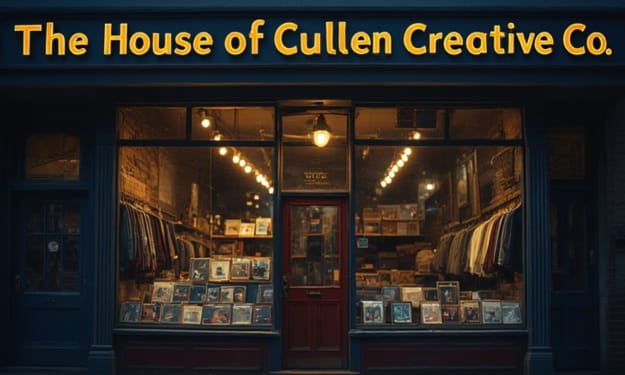
ORIGINS — “Where It All Began”. AI-Generated.
At just 30 years old, Cullen Spencer has already carved out a name for himself as a storyteller — one who writes not just to be heard, but to be felt. His songs pulse with emotion, honesty, and a touch of grit, echoing through the same walls where he first learned what music really meant.
By Jane Carty about a year ago in Interview
Introducing Songstress Shaynah
Shaynah was born into music, her parents, both professional musicians, have inspired her and instilled in her a love for music. This talented soul has supported Sabrina Starke on her “Dreamer’s Tour”, performed on the Codarts/Keymusic talent stage of the North Sea Jazz Festival, and is currently working with HAYP (Ladies of Soul), Anan den Boer (Alain Clark) and Nosa Apolo (Craig David). Her undeniable talent, dedication and hard work were rewarded in December 2014 when she received the “Music Matters Award”. As a result, she proudly released her first EP “DARE” in June 2015, featuring the popular single “Werk It”, which earned her the title of “Radio 6 Soul & Jazz Talent”. In 2018 she came back with newly gained inspiration and a fresh new sound, which translated into the song “Over”, the first single from her most personal album: “Chapter 22”. Her story, wrapped in an emotional musical masterpiece, consists of three EP’s; PUZZLED, WASTED & NAKED”. With her heart on her sleeve and her hurt exposed, she tells the relatable stories of a young human getting to know herself. Today we speak with her to get a better understanding of who she is, and she stands for.
By Shay McNaire about a year ago in Interview