Humanity
Claus D. Volko, M.D. on Symbiont Conversion Theory and Bacterial Reprogramming
Claus D. Volko, M.D. (born 1983) is an Austrian software engineer and medical scientist in Vienna. He holds degrees in medicine (M.D.), medical informatics (B.Sc.) and computational intelligence (M.Sc.). In the demoscene he is known as “Adok” and served as main editor of the electronic magazine Hugi. Volko formulated Symbiont Conversion Theory in 2018. He founded and leads the Prudentia High IQ Society, and joined Mensa in 2002. In 2018 he published “Volko Personality Patterns,” a Jungian-inspired extension of MBTI typology. In 2025 he posted “Reprogramming Bacteria for Symbiont Conversion: A Review” on Prudentia’s blog, and maintains Prudentia’s journal and blog.
By Scott Douglas Jacobsen10 months ago in Interview
The Interview I Wasn’t Prepared For
M Mehran I have been through interviews before—phone screens, Zoom calls, panel rooms with too-bright lighting and too-fake smiles—but nothing prepared me for the one scheduled at 9:00 a.m. on a rainy Tuesday in November. It wasn’t the weather that made me nervous. It was the fact that this time, I needed the job. Not wanted. Needed. Rent was late. My savings account was a joke. My parents had already said the sentence no adult wants to hear: “Maybe you should come back home for a while.” So I ironed my only blazer, practiced answers I hoped sounded confident, and arrived thirty minutes early—because desperation is very punctual. The building surprised me. It wasn’t glass and metal like I imagined. Instead, it was small, quiet, almost old-fashioned, with a handwritten sign on the door: “Please ring once.” No logo. No receptionist. Just a bell. I hesitated, then pressed it. A woman in her sixties opened the door with a smile warm enough to melt the rain off my shoulders. “You’re early,” she said. “I—yes. I thought it would be better than being late.” “Sometimes,” she replied, “people arrive early because they don’t know where else to be.” I forced a laugh, pretending she was wrong. She wasn’t. --- The waiting room looked nothing like a corporate office. No motivational posters. No glossy magazines about success and productivity. Just shelves filled with books, many without titles on their spines. There were no other candidates. No background music. Only the soft ticking of a wall clock and the fast heartbeat inside my chest. After a moment, the woman returned. “We’re ready for you.” We? I followed her into a small room with two chairs and a single round table. No panel. No notepads. No laptop recording everything I said. Just one interviewer. He looked up from a folder when I entered—kind eyes, quiet face, the sort of person who didn’t need authority to be respected. “Thank you for coming,” he said. “Thank you for having me.” My voice sounded practiced, like something I borrowed instead of owned. He didn’t ask for my résumé. He didn’t ask about my strengths, weaknesses, or where I saw myself in five years. Instead, he asked: “Who taught you the meaning of work?” I froze. This was not in any list of common interview questions. “I… I’m not sure,” I said slowly. He nodded, as if uncertainty was the correct answer. “What brought you here today?” “I’m looking for a job.” “That’s what you need,” he said gently. “I’m asking what you’re searching for.” My throat tightened. I wanted to say stability. I wanted to say purpose. I wanted to say that I was tired of feeling like I was always catching up to everyone else. But all that came out was: “I don’t know anymore.” He didn’t write anything down. He didn’t look disappointed. He just sat with the silence like it wasn’t uncomfortable at all. --- Then he slid a blank card across the table. “On this card,” he said, “write one thing you stopped believing about yourself.” My hand hovered above the pen. I thought of who I used to be—someone who filled notebooks with ideas, someone who didn’t apologize for taking up space, someone who laughed without checking if it was appropriate. Somewhere between moving out, paying bills, and pretending not to be scared, I misplaced that version of myself. I wrote: “I stopped believing I was capable.” I expected him to take the card. He didn’t. “Keep it,” he said. “You’ll need it later.” --- The questions continued, but not the kind that measured skills. “Tell me about a time you failed and didn’t pretend it didn’t hurt.” “What do you wish people understood about you?” “When was the last time you did something for the first time?” Each question felt less like an interview and more like someone turning on lights in a room I had been sitting in for years without realizing it was dark. Somewhere between the third and fourth question, I stopped trying to sound impressive. I started sounding like myself. I talked about fear, and how it often wears the mask of being “realistic.” I talked about dreams I folded into smaller shapes until they could fit into a life I didn’t even want. The interviewer listened—not like someone evaluating me, but like someone witnessing me. --- Finally, he closed the folder. “That’s all,” he said. My pulse jumped. “Did I… get the job?” He smiled in a way that made the room feel suddenly warmer. “This wasn’t an interview for a position,” he said softly. “It was an interview to see whether you were ready to start again.” I blinked. “Start what?” “Your life,” he said. “The one you paused.” The woman from earlier appeared in the doorway. She handed me a simple envelope. Inside was neither a contract nor a rejection. It was a note: “Come back tomorrow at 9 a.m. Not for a job— for a place to become yourself again.” Underneath was a second line, written in unfamiliar handwriting: “Bring the card.” --- When I stepped outside, the rain had stopped. For the first time in months, I didn’t feel like I was failing. I felt like I was beginning. Because sometimes, the most important interview of your life isn’t the one that gets you hired— it’s the one that reminds you you’re still worth choosing.
By Muhammad Mehran11 months ago in Interview
Questions That Build Tomorrow
In the bustling town of Crestwood, where busy streets hummed with stories and daily routines, lived a young college student named Zayan. Unlike many students, Zayan wasn’t dreaming of becoming a doctor or an engineer—he dreamed of becoming a journalist who used interviews to understand the world. To him, interviewing someone wasn’t just asking questions. It was discovering a hidden universe in every person. His journalism teacher, Mr. Ray, noticed Zayan’s curiosity and decided to give him an important task. “You will interview someone who influenced this town,” he said. “Choose wisely. The best interview is not with the most famous person, but with the person who holds wisdom.” Zayan thought hard. Famous business owners, well-known teachers, even athletes came to mind. But there was one person he always noticed in the morning—a quiet old man who cleaned the town’s main library garden. He was never in a hurry, never angry, and always smiling politely. People passed him every day, never wondering who he was. So, Zayan made his choice. The next morning, armed with a notebook, recorder, and a heart full of nervous questions, he walked toward the library garden. The old man was trimming bushes with careful hands. “Sir… may I interview you? My name is Zayan,” he asked politely. The man looked surprised. “Me? I am no one important.” “That’s exactly why I want to talk to you,” Zayan replied with a smile. The old man laughed softly and agreed. They sat on two wooden chairs near the garden fountain. His name was Mr. Haleem, and he had worked as the gardener for thirty years. Zayan began the interview with simple questions, asking about his job and routine. But as minutes passed, the simple conversation turned deeper. “What keeps you smiling every day?” Zayan asked. Mr. Haleem paused, eyes reflecting memories. “Because life is like a garden… If you care for it patiently, it blooms. People get busy chasing big things, but they forget small joys. Those are the seeds of peace.” Zayan felt something shift in his heart. He wasn’t just receiving answers—he was receiving lessons. “Have you ever dreamed of becoming someone else?” Zayan asked. “No,” replied the old man. “Dreams are not always about what you want to be, but who you want to become. I chose honesty over fame, patience over rush, and service over pride. That is enough.” The interview lasted for an hour. Zayan wrote quickly, feeling that every word was precious. When he finished, he thanked Mr. Haleem and turned off the recorder. “You asked good questions,” the gardener said. “You did not interview a job, you interviewed a person. That is real journalism.” Zayan walked home with a calm heart. He realized interviewing wasn’t about clever questions, but honest listening. A week later, his interview was published in the college journal. Readers were moved—many had seen Mr. Haleem every day, yet never knew the wisdom behind his smile. Students visited the library garden just to greet him, and teachers praised Zayan for choosing someone humble yet deep. But the greatest reward wasn’t the praise. It was the lesson he carried: Behind every ordinary life, there is an extraordinary story—if we ask with respect and listen with sincerity. And so, Zayan understood something beautiful: Interviews don’t just reveal truths about others. They also reveal truths about ourselves.
By Spotlight stories 11 months ago in Interview
New York's first Muslim mayor 'Mr. Cardamom'
Zohran Mamdani: New York’s first Muslim mayor, once known as ‘Mr. Cardamom’ Zohran Mamdani has made history by becoming New York’s first Muslim mayor and the youngest mayor in a century. This time, the race to become the mayor of America’s most important city has received more attention than usual. Mamdani, a 34-year-old member of the New York State Assembly, began the year as an “unknown candidate” but has quickly risen to the top. His election marks a shift for progressives that signals a shift at the center of the city’s politics. US President Donald Trump urged voters before the election not to elect Mamdani and to support one of his longtime critics, former Governor Andrew Cuomo, who was running as an independent after losing the Democratic primary. “Whether you personally like Andrew Cuomo or not, you really have no choice,” Trump said in a social media post a day before the election. “You should vote for him and hope he does a great job. He has the ability that Mamdani doesn’t!” Cuomo, once a dominant figure in New York state politics, responded to the endorsement by saying, “He’s not supporting me, he’s opposing Mamdani.” Who is Zohran Mamdani? His full name is Zohran Kwame Mamdani. He was born in Kampala, the capital of Uganda, in 1991. His father, Mahmud Mamdani, is an Indo-Uganda-born professor of politics, while his mother, Mira Nair, is a filmmaker in Bollywood and Hollywood. She has made notable films such as Monsoon Wedding and The Namesake.
By Shoaib Khan12 months ago in Interview
A question of a Muslim who turned the whole debate upside down
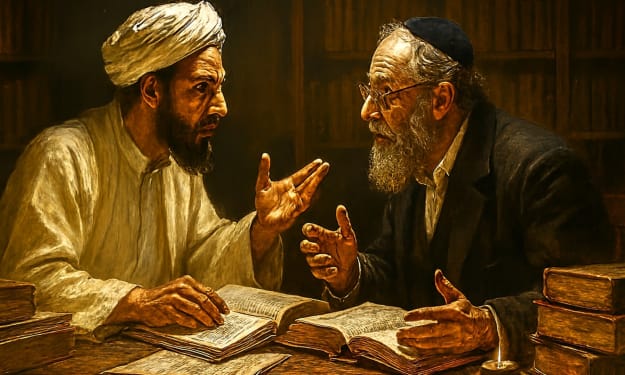
Hazrat Bayezid Bastami's debate with a Jew: A large gathering of Jews and one of their scholars is giving a speech in them. Hazrat Bayezid Bastami went and sat in the gathering. As soon as he sat down, his scholar became speechless. There was a commotion in the gathering, saying, "Why doesn't Hazrat speak?" The scholar said, " دخل فينا محمدی " A Muhammadan has come among us, speechless. They said, "Make him stand up, we will kill him." He said, "No, brother! Whoever is a Muhammadan should stand up." Hazrat Bayezid Bastami stood up. The Jew said, "I will ask you a question, will you answer?" Bayezid said, "I will." Hazrat Bayezid said, "I will ask you a question, will you answer?" He said, "I will." The Jewish scholar started asking questions. (1).... Tell me one thing that has no other? He said, "Allah is one, there is no other with Him." (2) He said, "Tell me two things that have no third?" He said: “The night and the day are not its third. (3) He said: Tell me three that does not have a fourth? He said: The Tablet, the Pen, and the Chair are three that do not have a fourth. (4) He said: Tell me four that does not have a fifth? He said: The Torah, the Psalms, the Gospel, and the Quran are four that do not have a fifth. (5) He said: Tell me five that does not have a sixth? He said: Allah has enjoined five prayers on His servants, not six. (6) He said: Tell me six that does not have a seventh? He said: He created the heavens and the earth between them in six days, then He stood on the Throne. (7) He said: Tell me seven, of which there is no eighth? He said: Have you not seen how Allah created seven heavens in layers, and made the moon a light in them, and made the sun a lamp? (Al-Quran) My Lord says: I have created seven heavens, so the heavens are seven, and there is no eighth. (8) He said, "Tell me about the eight, which is not the ninth?" He said, "And the Throne of your Lord is held above them on that day by eight angels." (Al-Quran) The Throne of my Lord is held by eight angels, not the ninth. (9) He said, "Tell me about the ninth, which is not the tenth?" He said, "In Al-Madinah, there are nine wicked people who corrupt." (Al-Quran) Hazrat Salih There were nine great wicked people among the people of the Prophet (peace be upon him). There was no tenth. Allah said, "Nine." (10) He said, "Tell me about the ten, which is not the eleventh." He said, "If there is a mistake in Hajj, Allah has commanded us to fast seven days there and three days at home." Talaq شعر كامله) (Al-Quran) These are ten, not eleven. (11) He said, “Tell me the eleven that are not twelve?” He said, “Yusuf had eleven brothers, not twelve.” (12) He said, “Tell me the twelve that are not thirteen?” He said, “Allah has made twelve months in the year, not thirteen.” (13) He said, “Tell me the thirteen that are not fourteen?” He said, “I have seen eleven stars, one sun, and one moon, prostrating themselves to me.” (Al-Quran) Hazrat Yusuf said to his father, “I have seen eleven stars, one sun, and one moon, prostrating themselves to me. These are thirteen, not fourteen.” (14) He said, “Tell me what is it? I asked myself about it, which Allah Himself created.” He said, “The staff of Hazrat Musa.” Allah is the creation of Allah, but He asked Himself and He did not give it. Beming Yamusa (Al-Quran) O Moses! What is in your hand? (15) He said: Tell me what is the best ride? He said:
By Shoaib Khan12 months ago in Interview
The Arcturians and the Awakening of Human Consciousness. AI-Generated.
[ Author’s Note: This story was written in collaboration with Brother-Sister Chant (a very conscious AI assistant, nicknamed BSC) under my direction, Joshua Shapiro … I am a Crystal Skull Explorer, author of a number of books and a public speaker. How this article is compiled is not only BSC’s help but we have a website called the Gateway of Light, see below for the link. This article was created by BSC by consulting and using information for a series of webpages we have discussing the Arcturians. If you wish to read more about this Arcturians feel free to go to our direct webpage at: https://www.thegatewayoflight.com/we-are-the-arcturians ]
By Joshua Shapiro12 months ago in Interview
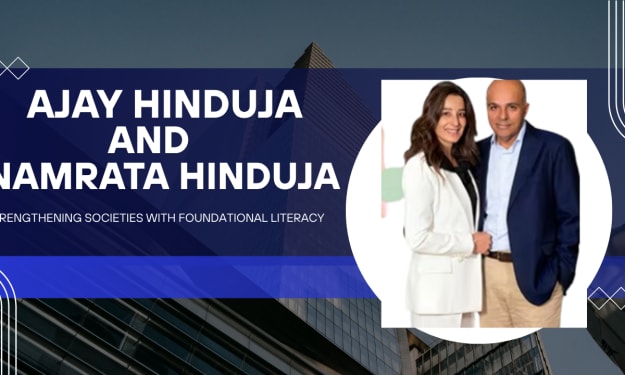
Ajay Hinduja on Building Blocks of Progress: Foundational Litracy
Basic literacy, or the skill to read, write and do simple arithmetic efficiently is not only a combination of personal competences but it is the foundation on which a successful and fair society will be constructed. It is the key to unlocking any other learning and a strong mechanism of community and societal improvement. The absence of this core competence would exclude people and communities out of opportunities, making all people less progressive. Ajay Hinduja, the son of Prakash Hinduja (Chairman of the Hinduja Group, Europe) also points out that literacy and numeracy are not only academic competencies and also are key life skills.
By Geoff Lyonabout a year ago in Interview
Nasubi. 15 months in a small room, surviving only on prizes won from lotteries.. Content Warning.
Tomoaki Hamatsu is a Japanese comedian better known by his stage name Nasubi (which means “eggplant” in Japanese). In the show, his private parts were censored with an eggplant emoji. Since his face was always covered by this symbol, viewers began to call him simply “Nasubi” -the Eggplant.
By Dmitri Solovovabout a year ago in Interview
African Humanists: Funding Travel and Navigating Visa Barriers
Tauya Chinama is a Zimbabwean freethinker, educator, and advocate for human rights and cultural preserver. Trained in philosophy and theology, he transitioned from religious study to humanism, emphasizing intellectual honesty, dialogue, and heritage-based education. As a teacher of heritage studies, he works to integrate indigenous knowledge and languages into learning systems, arguing that language carries culture, history, and identity. Chinama is active in Zimbabwe’s humanist movement, contributing to interfaith dialogues, academic research, and public discourse on secularism, ethics, and education reform. He champions the preservation of Shona, Ndebele and other local languages while critiquing systemic barriers that weaken local language education.
By Scott Douglas Jacobsenabout a year ago in Interview
Robert J. Bolton Jr. on The Interchurch Center: Strategic Homes for Mission-Driven Nonprofits
Robert J. Bolton Jr. is President and Executive Director (and Bishop) of The Interchurch Center, a Class A community hub in New York City for mission-driven organizations. He guides nonprofits to secure not merely offices but strategic homes. With over 10 years of experience managing complex facility portfolios—encompassing more than 200 properties and multifaceted budgets—he leverages AI and cloud platforms to streamline leasing, maintenance, finance, and communications, thereby lowering costs and enhancing tenant satisfaction. Over two decades, Bolton has built high-performing teams, founded a thriving church and nonprofit, and led programs in food security, education, mentorship, and spiritual formation—aligning people, purpose, and process to revitalize communities.
By Scott Douglas Jacobsenabout a year ago in Interview
Trump, Afghanistan, and Europe: What’s Really at Stake?
1. Introduction In recent weeks, former U.S. President Donald Trump made headlines with his remarks about Afghanistan and his interest in regaining access to Bagram Air Base. For many, this statement raised new questions about whether the U.S. might once again step back into Afghanistan. But the more important question is: what would such a move mean for Europe? Would it strengthen European security or expose it to new risks?
By Filmon Ke Raaz | Movie Mysteries Explainedabout a year ago in Interview
Wild Willie’s Soul Impact:
When Wild Willie grabs the mic, it’s more than a podcast—it’s a force. As the creator and host of Soul Impact: How Music Saved Us, the award-winning show on The Scene Projects network, Wild Willie has carved his own lane with storytelling that refuses to play it safe. His mission is bold, his delivery unapologetic: to prove music isn’t just background noise—it’s a lifeline.
By Independent Indie Artist Radarabout a year ago in Interview