
Sofia Nordgren on Illegal Adoption, Identity, and the Search for Biological Family
How does Sofia Nordgren's story illuminate illegal adoption, adoptee identity, and the search for biological family and justice?

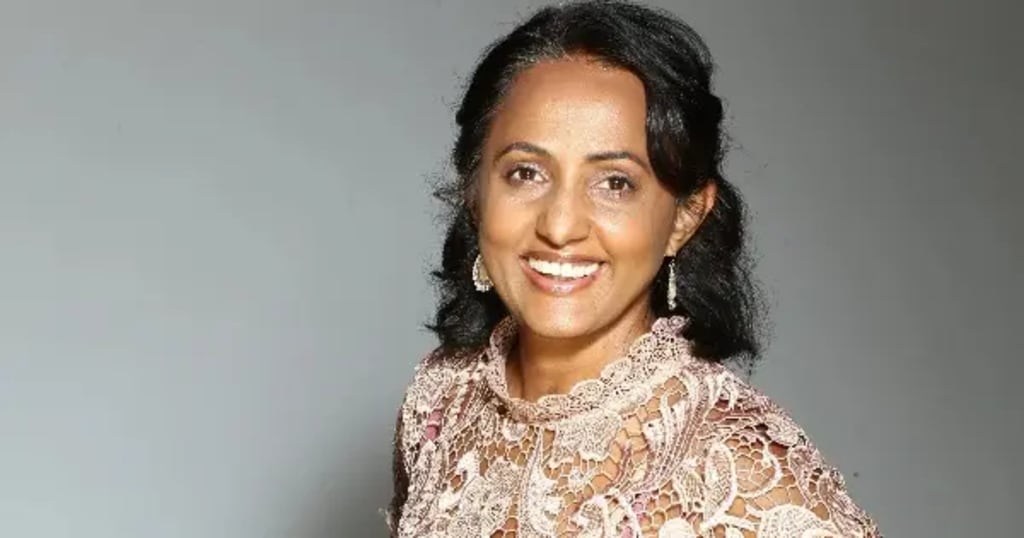
Sofia Nordgren is an international speaker, author, moderator, transformation coach, entrepreneur, and survivor advocate with more than 30 years of professional experience in health, wellbeing, leadership, coaching, and personal development.
With a professional background in nursing, coaching, leadership, and personal development, she has spent more than three decades supporting people through trauma, grief, stress-related conditions, mental health challenges, identity issues, major life transitions, and personal growth. Her experience spans primary healthcare, mental health services, occupational health, elder care, health promotion, education, leadership, and coaching. She is trained as an ICC-certified coach and NLP Practitioner and has continued her professional development in areas including ACT, trauma, resilience, communication, attachment, belonging, identity, and psychological wellbeing.
Nordgren is the founder and CEO of Lifestyle+ in Sweden. Through speaking, coaching, writing, facilitation, moderation, and education, she supports individuals and organizations in navigating change, adversity, identity challenges, leadership development, wellbeing, and personal transformation.
She has moderated events at Stockholm City Hall, spoken internationally in Sweden, New York, and Belgrade, appeared in television programs, podcasts, interviews, documentaries, and media productions, and participated in conferences, leadership forums, and international discussions concerning health, identity, human rights, resilience, and social change. She has also performed stand-up comedy and uses storytelling, humour, and lived experience to communicate complex human issues to diverse audiences.
Nordgren is actively involved in advocacy, board-related work, consultation processes, and collaborative initiatives connected to adoptee rights, human rights, family reunification, inclusion, diversity, anti-racism, mental health, trauma awareness, and social justice.
Over the years, she has built extensive international networks and collaborates with adoptees, researchers, advocates, journalists, filmmakers, organizations, and professionals from multiple countries. She regularly participates in international conferences, webinars, interviews, and cross-border initiatives addressing adoption, identity, family tracing, human rights, and the long-term consequences of family separation.
She has contributed to international media discussions regarding adoption, identity, family reunification, illegal adoptions, falsified records, and adoptee rights. She has been interviewed for an international documentary project concerning illegal adoptions and adoption-related issues and has participated in interviews, podcasts, and discussions with journalists, filmmakers, and media professionals from different countries. Through these opportunities, she has shared both her personal experience and broader perspectives on adoption, identity, trauma, resilience, belonging, family reunification, and social justice.
Born in Bangladesh and adopted to Sweden as a young child, Nordgren has spent decades searching for her biological roots while confronting missing records, contradictory information, institutional silence, and unresolved questions surrounding her origins. Her search led her back to Bangladesh several times. In 2025, after decades of uncertainty, DNA testing confirmed with near certainty the identity of her biological mother and biological relatives in Bangladesh, providing long-awaited answers while also raising new questions about the circumstances surrounding her separation from her family.
Her personal journey—from orphanage records and missing documentation to DNA-confirmed family reunification—has positioned her as a unique voice in international conversations about adoption, identity, truth, family separation, and justice.
Through public speaking, writing, advocacy, media appearances, and testimony, Nordgren gives voice to adoptees affected by identity loss, family separation, irregular adoption practices, missing records, and the lifelong search for truth. Her work supports broader efforts for documentation, family reconnection, emotional healing, accountability, human rights, and justice for adoptees and biological families worldwide.
She is currently involved in book projects, international speaking engagements, advocacy initiatives, and documentary projects related to adoption, identity, family reunification, resilience, and the search for truth across borders and generations.
In this interview, Scott Douglas Jacobsen speaks with Sofia Nordgren about her search for biological origins after adoption from Bangladesh to Sweden. Nordgren describes childhood racism, silence around adoption, missing records, conflicting narratives, emotional displacement, and the profound impact of reuniting with her biological mother after decades apart. The conversation expands to illegal adoptions, financial incentives, weak accountability, international justice gaps, and the need for practical, emotional, and institutional support for adoptees and birth families seeking truth and repair worldwide.
Scott Douglas Jacobsen: Today, we are here with Sofia Nordgren, a distinguished public speaker and survivor advocate, to discuss an issue that came into my personal and professional awareness as a journalist: children allegedly stolen or unlawfully taken from their families, however one chooses to frame it. This experience has directly impacted your own life story. A good opening point would be your own story. You gave a public presentation at the Congress. What do you consider the most emotionally significant parts of your story that resonated with other people who have gone through similar experiences?
Sofia Nordgren: What touched me during and after my speech was realizing, when I showed my symbolic empty frame, that I was saying, "Here is my missing family, parents, or relatives." Then, when I showed the picture of myself with my biological mother, whom I later found, people were deeply moved and touched. They wanted to come forward, take pictures, and express how emotionally happy they were for me.
At the same time, I understood that this also reflected something within themselves, especially mothers who were missing their own babies. For me, being on the other side of this experience, it was extremely important on an emotional, psychological, and spiritual level to find my biological mother. I understood that this was meaningful not only to me but also to the audience and the other people present.
Jacobsen: How would you describe those emotions? What was the emotional composition of the experience?
Nordgren: You mean the emotions that emerged from what I shared?
Jacobsen: Yes.
Nordgren: People came to me while I was standing there showing the picture. They said, "Wait, let me take a picture." They hugged me and wanted to connect.
Afterwards, people were very open, warm, and emotionally engaged. They wanted to talk with me, take pictures, and interview me for more information. Even after the conference, when I was sitting down, people continued asking questions. The depth of the questions, the curiosity, and the desire to know more were amazing to witness.
I understand this conversation is crucial and needed. I was a little surprised on some level, but also very happy. This continued throughout the evening and even the next morning at breakfast. People spoke with me and wanted to take pictures. I felt as though I had found a new extended family beyond my adoptive parents and my biological parents.
People also wanted to connect with me through social media, LinkedIn, and other channels connected to the British documentary project. It was like a river flowing in every direction.
Jacobsen: When you spoke with individuals at the Congress in Belgrade, Serbia, what common feelings and experiences did you notice among people from different countries and backgrounds, even though many discussions focused on allegations surrounding missing babies and adoptions connected to Serbia?
Nordgren: It is a sensitive question, but I can say that people came with different motives and experiences. If I understand your question correctly, you are asking about the emotional drive that brought us there. I would summarize it by saying that everyone carried deep pain and trauma, but also a profound longing to share their experiences and seek justice. People wanted to find ways to support one another and work together.
There were many people with strength and determination despite struggling against different hospital systems and bureaucratic institutions. Many people were devastated. I could see the pain in how, in different situations, we felt forced to struggle against systems we believed had failed to support us.
That was the overall picture I experienced: people felt deeply wronged and denied justice. They are trying to get justice, find new ways to address these issues, connect, and find the original babies or children. In my case, I wanted to find my biological parents.
Jacobsen: Most people who go through this experience and have some awareness of the reality probably do not speak publicly about it. I suspect that those who do come forward are the rarer individuals who are motivated by the injustice and pain they have experienced, especially when they encounter others who share similar experiences. What do you think distinguishes those who remain private from those who are willing to speak publicly?
Nordgren: That is an interesting question. I can only share my own perspective. If I begin with myself, I feel that I have been holding back my truth. I was silenced within my adoptive family and throughout my upbringing. It was not acceptable to talk about adoption. In my case, I grew up in a dysfunctional family with a great deal of conflict. My adoptive mother was often harsh toward me, so I felt suppressed.
From a young age, I have felt a strong sense of justice and a deep resistance to oppression. I wanted to bring my experiences into the light and share them with others. However, as you say, many people do not dare to share their stories.
I know many adoptees. I speak from that perspective because I am adopted myself. I participate in forums and networks for adoptees and have been engaged in adoption-related issues in Sweden since 1995. For many years, people spoke very little about these experiences. Later, social media platforms such as Facebook created more opportunities for connection.
Even then, many people only shared a little about their struggles, pain, thoughts, or challenges. For example, returning to one's country of origin, searching for original documents, or trying to find biological parents, if they are still alive, can require confronting significant trauma. Many people do not dare to do that, or do not want to revisit those experiences.
I have friends who are adopted and do not want to talk about adoption at all. There are many different levels of engagement. Some people say, "I do not have a problem. I had a good family experience," or they have other reasons for remaining private.
Some people do not talk about adoption, some people talk about it a little, and some people are willing to be vulnerable and share some of their pain. It exists on a spectrum.
Today, I am 52 years old and have lived in Sweden for approximately 50 years. I am an adult with a great deal of life experience. Younger adoptees may still be struggling to speak openly about their experiences. They may find it difficult, feel ashamed, or not have someone they trust enough to talk to.
In my own case, I also have a professional background. I am a nurse, a trained coach, and an experienced public speaker. I have given presentations in healthcare settings and for various organizations in Sweden. I have also performed stand-up comedy. Through those experiences, I have trained myself to be comfortable in the public eye.
I have spoken publicly in Sweden and New York, so I have had extensive practice. That is another factor. Speaking publicly in general is one thing. Speaking publicly about deeply personal trauma and emotional experiences requires a different kind of courage.
I can tell you that I received responses on social media and from friends who said, "Wow, did you share that in English at an international congress? How did you dare to do that? You are so brave." I met other people who asked, "How did you do it? How did you manage to go there and speak about it?"
There is a significant difference between having an experience and being willing to share it publicly. To stand in front of an audience and speak about something so personal is an entirely different step.
I can only share my own experience and what I have observed in others. People are motivated by different things. Some seek justice. Some carry profound pain, rage, or anger. Others want to channel that pain or trauma into something productive. They ask themselves, "How can I create change? How can I make an impact?"
There is no simple answer to why some people dare to share their stories publicly, and others do not. You were there yourself, and you saw that some people were willing to tell their stories.
Some individuals may have had relatively stable upbringings and therefore feel more comfortable speaking publicly. I do not want to make assumptions. However, for many adoptees who experienced challenging childhoods, it is not easy to share their stories in public. A few do, but not many.
That may not be a complete answer to your question, but it is my answer.
Jacobsen: It does not have to be a complete answer. It only has to be your answer.
Scott Douglas Jacobsen is a blogger on Vocal with more than 200 publications on the platform. He is the Founder and Publisher of In-Sight Publishing (ISBN: 978–1–0692343; 978–1–0673505) and Editor-in-Chief of In-Sight: Interviews (ISSN: 2369–6885). He writes for International Policy Digest (ISSN: 2332–9416), The Humanist (Print: ISSN, 0018–7399; Online: ISSN, 2163–3576), Basic Income Earth Network (UK Registered Charity 1177066), Humanist Perspectives (ISSN: 1719–6337), A Further Inquiry (SubStack), Vocal, Medium, The Good Men Project, The New Enlightenment Project, The Washington Outsider, rabble.ca, and other media. His bibliography index can be found via the Jacobsen Bank at In-Sight Publishing, comprising more than 10,000 articles, interviews, and republications across more than 200 outlets. He has served in national and international leadership roles within humanist and media organizations, held several academic fellowships, and currently serves on several boards. He is a member in good standing in numerous media organizations, including the Canadian Association of Journalists, PEN Canada (CRA: 88916 2541 RR0001), Reporters Without Borders (SIREN: 343 684 221/SIRET: 343 684 221 00041/EIN: 20–0708028), and others.
Image Credit: Sofia Nordgren.
About the Creator
Scott Douglas Jacobsen
Scott Douglas Jacobsen is the publisher of In-Sight Publishing (ISBN: 978-1-0692343) and Editor-in-Chief of In-Sight: Interviews (ISSN: 2369-6885). He is a member in good standing of numerous media organizations.
Enjoyed the story? Support the Creator.
Subscribe for free to receive all their stories in your feed.
Comments
There are no comments for this story
Be the first to respond and start the conversation.