
Nestor Barchuk on Ukrainian POW Torture, Azov Captives, and Russia’s Red Lines
How does Nestor Barchuk explain Russia’s torture of Ukrainian POWs, harsh treatment of Azov captives, and hollow “red line” threats?

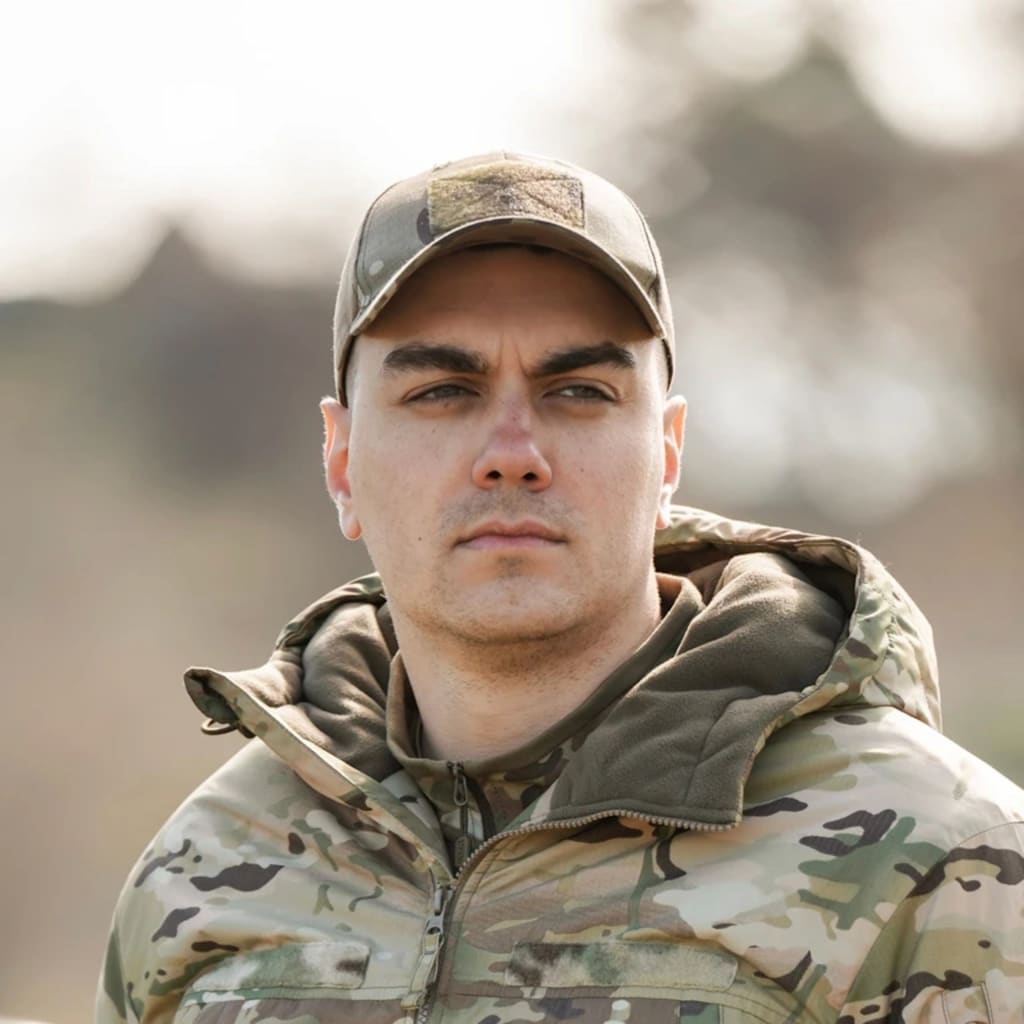
Nestor Barchuk is a Ukrainian lawyer, serviceman, and international advocacy specialist with the 1st Corps Azov of Ukraine’s National Guard. He works on securing the release of Ukrainian prisoners of war and advancing investigations into the Olenivka prison-colony massacre. Before joining Azov, Barchuk served as a legal expert and international relations manager at DEJURE Foundation, a Ukrainian rule-of-law NGO focused on judicial reform and anti-corruption accountability after the Revolution of Dignity and democratic legal standards. Interview conducted after the event “Anatomy of Torture” of the Center for Civil Liberties.
Scott Douglas Jacobsen interviews Nester Barchuk, a Ukrainian junior sergeant and Strategic Communications representative with Azov’s First Corps, about Russia’s systematic torture of Ukrainian prisoners of war. Barchuk details medical abuse, forced tattoo removal, harsh treatment of Azov captives, stalled exchanges, and Moscow’s hollow “red line” threats. The exchange links POW accountability, Olenivka, propaganda against Azov, and Ukraine’s struggle to secure prisoner releases amid Russia’s escalating war and diplomatic intimidation before global courts act decisively.
Scott Douglas Jacobsen: What is your current title and work?
Nester Barchuk: I am a junior sergeant, and I represent the Strategic Communications Unit within the First Corps of the National Guard of Ukraine. My focus is international relations regarding issues of Ukrainian prisoners of war, particularly Azov prisoners of war in Russian captivity.
Jacobsen: What are the major trends we are seeing in the treatment of Ukrainian POWs?
Barchuk: First, yesterday, there was a strong presentation with excellent speakers on the panel.
The panel and its report underscored one of the major and most concerning trends: medical personnel being used in the torture or abuse of Ukrainian prisoners of war. We hear many stories and testimonies from Ukrainian prisoners of war and others about horrific cases.
Yesterday, a representative from the Coordination Headquarters for the Treatment of Prisoners of War in Ukraine, which operates under the Main Directorate of Intelligence of the Ministry of Defence of Ukraine, said that treating toothaches without anesthesia is very common.
In another case, a man had a broken jaw and could not eat or chew properly. A Russian guard saw this and sent him to a doctor, essentially a dentist. Although the man had a broken jaw, his teeth were removed without anesthesia.
This is quite common. That is one trend. According to Danielle Bell, head of the UN Human Rights Monitoring Mission in Ukraine, more than 96% of Ukrainian prisoners of war held by Russia have been subjected to torture.
Those are official UN findings. Basically, almost everyone has been affected. We know this is a deliberate policy, not a series of isolated incidents, because The Wall Street Journal conducted an investigation titled “‘Be Cruel’: Inside Russia’s Torture System for Ukrainian POWs.”
In 2022, Russia's Federal Penitentiary Service, with the involvement of the FSB, the Federal Security Service of Russia, reportedly gave instructions that enabled systematic violence against Ukrainian POWs. Guards were told there would be no restrictions on violence and that they would not be held accountable.
Those instructions were then distributed among different detention sites where prisoners of war were being held. From Russian attorneys, we know that penitentiary system workers went on business trips between different prison colonies and pretrial detention centers to exchange knowledge and practices.
Even when there are thousands of kilometers between detention sites, we still see similar practices and similar methods of torture.
One particular prisoner had undergone a life-saving abdominal procedure, which left a surgical scar on one side of his abdomen. In Russian, the words “Glory to Russia” were carved into the scar tissue.
Yes, we are speaking of scar tissue, cut deeply into the person. Prisoners are also often burned with hot metal.
If Ukrainian prisoners of war have tattoos of the Trident, Ukrainian flags, or symbols of our brigade or corps, signifiers of Ukrainian identity or independence, those tattoos are forcibly removed with a rock or a piece of metal.
Within that general picture, there is a very challenging group of prisoners of war: the Azov Brigade prisoners of war. Azov has a legacy. It was one of the first volunteer units to emerge in the first weeks of Russian aggression in 2014. It later developed into a regiment, then into a brigade, and now forms the foundation of the First Corps Azov of the National Guard of Ukraine.
After the defence of Mariupol, Azov became one of the main symbols targeted by Russia and has been heavily demonized in Russian propaganda, both domestically and internationally.
According to our testimonies, testimonies from prisoners of war from our units, civilian accounts, and international reports, Azov prisoners of war receive especially harsh treatment. They often have to wear different clothing from other prisoners of war to single them out.
This is also because Azov is a special forces unit, and because the unit is effective and highly motivated. The vast majority of its members are volunteers, so there is specific treatment.
We also see that Russia is very reluctant to exchange Azov prisoners of war because they have symbolic meaning for Russia. Even in major exchanges, such as the 1,000-for-1,000 exchange in 2025, very few Azov Brigade prisoners of war were included. At the current pace, it could take decades to bring them all home.
Approximately 1,400 Azovstal defenders were taken into captivity. Now, around 700 remain in captivity. That may sound positive because roughly half have already been exchanged. However, large numbers of Azov prisoners were exchanged earlier for Viktor Medvedchuk and Russian pilots.
After the Kursk operation, when Ukraine captured Russian conscripts, FSB personnel, and Akhmat fighters, Russia was interested in getting them back. That was the only time I know of when Russia actually initiated negotiations on an exchange. There may have been a couple more cases. In all other cases, Ukraine has been the side initiating the process.
Jacobsen: Why the particular animosity toward Azov from the Russians? The particular animosity, the extra emphasis, different clothing, harsher treatment, and greater reluctance to conduct full exchanges. So the exchanges involving them only partially involve them.
Barchuk: I think the first reason is the symbolic meaning of the unit. Azov is one of the main targets of Russian propaganda, both inside Russia and internationally, including in Europe and many other countries.
Jacobsen: We are looking at you, Canada. Side note: there is all this hullabaloo about bombardments against targets inside Russia, deep strikes, long-range strikes. As we both know, there have been more than a few recently, including the lid coming off from one of Russia’s own anti-missile systems. The response from the Russian side has essentially been lacklustre.
I think this is a pretty clear indicator of grandiose threats: once they are breached, the response is nowhere near what had been claimed. What are some other things we can take as indicative of statements made as warnings, with threatening language from Russian authorities, and then the response after devastating strikes on oil refineries or other targets?
Barchuk: What do you mean by that?
Jacobsen: The Russians will say, “If you attack us, we will launch nuclear strikes,” or “We will bomb Paris and London,” and so on. Then the attacks happen, and basically there is no major response. There were attacks on Kyiv on May 24, June 2, and June 15 that were substantial by the metrics of the last 14 years, but in terms of an actual consistent response corresponding to the level of threat they made, I think the Russian response has been quite weak. What are your thoughts?
Barchuk: Russia has used every weapon it has except nuclear weapons. Every time Ukraine received new arms from its partners, for example, HIMARS, Patriots, or any new system that was not necessarily a game changer but changed the nature of warfare here, Russia said that it would be a red line. Then nothing followed.
Even in Russia, there is a meme or joke that people have heard about these red lines so many times that they are “brown lines” now. So, yes, we do not see meaningful answers to the crossing of those red lines.
For example, Putin or Lavrov stated that Kyiv would now be systematically bombarded in response to something. However, Kyiv had already been bombarded before. If you were here in winter, the strikes were every week, the same as now. I do not know what he is trying to achieve, not only Putin, but also his government representatives.
I think they are trying to influence Western diplomatic missions here, or they want to threaten them.
Jacobsen: They were telling all the diplomatic missions to leave.
Barchuk: Yes, but that was done by Lavrov. Even at the beginning of the full-scale invasion, Russia did not say it publicly. It was conveyed through unofficial, or perhaps official but non-public, channels through the ministries of defence. Then a few embassies left.
However, when it is said openly by the head of the Ministry of Foreign Affairs of Russia, it is more like a public threat that is ungrounded now because, as I said, Russia has already used every weapon it has. They even used this Oreshnik system.
Barchuk: They used it to bomb garages in Bila Tserkva, to bomb territories they claim are their own. The previous time, it was the Donetsk region that was hit by a Russian strike. So I do not think we will see any harsh answer to crossing any red line that Russia is drawing, because they have already used everything they have.
Jacobsen: Is there any will, even at the level of the oligarchs, to use thermonuclear options?
Barchuk: In Russia?
Jacobsen: By oligarchs, or those around Putin?
Barchuk: I do not know. I heard an interview with the former Russian prime minister, Mikhail Kasyanov, if I am not mistaken. He was prime minister between 2000 and 2004. He said there is growing resistance, or growing anger, among Russian business owners, major business owners. They are trying to push or encourage Putin to end this war somehow.
However, there are only a few options: to escalate and hit NATO or European countries, or to back off, negotiate, and make a deal. At this point, given all the goals of the so-called special military operation, that would look like capitulation for Russia.
So it looks bad for them. However, I do not know whether the oligarchs are reacting in any meaningful way.
Jacobsen: Thank you very much for the opportunity and your time, Nestor.
Scott Douglas Jacobsen is a blogger on Vocal with more than 200 publications on the platform. He is the Founder and Publisher of In-Sight Publishing (ISBN: 978–1–0692343; 978–1–0673505) and Editor-in-Chief of In-Sight: Interviews (ISSN: 2369–6885). He writes for International Policy Digest (ISSN: 2332–9416), The Humanist (Print: ISSN, 0018–7399; Online: ISSN, 2163–3576), Basic Income Earth Network (UK Registered Charity 1177066), Humanist Perspectives (ISSN: 1719–6337), A Further Inquiry (SubStack), Vocal, Medium, The Good Men Project, The New Enlightenment Project, The Washington Outsider, rabble.ca, and other media. His bibliography index can be found via the Jacobsen Bank at In-Sight Publishing, comprising more than 10,000 articles, interviews, and republications across more than 200 outlets. He has served in national and international leadership roles within humanist and media organizations, held several academic fellowships, and currently serves on several boards. He is a member in good standing in numerous media organizations, including the Canadian Association of Journalists, PEN Canada (CRA: 88916 2541 RR0001), Reporters Without Borders (SIREN: 343 684 221/SIRET: 343 684 221 00041/EIN: 20–0708028), and others.
Image Credit: Nestor Barchuk.
About the Creator
Scott Douglas Jacobsen
Scott Douglas Jacobsen is the publisher of In-Sight Publishing (ISBN: 978-1-0692343) and Editor-in-Chief of In-Sight: Interviews (ISSN: 2369-6885). He is a member in good standing of numerous media organizations.
Enjoyed the story? Support the Creator.
Subscribe for free to receive all their stories in your feed.
Comments
There are no comments for this story
Be the first to respond and start the conversation.