
Mike Wilson and Svitlana Didkivska on Ukrainian Cowboy Culture, Kyiv Western Saloon, and the Cowboy Fair
How are Mike Wilson and Svitlana Didkivska building cowboy culture, veteran community, and Western traditions in Ukraine?

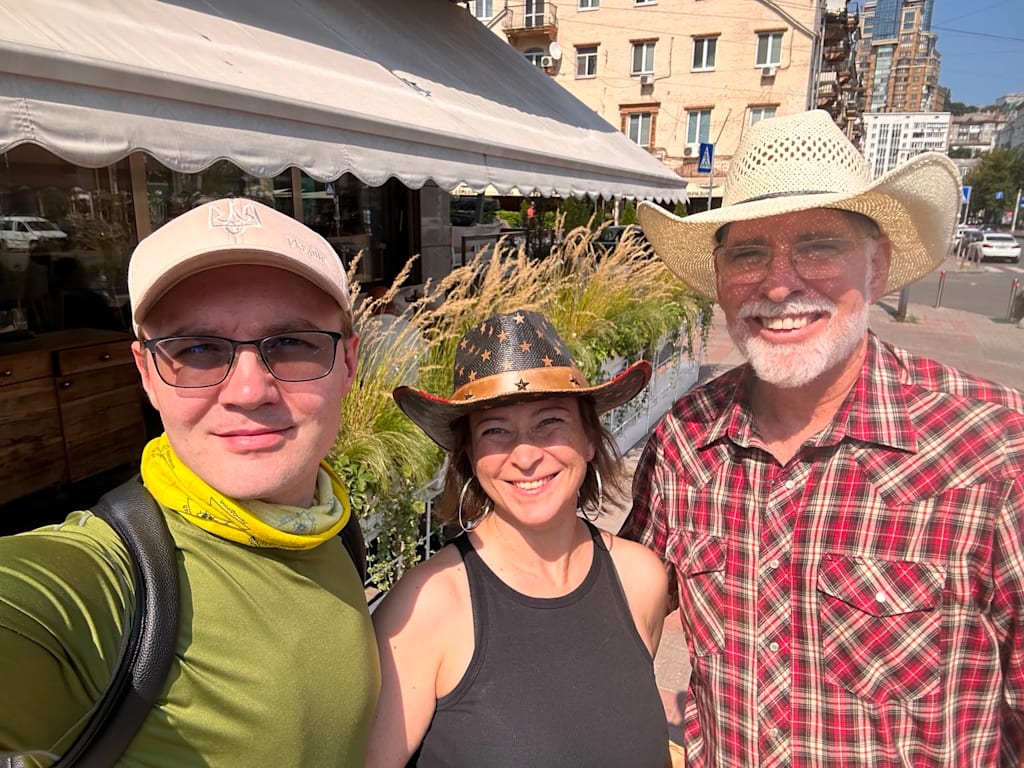
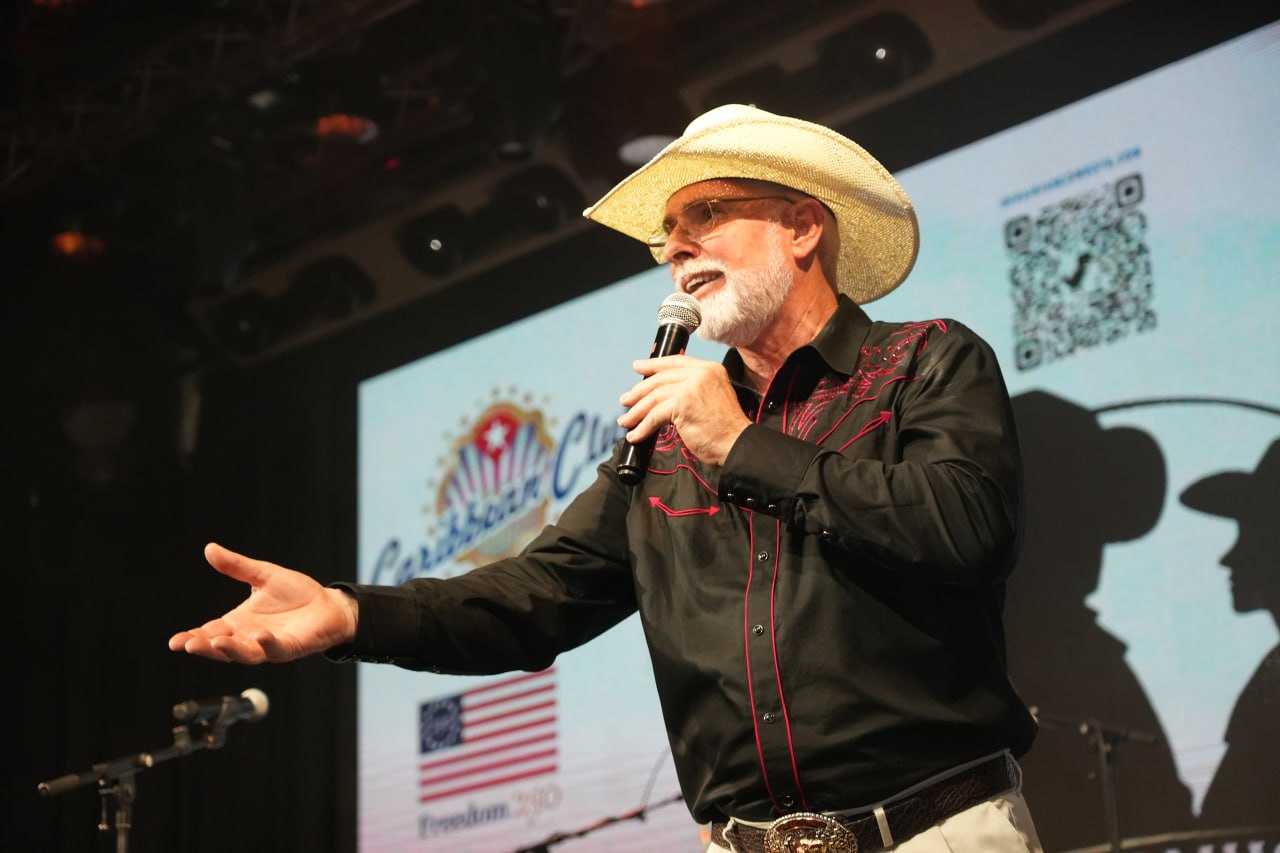
Mike Wilson is a United States Marine Corps veteran, entrepreneur, founder and president of the Association of Ukrainian Cowboys, and owner of Kyiv Western Saloon. Svitlana Didkivska is the association’s vice president and saloon director. Together, they promote Western culture in Ukraine through community events, equestrian activities, dancing, family entertainment, and planned veteran support. Their work connects American cowboy traditions with Ukrainian Cossack, horse, frontier, music, and community traditions in contemporary Kyiv amid wartime Ukraine. Cowboy Fair 2026 hosted by Association of Ukrainian Cowboys.
In this interview, Scott Douglas Jacobsen speaks with Mike Wilson and Svitlana Didkivska about the Association of Ukrainian Cowboys and the appeal of Western culture in Ukraine. They explore parallels between cowboy and Cossack traditions, equestrian life, frontier ideals, clothing, dance, gender roles, family values, and community. Wilson and Didkivska also discuss Kyiv Western Saloon, veteran reintegration, and their September 2026 Cowboy Fair featuring horses, food, vendors, music, and line dancing at the Kyiv Hippodrome.
Scott Douglas Jacobsen: So, what is the purpose of the association? Why is it important to bring this culture to Ukraine? Moreover, what has been the response from Ukrainians to cowboy culture in Ukraine?
Mike Wilson: About the Association of Ukrainian Cowboys, the main thing is to introduce the culture of the Old West. However, Ukraine parallels that a little bit. They have a cattle culture, they have an equestrian culture here, and they have a settlement culture too.
When you go west and look at all the different types of homes and the way that people have developed their lives over thousands of years, you can see that. However, the romance of the West never dies, and everybody gravitates to it. You see it in movies, and you see it in apparel.
Even now, you are seeing so many more cowboy boots being worn by girls. They are very stylish. They love that feel and the way it looks.
Moreover, now we are beginning to see a few more cowboy hats being introduced out there. A lot of that comes from what Svitlana and I have already done in promoting the association.
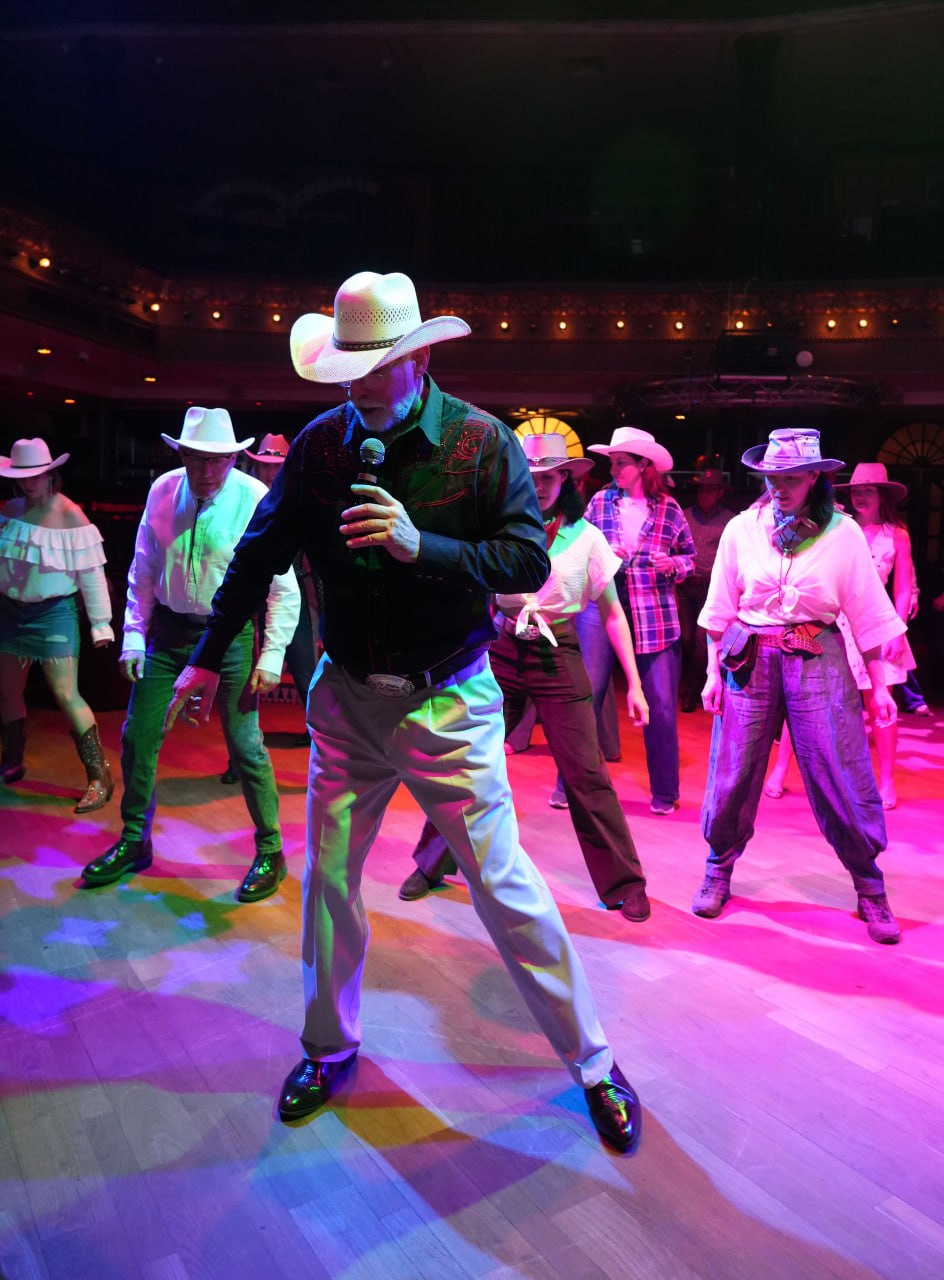
Svitlana Didkivska: I want to add, from my perspective, that I understand I had this certain type of spirit in me many years ago. Moreover, the most interesting thing is that when you are wearing a hat, you feel different. I love to look at myself in a mirror, in a hat and boots, and it looks amazing. I even feel different. Moreover, as Mike said, we have a lot of things in common with this.
Wilson: Cross-cultural. Yes. Mountains, music. Even when we started to look at the videos, just the music, cowboy music, I was thinking, “It looks like the Carpathians.” The Carpathians, with these cheesemakers there. It is very, very similar.
Moreover, as far as the apparel goes, it changes your whole persona. Internally, you actually feel it when you put on the hat and the boots. Moreover, you do not have to be a wrangler, someone out there working cattle, to have that feeling and have that emotion.
The cowboy spirit is very unique because it is about hard work. It is about ruggedness.
For me, it is about a lifestyle of God, country, and family. It is very nuclear-family-oriented, with Judeo-Christian-type values. Moreover, Ukraine has a deeply rooted Christian tradition.
That Christian tradition goes back more than a thousand years. Kyivan Rus’ officially adopted Christianity under Volodymyr the Great in 988. Who brought Christianity here?
Volodymyr the Great.
Didkivska: But Volodymyr began building churches in Kyiv.
Wilson: He promoted Christianity throughout Kyivan Rus’, and that helped establish Christian values here.
However, we are talking about more than 1,000 years ago, too. Those values became deeply rooted. Volodymyr promoted Christianity throughout his realm.
His influence was not limited to Kyiv. The Christianization of Kyivan Rus’ had a significant influence across the region and on the subsequent development of Eastern Europe.
That Christian civilization in Kyivan Rus’ really took root here. Before that, there were various pagan religious traditions.
Jacobsen: And paganism, when I talk to evangelical theologians in my hometown in Canada, historically and theologically, the simplest description from a Christian perspective is often the pre-Christian religious traditions. However, “pagan” is not simply a synonym for “non-Christian.”
Wilson: People can also identify with modern Pagan traditions today. So it has nothing to do with sexual orientation or whether someone lives a good or bad life. Someone may not share the moral convictions taught within Christian traditions.
Jacobsen: If they do share some of them, they may arrive at those convictions through a different ethical framework.
Wilson: However, that romance is so attractive. I have thought about it over the years.
Jacobsen: Is it a romance with the idea of a never-ending frontier?
Wilson: It is hard to say. Because the frontier is always moving outward, right?
Jacobsen: Now space is the final frontier. You have gone so far west that you have gone east.
Wilson: Right, yeah.
Jacobsen: So we are always exploring new ideas, new lives, something new, right? That is part of what “frontier” means.
Wilson: And yeah, the West was carved into that mould. However, it is not only the frontier, because those geographic frontiers have already been explored. What lasts is the culture.
Ukrainians are embracing it. They are loving it. The praise and compliments that we get just walking down the street, or wherever we are, are remarkable. Wherever we go, we are always receiving compliments. People are always taking videos of us from a distance.
It is attractive. However, why is it attractive? I went through this question a few years ago when I was putting this together.
For me, it has to do with ideas about masculinity and femininity. What is the traditional cowboy ideal of a man? He is hardworking, right?
He uses his hands. He builds infrastructure. He builds buildings. Traditionally, that image emphasizes physical strength and manual work.
This has nothing to do with a misogynistic attitude or anything like that. The way I see it, men and women can bring different strengths. One is not better than the other.
Jacobsen: So you are speaking about complementarian theology around gender?
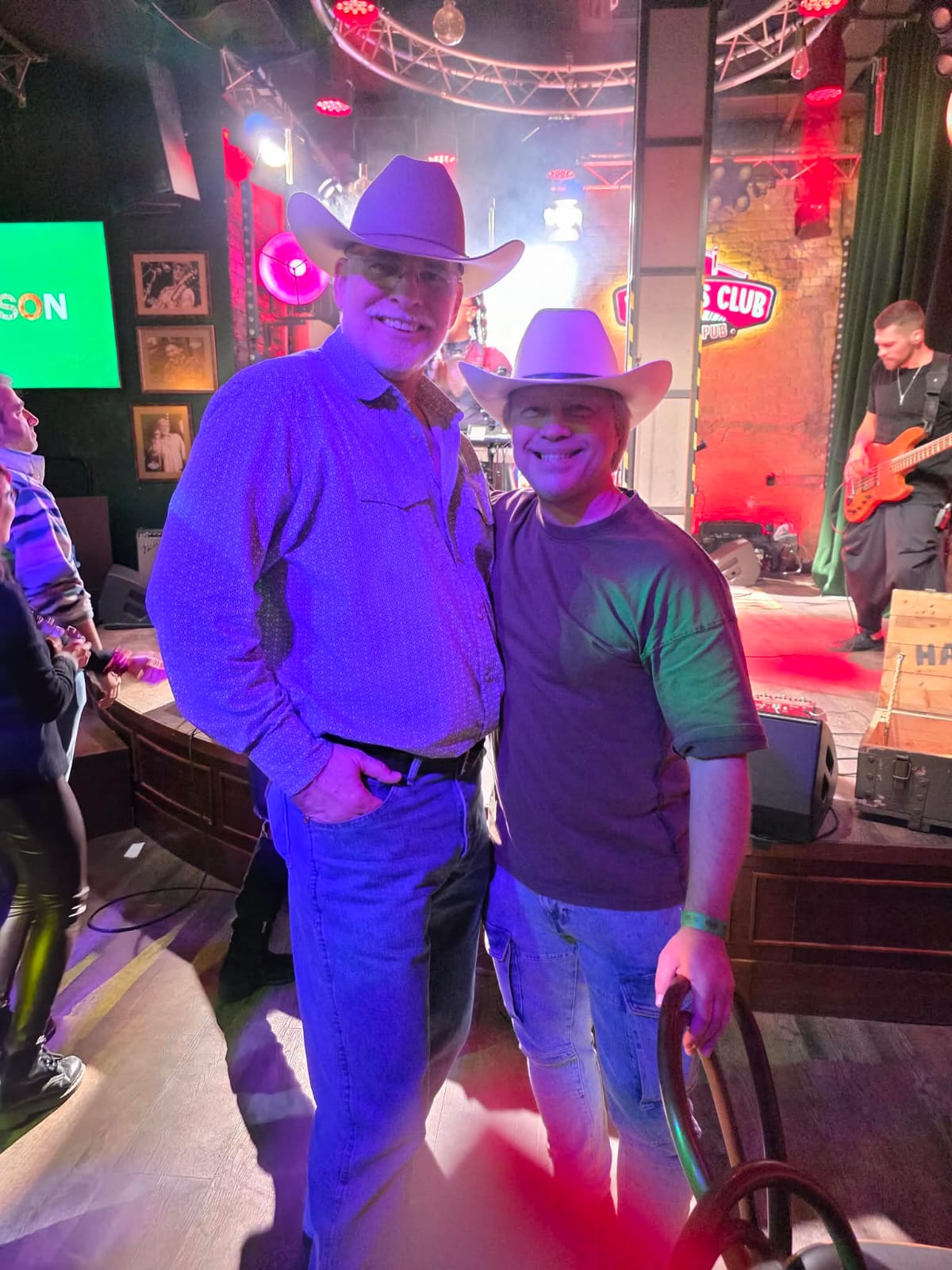
Wilson: Correct. They are complementary, and they need each other. So there is something about that traditional masculinity. When you put on a cowboy hat and cowboy boots, and you wear your Wrangler jeans, women start...
Jacobsen: I have my cowboy muck boots on and Wrangler jeans on now. This comes from the workwear of a farmer. This shirt is sun-protective, and it is good for a cold night. This is from when I used to muck stalls in the mornings, right? When it is super cold out.
Wilson: It has an appeal because it speaks of responsibility. It speaks of toughness. It speaks of hard work. It says, “I take care of business.” Moreover, some women gravitate toward that.
They adore that because they love masculinity. In Ukraine especially, from what I have seen, traditional ideas about masculinity and femininity remain strong. Of course, there are feminists here, and Ukraine does have an organized feminist and women’s-rights movement, but not every Ukrainian woman identifies with feminism in the same way.
Jacobsen: Or if they do identify with feminism, they may interpret it in a particular way. For instance, on March 8, International Women’s Day, one impression I have gotten from some young women here and elsewhere is that they treat it partly as a celebration of women. At the same time, International Women’s Day has deep historical connections to women’s rights movements. Ukraine also has initiatives such as She Drives, which expands employment opportunities for women in transportation.
So you can celebrate women while also supporting women’s rights movements or feminist movements. From what some Ukrainian women have told me, one tension can be between pursuing greater individual opportunity and retaining a sense of cultural identity. It is the idea of, “We want self-actualization, but we do not necessarily want to lose our cultural identity in the process.” They used March 8 to celebrate women’s rights and their aesthetic and sensibilities around Ukrainian femininity.
Wilson: And many of the women I meet in Ukraine are very feminine. Yes, they are strong. They take care of their families. Many cook, care for their children, work, and do all these things.
Jacobsen: However, remember one thing. There is a joke that the one thing men are afraid of is not the front line or the war, but an angry Slavic woman. That is a joke I have repeated to Ukrainians a few times, and they usually laugh.
Wilson: Some men even joke that they find more peace on the front line than at home. As a masculine man, dressed this way, and as a family man, one thing that can make a woman feel amazing is knowing that I am attracted to her, right? Moreover, when she puts on the hat and the cowboy boots, she gets to feel sensual and sexy.
She looks at herself, and she knows that people are noticing her. For anybody’s ego, that can be a massage. Moreover, that masculinity can make a woman feel safe and secure. Then she can feel feminine and sexy. When you put on those short shorts, that cowboy hat, and those cowboy boots, it is just a bombshell.
Very attractive. Thus, they complement each other. That is part of the cowboy spirit.
The guys are out there roping cattle, bringing them down, and branding calves. Women are riding horses too. They barrel race, perform in shows, and do stunts and things like that. They can have a different aesthetic on horseback than men do, but there is also attraction between men and women within that culture.
For me, cowboy culture emphasizes masculinity. The man is a man, and the woman is a woman. A lot of women enjoy being admired by men, and a lot of men enjoy looking at an attractive woman. So it feeds into each other. It is a kind of symbiotic relationship.
Moreover, that is why I think the culture is so attractive. You can see its appeal in many places around the world. We are in Ukraine, and from what we see, Ukrainians are absolutely eating it up.
Jacobsen: I think Western culture, not Midwestern culture, but the culture of the American West, maps quite evenly onto elements of traditional Ukrainian culture.
Wilson: Yes, exactly. Exactly.
Unfortunately, Ukraine has also had relatively high levels of divorce by some measures. Women initiate most divorces.
Jacobsen: It is also a nation under tremendous duress at the same time.
Wilson: Well, yes, there is tremendous duress now. The full-scale war obviously affects families and relationships. However, divorce was also an issue in Ukraine before the full-scale invasion. So there is a longer historical element to it as well. It is a cowboy society.
Didkivska: For centuries, we have known about the Cossacks. You have the men, the horses, the steppe, and the riding. You look at that and think, “Oh, there is almost a cowboy going by.”
So, for me, a person, not only a man, but a man or a woman with a horse, represents freedom. It is about a certain spirit. If you are riding a horse, you are going...
There are no roads. You can go in different directions, wherever you want. So, yeah, it is about the frontier. It is about exploring whatever you want.
Jacobsen: I go back to my phrase, the never-ending frontier. It is not just physical space, but the idea of exploration.
Wilson: It is always in us to explore. It is always in us to seek out a new frontier. So, yeah, back to the association. It has three main aspects. One is bringing together a community of people who have that desire to present this culture and bring it to other people.
Didkivska: You said before that there are a lot of things in common between cowboy culture and Ukrainian culture. We all like to eat good food.
Jacobsen: Bread and meat and liquor.
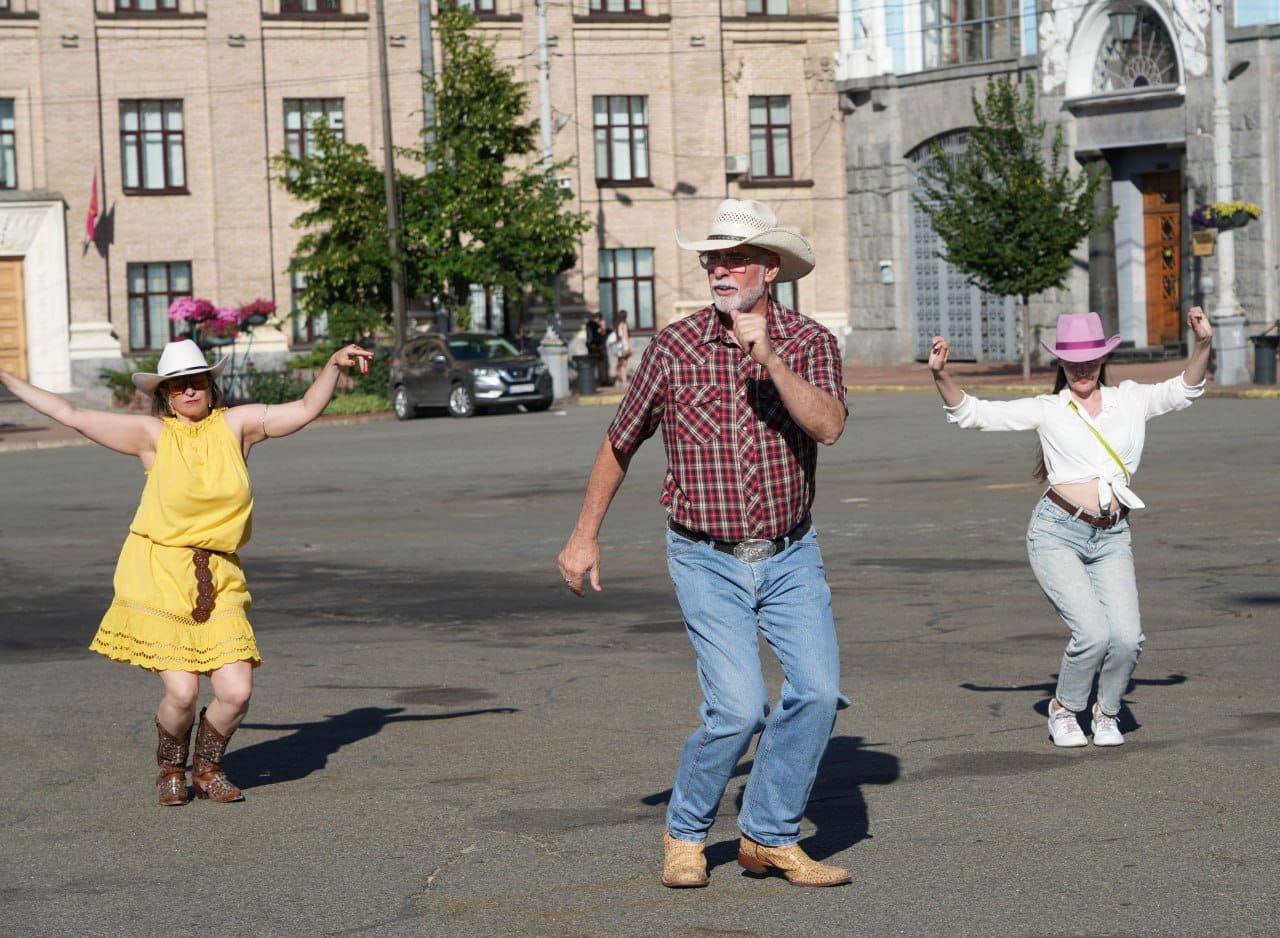
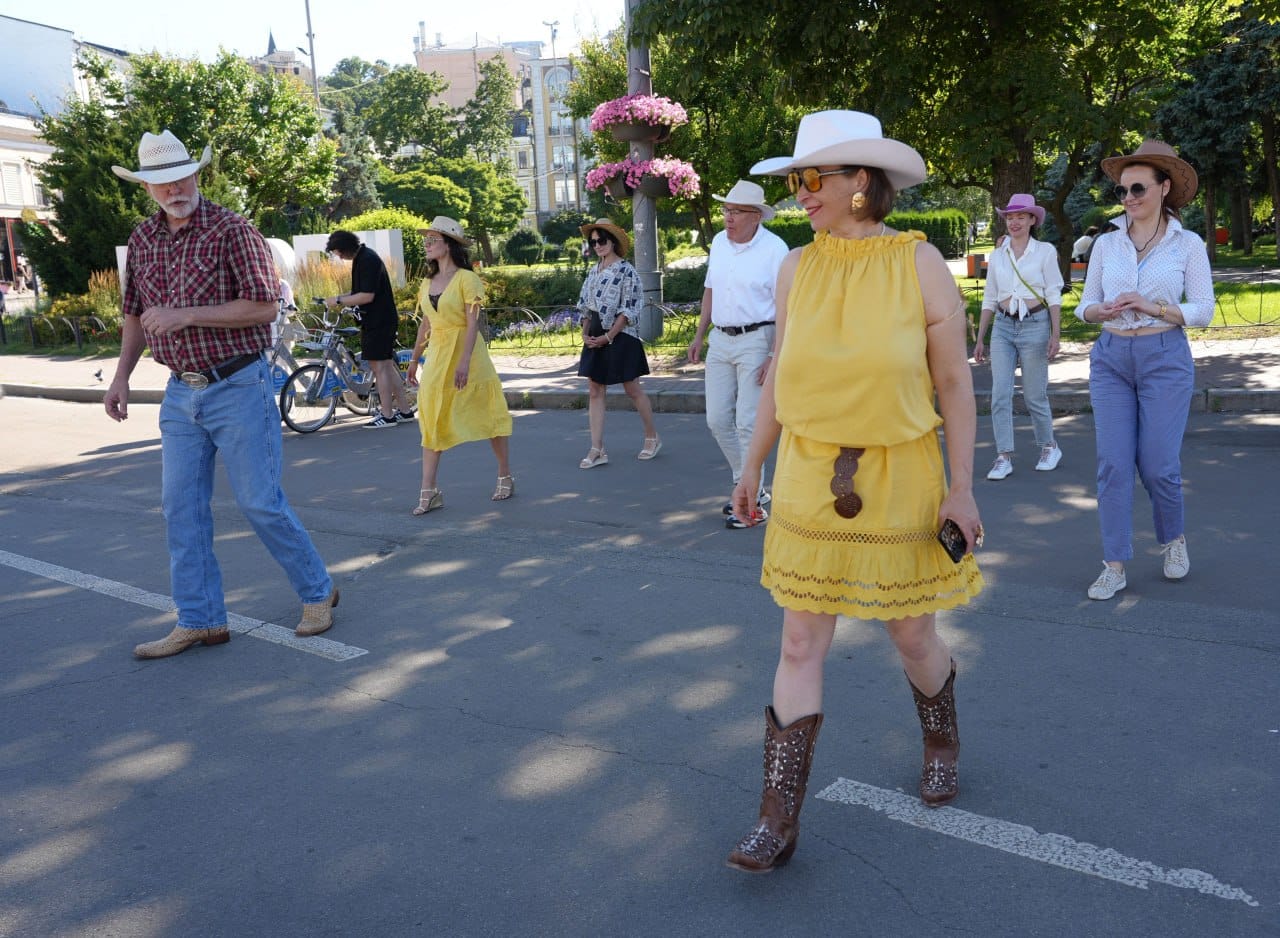
Didkivska: Yes, yes, yes. That is one thing. Another is dancing. We adore dancing.
Wilson: There is a huge dance culture here. Sometimes it feels as though there is a dance studio on every corner in Kyiv.
Didkivska: Yeah, and some of our folk dances are extremely demanding. They are so difficult to dance.
Jacobsen: I have even seen dancers balancing things on their heads.
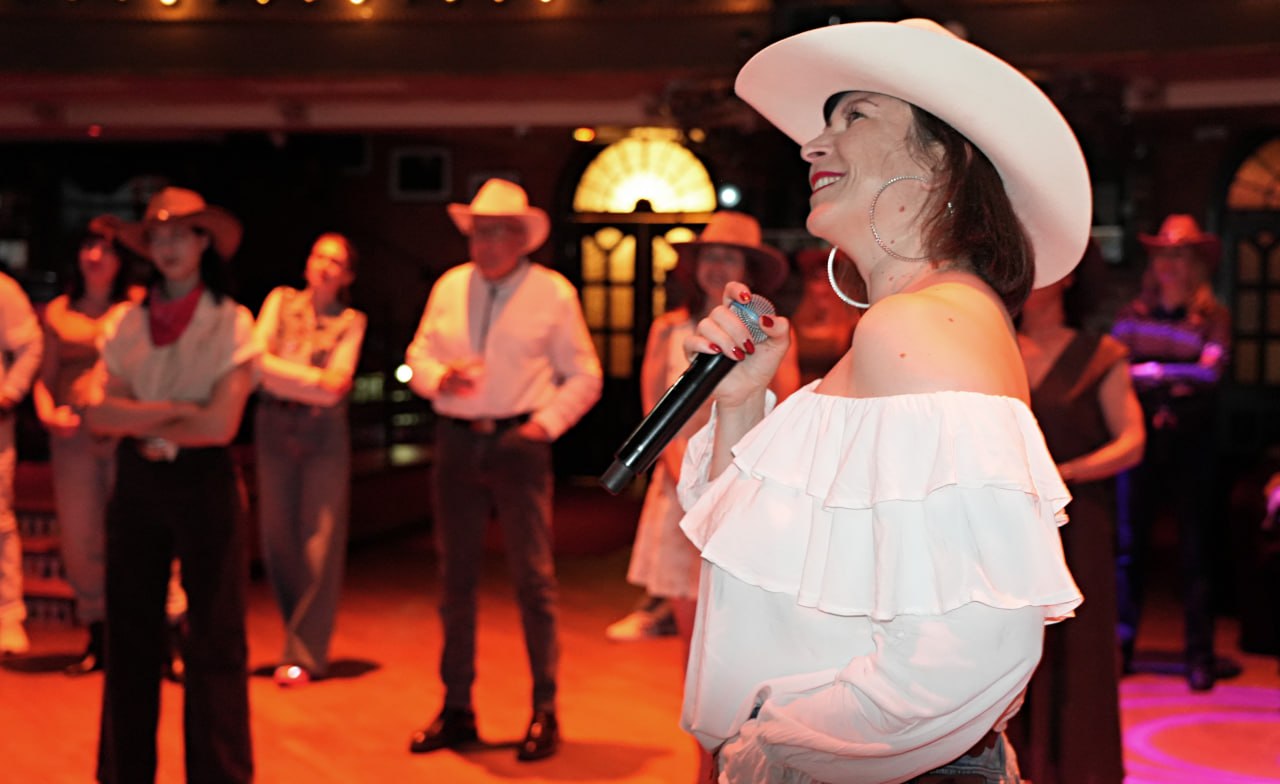
Didkivska: Yes, yes, yes. It is in our blood. That is why we love dancing. Moreover, our cowboy community brings dancing, too.
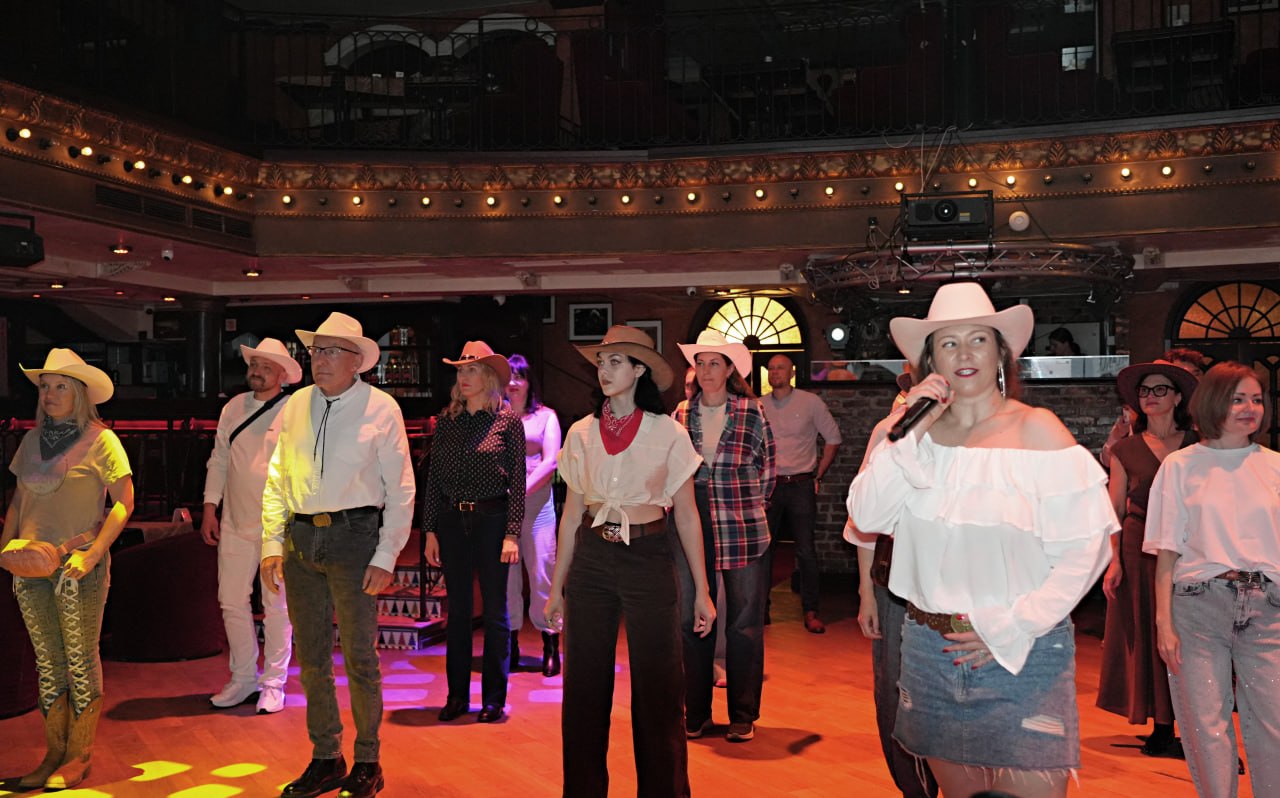
Wilson: Everybody jumps in and enjoys doing that. So, the association has many facets to it. The community is one, the welcoming community.
It also supports Kyiv Western Saloon, which, at this stage, is our ultimate goal: to open the saloon here in Kyiv.
Another part, of course, is supporting family entertainment and family enjoyment, but also supporting our military personnel as they come back from the front and return to civilian life. That is not an easy transition. I am military myself.
I have also designed Kyiv Western Saloon as a place where military veterans can regroup, reintegrate into civilian life, and learn a new trade.
Jacobsen: I have spoken with several veterans now, particularly those going through rehabilitation. One important thing I have heard from some of them is that they do not, underline do not, want to return to exactly what they were doing before.
They want to do something new. Their circumstances and abilities may have changed, and they have gone through a profound change in their lives by going to war. Moreover, thirdly, they want to build something new. They want to look forward, not back, because life is not the same, and for many of them it will never be the same.
Wilson: Especially for them. Especially for our military guys.
So, I have a lot of compassion for them. That is part of my goal, too: to minister to our veterans and give them opportunities within our community.
So, September 12. That is five weeks: five weeks and one day. It will be at the Kyiv Hippodrome, near Ipodrom Metro Station. It starts at 10 in the morning and goes until 10 at night. It is a 12-hour, one-day event.
We will have all kinds of equestrian events there. We are going to have some master classes. I am teaching some Western-style disciplines for horses and riders, such as barrel racing, and we will be doing some other demonstrations. It gives people an opportunity to try these things and also helps prepare us for next year’s fair.
We will have horseback riding and a mechanical bull. Of course, we will have food. We are going to have American-style food, including ribs, burgers, and pizza, as well as some traditional Ukrainian food.
It is also a marketplace, so we will have vendors there and an opportunity to buy cowboy gear, along with other vendors selling their products.
Didkivska: I will add that some vendors have told me, “We are preparing specifically for your fair.” Some of them have even made things according to the theme of the fair. So they are not preparing only their ordinary products, but things specifically for the fair.
Wilson: And then, of course, in the evening, starting at 6, we have two major bands performing. So we are going to have live performances and dancing.
We are also hoping to set a Ukrainian record for the largest number of people participating together in a line dance. So we are gathering everybody together. We aim for a thousand people or more and to get that national record into the Ukrainian record books.
Jacobsen: Thank you very much for the opportunity and your time, Mike and Svitlana.
Scott Douglas Jacobsen is a blogger on Vocal with more than 200 publications on the platform. He is the Founder and Publisher of In-Sight Publishing (ISBN: 978–1–0692343; 978–1–0673505) and Editor-in-Chief of In-Sight: Interviews (ISSN: 2369–6885). He writes for International Policy Digest (ISSN: 2332–9416), The Humanist (Print: ISSN, 0018–7399; Online: ISSN, 2163–3576), Basic Income Earth Network (UK Registered Charity 1177066), Humanist Perspectives (ISSN: 1719–6337), A Further Inquiry (SubStack), Vocal, Medium, The Good Men Project, The New Enlightenment Project, The Washington Outsider, rabble.ca, and other media. His bibliography index can be found via the Jacobsen Bank at In-Sight Publishing, comprising more than 10,000 articles, interviews, and republications across more than 200 outlets. He has served in national and international leadership roles within humanist and media organizations, held several academic fellowships, and currently serves on several boards. He is a member in good standing in numerous media organizations, including the Canadian Association of Journalists, PEN Canada (CRA: 88916 2541 RR0001), Reporters Without Borders (SIREN: 343 684 221/SIRET: 343 684 221 00041/EIN: 20–0708028), and others.
Image Credit: Scott Douglas Jacobsen, Mike Wilson.
About the Creator
Scott Douglas Jacobsen
Scott Douglas Jacobsen is the publisher of In-Sight Publishing (ISBN: 978-1-0692343) and Editor-in-Chief of In-Sight: Interviews (ISSN: 2369-6885). He is a member in good standing of numerous media organizations.
Enjoyed the story? Support the Creator.
Subscribe for free to receive all their stories in your feed.
Comments
There are no comments for this story
Be the first to respond and start the conversation.