
Jakob Kepka’s 2026 HopeRaising Expedition Across Ukraine
How is Jakob Kepka’s 2026 HopeRaising Expedition supporting Ukrainian amputees through cycling, prosthetic advocacy, and international solidarity?

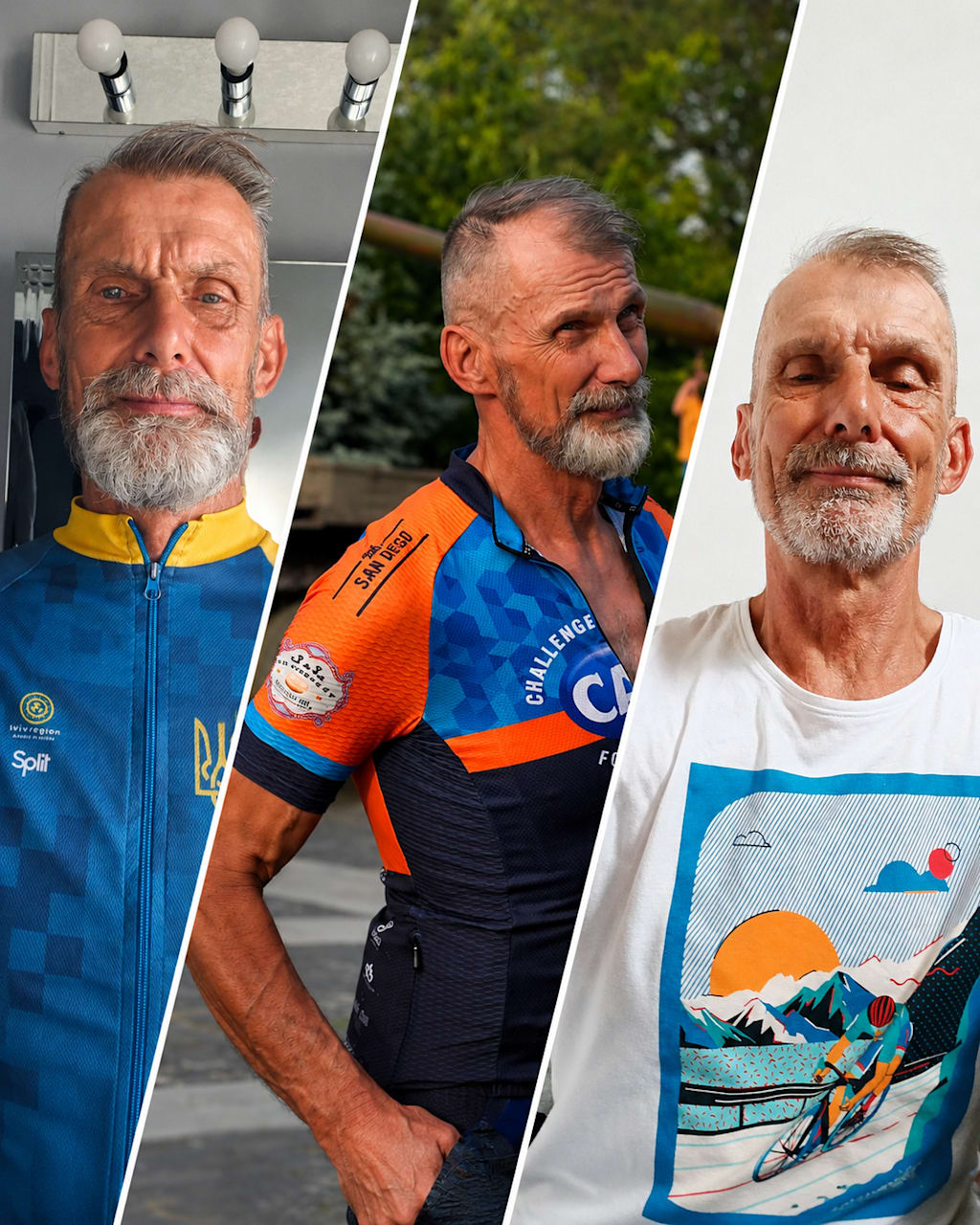
Jakob Kepka is a Canadian humanitarian, military veteran, long-distance cyclist, above-knee amputee, and cancer survivor. Raised in Eastern Ontario, he served in the Canadian Army Reserve and United States Marine Corps before undertaking humanitarian work in Bosnia and Ukraine. Encounters with Ukrainian amputees led him to donate prosthetic components and launch the HopeRaising Expedition. His 2024 Kraków-to-Kyiv ride raised awareness and support for rehabilitation, prosthetic care, professional training, and sustained international solidarity across national borders.
In this interview, Scott Douglas Jacobsen speaks with Jakob Kepka about the experiences shaping his 2026 HopeRaising Expedition across Ukraine. Kepka discusses military duty, amputation, cancer recovery, sobriety, spirituality, and the discipline of one-legged cycling. He explains how encounters with Ukrainian amputees inspired prosthetic donations and advocacy, while reflecting on humanitarian work, survivor’s guilt, resilience, and his determination to mobilize international support for rehabilitation, technical training, human dignity, and lives rebuilt after war with purpose.
Scott Douglas Jacobsen: Jakob Kepka is a Canadian humanitarian, long-distance cyclist, military veteran, above-knee amputee, and cancer survivor. Raised on a farm in Eastern Ontario, he served in the Canadian Army Reserve and as an infantry rifleman in the United States Marine Corps. After Russia’s full-scale invasion of Ukraine, Kepka volunteered in Ukraine, helping construct accommodations for humanitarian workers and renovate health clinics.
Encounters with Ukrainian amputees inspired him to collect and donate more than $100,000 worth of used prosthetic components, including parts from one of his own prosthetic legs. In 2024, he completed the HopeRaising Expedition from Kraków to Kyiv, travelling from Poland into Ukraine. Now in remission following surgery and chemotherapy, he is preparing an ambitious second fundraising ride across Ukraine in 2026.
Jakob Kepka: The prosthetic part, one of the things I donated was my own leg, which was worth about $100,000.
I also donated 14 boxes of used prosthetic components to be repurposed by Penta, a United States-based nonprofit that collects prosthetic devices and components for reuse. I collected them from prosthetic clinics in London, Ontario. I said, “All of this is going to Ukraine. That is the only place it is going.”
My bionic leg went to Ukraine too. I have another one in the closet right now that will eventually be donated. That one is worth about $120,000.
I receive a new one roughly every five years.
Jacobsen: That is kind of cool. To start, what experiences during your military service shaped your understanding of duty and resilience as they relate to humanitarian responsibility? My own understanding of military service is that it centres on duty.
Kepka: My main military experience was in the United States Marine Corps, so humanitarian work did not really enter into it, especially as a rifleman and infantryman.
If you have seen Full Metal Jacket, the first half of the film gives you some idea of Marine Corps recruit training. That is boot camp. That is boot camp.
The idea of becoming a humanitarian was not part of the dynamic, especially in my MOS, my military occupational specialty, which was infantry. No.
Our purpose was to apply overwhelming force and defeat the enemy. But the Corps did teach me duty, responsibility, honour, and perseverance. Marines do not give up.
We do not even give up when we die. We will fight Satan all the way down.
Jacobsen: Do you consider yourself a religious man?
Kepka: I studied for the priesthood for a while. In the 1980s, I was asked to leave. Later, I lived at an Orthodox monastic property for about eight years and worked there as a custodian.
I tried religious life again during that period. I was also a brother with a Catholic community in Ottawa.
I did not fit.
Jacobsen: So, if I understand correctly, you explored both Orthodox monastic life and Catholic religious life.
Kepka: Yes. I was raised Roman Catholic. I returned to the University of Ottawa and Saint Paul University to study theology, patristics, and related subjects.
At a certain point, I was reintroduced to Orthodoxy through an Orthodox bishop who lived on a farm not far from the farm where I was raised.
I liked the liturgy, and I eventually converted to Orthodoxy with the intention of becoming a monk. That did not work out because I met someone, and I now have a son. I still maintained a close relationship with that bishop, who was later elevated to archbishop.
He had a farmhouse near our farm. By then, my mother had died, my father had died, and we had sold the family farm. Because of circumstances in my life, I needed somewhere to take refuge. He was still a close friend.
I had driven for him before. He gave me a place to stay and a chance to regroup mentally and spiritually.
I went into the bush and cut firewood because we burned wood to heat the place. That is Eastern Ontario in winter. I also participated in the liturgical life there.
We had a chapel on the property. He eventually sent me to Edmonton to assist a Ukrainian priest who had health problems and served a Ukrainian parish there.
My leg condition worsened. Over a period of about 26 months, I repeatedly returned to the hospital, underwent more surgeries, and eventually had the leg amputated. It was rough living in a house heated by wood during that period.
When I received a computerized prosthetic leg, I had to return to Toronto to learn how to use it. That rehabilitation took a long time.
Afterward, I stayed in the Greater Toronto Area, specifically Oshawa, because I knew the city from my youth.
Am I religious now? I say that you can take the boy out of the Catholic Church, but you cannot take the Catholic Church out of the boy.
I find comfort in the Mass and in Orthodox liturgy. When I am in Ukraine, I may attend an Orthodox or Ukrainian Catholic service. I call myself a switch-hitter. I can attend either and understand what is happening.
I find a lot of comfort in the liturgical side of religion. Do I agree with everything theologically? Hell no.
But I do try to live a spiritual life. As of last month, I had been sober for 24 years. That has been a major part of my life. During a substantial period when I was undergoing repeated surgeries, I was not sober.
When I got into serious trouble with the law, I needed somewhere safe to go. What could be safer than living almost in the bush with a group of monks and an archbishop?
Jacobsen: How do your health problems and eventual amputation shape that outlook of, “You can take the boy out of the Catholic Church, but you cannot take the Catholic Church out of the boy”? You have found comfort both in the bush and among religious scholars and spiritual leaders.
Kepka: I also spent time with Indigenous spiritual leaders. Spirituality, to me, is like what I say when I share at my meetings: if I am drawn to drink from a particular spiritual well, I will drink from it. I will not refuse to drink from it simply because it does not fit the mould in which I was raised or what I believed at one time.
To me, spirituality is an evolution. It is not stagnant. We never reach a final destination. Maybe we do when we pass, but right now, I am still a searcher. I always have been.
Going back to my childhood, I was always drawn to prayer. I enjoyed being an altar boy. I liked the sense of mystery in the Catholic Mass, the incense, the ringing bells, and all of that.
In my life, whenever I wandered away from my spiritual or religious roots, I seemed to get into trouble. When things became difficult before I got sober, I always returned to prayer and some form of meditation. Now, it is a daily practice. It is not something I pick up only when I am in trouble. It is something I try to follow every day.
That is also why I was so drawn to cycling. I used to run until they removed my kneecap while I was in the Marine Corps. After that, it became too painful to run.
I still needed that physical release and the repetitive rhythm associated with running, the steps, the breathing, and everything else. A friend of mine at a gym in Ottawa where I was working said, “Why do you not try cycling?”
I had already been doing therapeutic cycling after my knee surgery. Being a non-compliant, overachieving patient, when they said in physiotherapy, “Cycle for 15 minutes,” I pushed it to an hour.
I thought more was better. It was the old Marine Corps adage: pain is only weakness leaving the body. I still adhere to it, although I am older and should be wiser.
Jacobsen: I assume that, as you get older, it sometimes feels as though weakness is leaving the body all the time.
Kepka: Well, yes. No, it feels as though strength is leaving the body all the time.
It is curious. I am faster now as a cyclist than I was three or four years ago because I have become better at pedalling with one leg. I have worked out more of the mechanics.
The spiritual part of my life came partly from my upbringing, but not only from the Church. When I was a child in the early 1960s, we lived on a country road where everybody knew one another. If there was a tragedy, such as a neighbour’s wife dying of cancer, a child becoming sick, a house fire, or a barn burning down, everybody stepped in. Nobody had to be asked.
If a wife was sick, people along the road took turns bringing supper to the house. If something happened to a home or farm, or the weather was changing and someone still had hay in the field, everybody gathered to bring the hay in.
If somebody accidentally set the bush on fire while burning grass, we did not wait for the fire department. Everybody grabbed shovels, climbed onto tractors, went into the bush, and fought the fire.
That was how we were raised. You helped regardless of who the person was. You might not have liked them as a human being, but they were still your neighbour. You also knew that one day it might happen to you.
The Canadians who lived on our road had survived the Great Depression. That was how they got through it. The immigrants who lived there, the displaced persons, including my parents, had lived through the war. They had endured hard times before the war, during the war, and after coming to Canada.
The only way they survived was by pulling together.
My sister, who is 10 years older than I am, went into healthcare. We were raised with that sense of responsibility. Nobody needed to ask you to help. You simply did it.
That is what I carried forward.
Then there was my Marine Corps training. Call it brainwashing, indoctrination, or whatever you want. Once a Marine, always a Marine.
I may have been out of the Corps for more than 40 years, but I am still a Marine. I carry myself that way. People can tell that I was in the military.
When they ask whether I served and I say yes, they ask which branch. When I tell them, they are not surprised.
For a pudgy kid who was bullied throughout school and into high school, until he had a growth spurt and became a star lineman in football, joining the Marine Corps was not something anybody would have predicted. I used to weigh 260 pounds and played football.
Nobody who knew me growing up would have expected me to enter the Marine Corps, survive recruit training at Parris Island, and not merely survive but excel there.
All of a sudden, I felt at home on the island, even with all the abuse. They have apparently cleaned it up, although I will believe that when I see it.
What they taught me there, I carry to this day.
There is also the fact that I have survivor’s guilt. Some of the men I knew were killed in Beirut after I was discharged. They were people I had known during boot camp or military schooling. They went to Beirut and were killed there in the 1980s.
Jacobsen: Do you think about them often?
Kepka: I tried to reenlist. I found my old recruiter in Utica, New York, and called him. By then, he was no longer a gunnery sergeant. He was a master sergeant.
I still called him “Gunny.” I said, “Gunny, I want to go back in.”
He said, “Let me look at your discharge.”
Because of the code placed on my medical discharge, I could never reenlist. I told him, “I will even become a Remington Raider. Hand me a typewriter. I just want to get back in, and I will prove that I can do the job. Then I will work my way out of being a clerk.”
He said it was impossible.
I have carried guilt because I believed I was a better Marine than some of the men I knew who died that day. Yes, I think about them. I still cry when I hear that Marines have died because that connection to the Corps remains. Regardless of what the United States is doing politically right now, I am still a Marine.
My honour, my loyalty, and my duty are to uphold the morals and ethics that I was taught make a good Marine, and to carry them until the day I die.
Yes, we were taught to fight and eliminate the enemy, but there was always the idea that we were doing it for a greater good. I have carried that throughout my life.
In the 1990s, I went to Bosnia as a humanitarian aid worker for several months. I ended up in Mostar, on the Muslim side of the city. I lived with a Muslim family and did humanitarian work there.
The man of the house was an above-knee amputee because of the war. He could not wear a prosthetic leg. People explained why, but it did not make much sense to me at the time because I still had two legs. One was not a very good leg, but I still had both of them.
About 30 years later, I became an amputee myself. Then I finally understood everything I had watched him experience.
Sometimes I think I was fated to become an amputee. I helped it along through my lifestyle and stubbornness, but perhaps I was meant to become one so that I could do what I am doing now.
When I went to Ukraine in 2022, I travelled with an American foundation that recruited veterans of the United States Armed Forces, former police officers, and paramedics.
When Russia launched its full-scale invasion in 2022, I became extremely agitated and angry. I watched everything on television, especially the reports of atrocities in Bucha and elsewhere. As more of it came to light, I became angrier. I have anger issues.
That is what the Marine Corps does. It takes angry young men and makes them angrier.
Without telling many people, I began looking for a way to go to Ukraine. I found an organization online, applied, and did not expect to be accepted. Who was going to accept a man who was almost 65 years old and had one leg?
One of the questions on the application asked whether I spoke Ukrainian, Polish, or Russian. I selected Polish.
Two weeks later, I received an email asking whether I could attend a Zoom meeting with a retired United States Air Force officer.
During the interview, I said, “You do realize that I wrote down that I am an above-knee amputee?”
They said, “Yes, we know. We looked you up on Facebook. Your profile is public, and we could see that you are active and fit. We also need someone who speaks Polish because we have a group of people on the Polish-Ukrainian border. They are staying in Poland, they are completely lost, and they are having a difficult time.”
So I went.
Before my father died in the early 2000s, he used to speak to me about Polish patriotism while we worked together. He told me, “If anything ever happens in that part of the world, promise me that you will do something to help, because we know who will start it.”
When Russia started another war there, I felt determined to fulfil the promise I had made to my father.
I knew that if Russia won, and if it had taken Kyiv in three days as predicted, it would not have stopped there. The Russians might have rested for a while, but they would have continued west.
Jacobsen: It has been the longest three days I have ever heard of.
Kepka: Yes, it has been a long three days. Now we know more about the condition of their army.
Scott Douglas Jacobsen is a blogger on Vocal with more than 200 publications on the platform. He is the Founder and Publisher of In-Sight Publishing (ISBN: 978–1–0692343; 978–1–0673505) and Editor-in-Chief of In-Sight: Interviews (ISSN: 2369–6885). He writes for International Policy Digest (ISSN: 2332–9416), The Humanist (Print: ISSN, 0018–7399; Online: ISSN, 2163–3576), Basic Income Earth Network (UK Registered Charity 1177066), Humanist Perspectives (ISSN: 1719–6337), A Further Inquiry (SubStack), Vocal, Medium, The Good Men Project, The New Enlightenment Project, The Washington Outsider, rabble.ca, and other media. His bibliography index can be found via the Jacobsen Bank at In-Sight Publishing, comprising more than 10,000 articles, interviews, and republications across more than 200 outlets. He has served in national and international leadership roles within humanist and media organizations, held several academic fellowships, and currently serves on several boards. He is a member in good standing in numerous media organizations, including the Canadian Association of Journalists, PEN Canada (CRA: 88916 2541 RR0001), Reporters Without Borders (SIREN: 343 684 221/SIRET: 343 684 221 00041/EIN: 20–0708028), and others.
Image Credit: Jakob Kepka.
About the Creator
Scott Douglas Jacobsen
Scott Douglas Jacobsen is the publisher of In-Sight Publishing (ISBN: 978-1-0692343) and Editor-in-Chief of In-Sight: Interviews (ISSN: 2369-6885). He is a member in good standing of numerous media organizations.
Enjoyed the story? Support the Creator.
Subscribe for free to receive all their stories in your feed.
Comments
There are no comments for this story
Be the first to respond and start the conversation.