
Ivan Ostroukhov on German-Ukrainian Engineering, Construction, and Business Culture
How does Ivan Ostroukhov combine Ukrainian entrepreneurial adaptability with German business stability to solve complex engineering and construction problems across European markets?

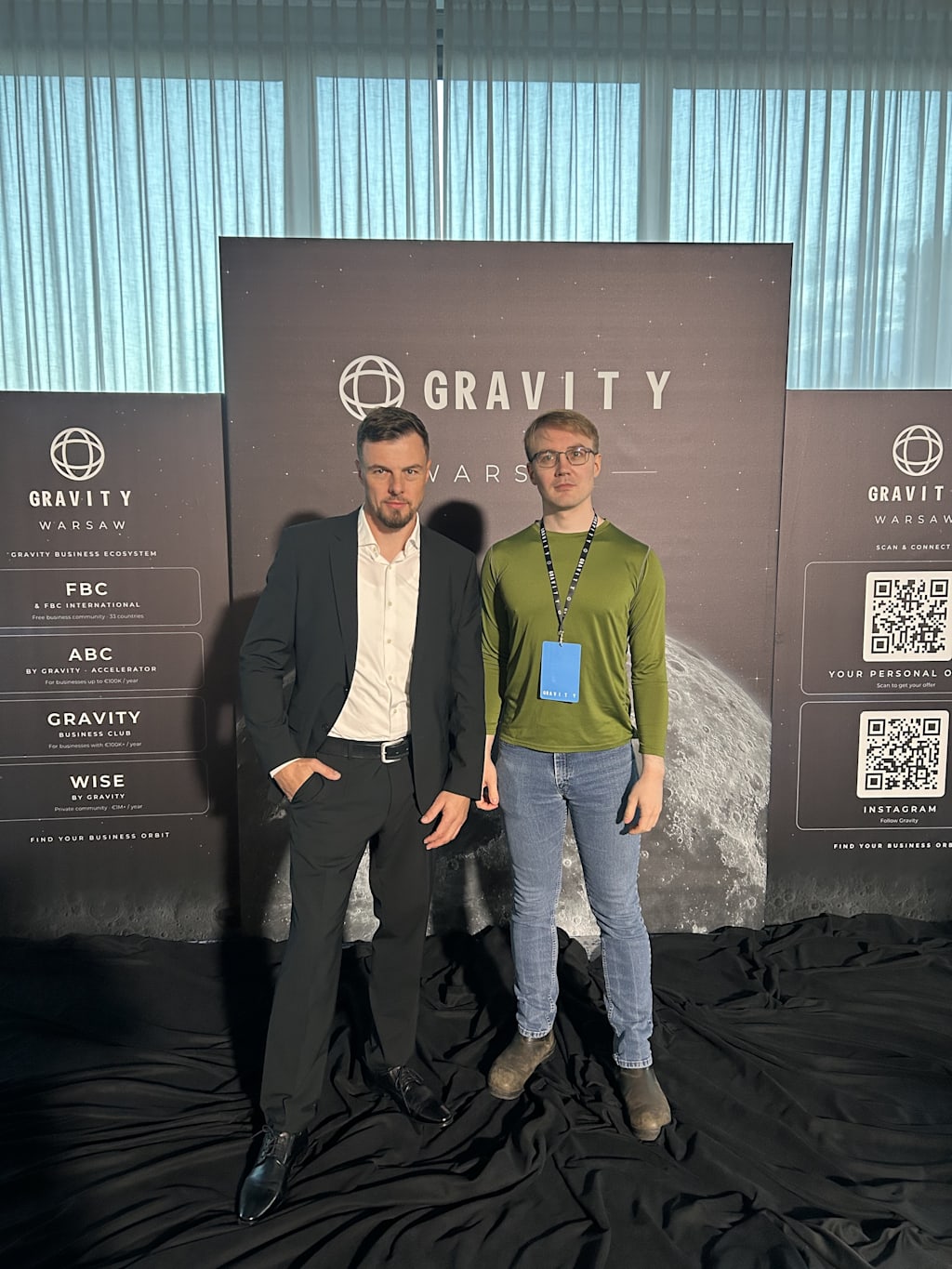
Ivan Ostroukhov is an engineer and entrepreneur based in Brandenburg an der Havel, Germany. He leads DTMI Technology GmbH, registered in 2022, working across engineering, construction planning, repair, installation, commissioning, electrical equipment, and modular buildings. His professional background includes work in Ukraine, Kazakhstan, and Germany, as well as energy-sector technical projects and partnerships.
In this interview, Scott Douglas Jacobsen and Ivan Ostroukhov discuss German and Ukrainian business cultures, entrepreneurship, construction, engineering, bureaucracy, stability, workplace relationships, and immigrant motivation. Ostroukhov explains DTMI Technology’s problem-solving approach, its Ukrainian team culture, and how the company builds credibility while pursuing technical projects across European markets and clients.
Scott Douglas Jacobsen: Could you introduce and describe the company you founded?
Ivan Ostroukhov: I am the founder of a German-Ukrainian startup. It is an engineering, construction, and production company. Our focus is solving difficult technical problems for customers, often within very short timeframes.
Jacobsen: We talked about this months ago. I want to return to the differences between German and Ukrainian business styles. My framework is not that one is better or worse. It is about trade-offs. If you organize business one way, you gain certain advantages while giving up others. The German approach has strengths, and the Ukrainian approach has strengths. What is your assessment?
Ostroukhov: The German way can be very long and difficult. For example, when I returned to Ukraine and started a new business, I developed a significant number of projects and contracts within about a year.
The German market is much more conservative, particularly in our field. Companies want to know who you are. They want information about your company, its capabilities, and what you have already accomplished. It takes a long time to demonstrate what you can do and establish credibility in the German market.
At the same time, once we began finding customers in Germany, we also developed relationships with companies in the Czech Republic, Poland, North Macedonia, and the Benelux countries. Alongside our German projects, we have worked on many other projects elsewhere in Europe.
I think it has been a very good experience for us. It is simply a different way of doing business.
Jacobsen: In our previous interview, one participant made an interesting observation about Ukrainians who have relocated to Germany. People coming from a country at war may have lived through very difficult circumstances, while immigrants more broadly can also feel a strong drive to establish themselves and succeed in a new country. In the construction sector, this was expressed almost as, “We want to become better at construction than the local Germans.” That attitude reflects a strong drive. What do you think drives it, and how do you encourage that motivation within your own company?
Ostroukhov: From my perspective, our team today consists of Ukrainians. I started with people I already knew from previous jobs and projects.
I think we have developed a good combination of Ukrainian and German business cultures. Our relationship is not simply that of an owner and employees. We also have relationships as friends. We stay in contact, spend time with our families, and try not to create too much distance between us.
That lets us work in a more Ukrainian way within the team while adapting to a different style when working with German customers and partners.
Mentality is a major part of this. Traditions and expectations about relationships are also important.
Jacobsen: Many former Soviet states have struggled with corruption, although to very different degrees. Comparative international indicators show that perceived public-sector corruption is substantially lower in Germany than in Ukraine or Russia, even though Ukraine has also undertaken significant anti-corruption reforms. At the same time, formal business registration in Ukraine can be extremely fast, whereas businesses in Germany often face more complicated administrative procedures.
Germany can require considerable patience. Does the system provide greater predictability and stability for a company?
Ostroukhov: Yes. There is a period in which we have to do a great deal of work, but after that there is considerable inertia and continuity. In that respect, I think German business can be more stable.
I have experience doing business in Ukraine and Kazakhstan, both former Soviet republics. Many years ago, I also worked with Russian colleagues in different countries. Each country has a different approach, traditions, pace of work, working methods, and expectations about relationships between people.
Jacobsen: Can you describe more specifically what your company does and the kinds of projects you undertake?
Ostroukhov: Our main message to customers is always, “We will try.”
Right now, for example, we have some very difficult technical assignments. In some cases, a customer has approached another supplier first, and that company has said, “No, this is not for us,” because solving the problem would require too much time or too many resources.
We approach it differently. We tell the customer, “We will try.”
Then we work on the problem, develop a solution, and try to execute it quickly. Sometimes customers ask us, “You guys are from Ukraine. Where does all this motivation come from?”
I tell them we have faced many challenges throughout our lives, starting after university and continuing throughout our careers. We have learned to find solutions and keep moving forward.
Our goal is always to help the customer solve the problem. I think that approach has been very positive for both our company and the customers we work with.
Jacobsen: Thank you very much for the opportunity and your time, Ivan.
Scott Douglas Jacobsen is a blogger on Vocal with more than 200 publications on the platform. He is the Founder and Publisher of In-Sight Publishing (ISBN: 978–1–0692343; 978–1–0673505) and Editor-in-Chief of In-Sight: Interviews (ISSN: 2369–6885). He writes for International Policy Digest (ISSN: 2332–9416), The Humanist (Print: ISSN, 0018–7399; Online: ISSN, 2163–3576), Basic Income Earth Network (UK Registered Charity 1177066), Humanist Perspectives (ISSN: 1719–6337), A Further Inquiry (SubStack), Vocal, Medium, The Good Men Project, The New Enlightenment Project, The Washington Outsider, rabble.ca, and other media. His bibliography index can be found via the Jacobsen Bank at In-Sight Publishing, comprising more than 10,000 articles, interviews, and republications across more than 200 outlets. He has served in national and international leadership roles within humanist and media organizations, held several academic fellowships, and currently serves on several boards. He is a member in good standing in numerous media organizations, including the Canadian Association of Journalists, PEN Canada (CRA: 88916 2541 RR0001), Reporters Without Borders (SIREN: 343 684 221/SIRET: 343 684 221 00041/EIN: 20–0708028), and others.
Image Credit: Scott Douglas Jacobsen.
About the Creator
Scott Douglas Jacobsen
Scott Douglas Jacobsen is the publisher of In-Sight Publishing (ISBN: 978-1-0692343) and Editor-in-Chief of In-Sight: Interviews (ISSN: 2369-6885). He is a member in good standing of numerous media organizations.
Enjoyed the story? Support the Creator.
Subscribe for free to receive all their stories in your feed.
Comments
There are no comments for this story
Be the first to respond and start the conversation.