
Dr. Carmela Maxell: A Powerful Voice Transforming Mental Health Through Advocacy, Education and Storytelling
Visionary Women Who Inspire
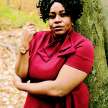

Mental health is more than a profession for Dr. Carmela Maxell— it is a lifelong mission driven by compassion, truth and meaningful conversations. As a licensed mental health professional, university professor, author, podcast host and speaker, Dr. Maxell has dedicated her career to helping people feel seen, heard and understood while encouraging honest discussions about grief, trauma, resilience and the realities many quietly carry every day.
Through her work in behavioral health, higher education, media and public advocacy, Dr. Maxell continues to make an impact far beyond the therapy room. Whether she is educating future professionals, challenging conversations around systems of care, writing thought-provoking stories or creating space for authentic dialogue through her podcast, she is committed to helping people recognize the value of their experiences and the importance of protecting their mental well-being.
In this exclusive Vocal Media interview, Dr. Carmela Maxell shares the inspiration behind her multifaceted career, the purpose that fuels her work and why using her voice to educate, advocate and encourage others remains one of the most meaningful parts of her journey.
Your career spans mental health, higher education, authorship, podcasting, and public speaking. What inspired this journey, and what continues to fuel your passion for serving others?
Dr. Carmela: I don’t think I ever sat down and decided that I was going to build a career that looked like this. In many ways, each part of my work grew out of the same question: How do we help people feel less alone in what they are carrying?
I have spent much of my career working with people during some of the most complicated moments of their lives. I have worked in mental health, human services, education, and systems where people are often reduced to diagnoses, circumstances, mistakes, or statistics. And one thing I have learned over and over again is that there is always a human being underneath the label.
But my understanding of that became much more personal through my own experiences with grief.
There is something about loss that changes the way you see other people. You begin to recognize how much of life happens beneath the surface. Someone can be sitting in a meeting, teaching a class, raising children, answering emails, laughing with friends — and simultaneously carrying something extraordinarily heavy.
I know what it means to continue functioning while grieving. I know what it means to show up when part of you would rather disappear for a while. And I think that has made me much more attentive to the things people don’t say.
That is what continues to fuel me.
Whether I am teaching students, leading programs, writing, speaking, or sitting behind a microphone, I want people to leave with the sense that their humanity matters — and that whatever chapter they are currently living through does not have to be the final chapter.
You’ve built a platform that amplifies conversations around mental health, grief, resilience, and systemic change. Why is using your voice to educate and advocate so important to you?
Dr. Carmela: Because silence has consequences.
There are so many things we have been taught to endure quietly: grief, trauma, burnout, discrimination, loneliness, unhealthy relationships, even our own emotional pain. We become remarkably skilled at appearing okay.
Sometimes so skilled that people stop asking if we are.
I think about that often.
People sometimes stop checking on you because you become extraordinarily convincing at pretending you don’t need them.
That is one reason I use my voice.
I want to talk about the things we have normalized that perhaps should never have been normal. I want to ask uncomfortable questions about the systems we live and work inside. I want to challenge the idea that resilience means endlessly tolerating pain without consequence.
And I also want people to understand that having a voice does not always mean being the loudest person in the room. Sometimes it means finally saying, “This hurt me.” Sometimes it means asking for help. Sometimes it means challenging something everyone else has accepted.
Sometimes using your voice simply means refusing to disappear.
Your work extends beyond clinical practice into writing, media, and speaking. How have these platforms allowed you to reach people in ways traditional therapy cannot?
Dr. Carmela: Therapy is incredibly powerful, but there are limits to who can access it.
There are people who cannot afford therapy. People who are afraid of it. People who have had harmful experiences with providers. People who come from families or cultures where mental health is still difficult to discuss. And there are people who simply aren’t ready to walk into a therapist’s office.
But they might listen to a podcast at midnight.
They might read a novel.
They might hear a five-minute interview while driving home.
They might encounter one sentence that gives language to something they have been carrying for years.
That matters to me.
I never want media, books, podcasts, or public education to be presented as replacements for appropriate mental health care. But I do believe they can become doorways.
Sometimes healing begins long before someone enters a therapy room. It begins when a person realizes, Wait. Someone else has felt this too.
There is tremendous power in recognition.
Your dystopian novel, Bereavement, explores a world where grief is regulated. What inspired the story, and what do you hope readers take away from this powerful book?
Dr. Carmela: Bereavement began with a question that frightened me:
What if grief became something you had to earn the right to experience?
The premise is dystopian, but the emotional foundation is deeply human.
I have experienced profound grief in my own life, and grief taught me something I don’t think I could have learned academically: grief is not orderly. It doesn’t care about timelines. It doesn’t care whether other people think you should be “better” by now. It doesn’t always look like crying. Sometimes it looks like anger. Sometimes exhaustion. Sometimes laughter followed by guilt because you suddenly remembered that you were capable of laughing.
And sometimes grief looks remarkably like functioning.
We already live in a culture that often tries to regulate grief informally. We give people bereavement leave and then expect them to return to productivity. We ask how someone is doing for a few weeks, and eventually the world moves forward — even when they haven’t.
So I began wondering: What would happen if we took that impulse to its extreme?
What if a government decided how long you were allowed to mourn? What if remembrance had rules? What if grief became transactional?
Underneath all of that, however, Bereavement is ultimately about love.
Because grief exists precisely because something mattered.
I hope readers finish the book thinking about how we treat grieving people, how institutions respond to human suffering, and how easily efficiency can become cruelty when we forget the human beings inside our systems.
But more than anything, I hope they remember that grief is not evidence that someone is broken.
It is evidence that someone loved.
As the host of Rooted & Rising with Dr. Carmela Maxell, you’ve created a space for honest conversations about trauma, identity, relationships, and healing. What inspired the podcast, and what impact do you hope it continues to have?
Dr. Carmela: Rooted & Rising came from my desire to have the kinds of conversations that don’t always fit neatly into clinical spaces or academic lectures.
I wanted somewhere we could talk about what happens after the inspirational quote.
What happens when healing isn’t linear?
What happens when the strong person gets tired?
What happens when you know all the coping skills and you’re still having a terrible day?
What happens when the systems that are supposed to help us become part of the reason we’re hurting?
Those are the conversations that interest me.
The name Rooted & Rising is intentional because I don’t think healing requires us to erase where we have been. Our roots contain complicated things — pain, family, culture, mistakes, survival, joy, trauma, love.
Rising doesn’t mean pretending those things never happened.
It means growing anyway.
If someone listens to an episode and feels understood, questions something they previously accepted, reaches out for help, offers themselves more compassion, or simply realizes they aren’t the only person struggling with something, then the podcast has done what I hoped it would do.
Throughout your career, you’ve worked with individuals navigating some of life’s greatest challenges. What has this work taught you about resilience, healing, and the strength of the human spirit?
Dr. Carmela: It has taught me that we sometimes misunderstand resilience.
We celebrate the person who keeps going.
We admire the person who never misses work, takes care of everyone else, survives unimaginable things and somehow remains standing.
But I have learned to ask another question:
What did staying strong cost them?
Resilience is not just endurance.
Sometimes resilience is resting.
Sometimes it is leaving.
Sometimes it is admitting that something hurt you.
Sometimes it is asking for help after years of insisting you were fine.
And sometimes healing doesn’t look triumphant at all. Sometimes healing is incredibly quiet. It is getting out of bed. Answering the phone. Eating something. Setting one boundary. Trying again tomorrow.
Working with people — and living through my own difficult seasons — has taught me not to underestimate those moments.
Human beings have an extraordinary capacity to rebuild.
Not always into the people they were before.
Sometimes into people they never imagined they could become.
You’ve dedicated your life to helping others feel seen, heard, and empowered. What has been the most rewarding part of this journey, and why does this work mean so much to you?
Dr. Carmela: The moments that stay with me are rarely the impressive ones.
They’re usually quiet.
A student telling me that something they learned changed the way they see people.
Someone telling me a conversation made them feel less ashamed.
A reader saying a character made them cry because they recognized something from their own life.
A listener saying, “I thought I was the only one.”
Those moments mean more to me than titles or credentials ever could.
Because ultimately, people want to know that they matter.
They want to know someone sees them beyond what happened to them, beyond their diagnosis, beyond their worst decision, beyond the role they play for everyone else.
I have spent a lot of my life trying to create spaces where people can feel that.
Maybe part of the reason it matters so deeply to me is because I understand what it feels like to need that space too.
For readers meeting Dr. Carmela Maxell for the first time, what would you like them to know about your mission, your work, and the legacy you hope to leave behind?
Dr. Carmela: I hope people understand that underneath all the different things I do, the mission is actually very simple:
I want people to feel more human.
Not more productive. Not more impressive. Not perfectly healed.
Human.
I want us to become better at seeing one another.
I want us to question systems that require people to sacrifice their humanity in order to survive them.
I want us to talk about grief before someone is grieving, mental health before someone reaches a breaking point, and resilience without romanticizing suffering.
And when I think about legacy, I don’t really think about whether people remember every title I held or every credential after my name.
I think about my children.
I think about my students.
I think about the people I’ve served, the readers who have entered worlds I’ve created, and the strangers who have listened to my voice through headphones while navigating something I may never know about.
If there is anything I hope remains after my work is finished, it is this:
That somewhere along the way, I helped people understand that surviving something is not the end of their story.
There is life after grief.
There is identity after trauma.
There is possibility after failure.
There is hope after the moment when you were certain there wasn’t any left.
Sometimes we don’t rise because we were fearless.
Sometimes we rise because, somehow, after everything that tried to convince us otherwise, a small part of us still believed there might be something worth rising for.
That’s the part of the human spirit I want my work to honor.
For more information please visit: http://carmelamaxell.com
About the Creator
Tammy Reese
Tammy is best known for her legendary interviews with Sharon Stone, Angela Bassett, Sigourney Weaver, Geena Davis, Morris Chestnut, Jeffrey Dean Morgan, Sheryl Lee Ralph, Laurence Fishburne, Omar Epps, Joseph Sikora, and more.
Enjoyed the story? Support the Creator.
Subscribe for free to receive all their stories in your feed.
Comments
There are no comments for this story
Be the first to respond and start the conversation.