
Blue-Collar Elegies for Staying Alive
Behind the new Ghost in the Willow LP Still Here

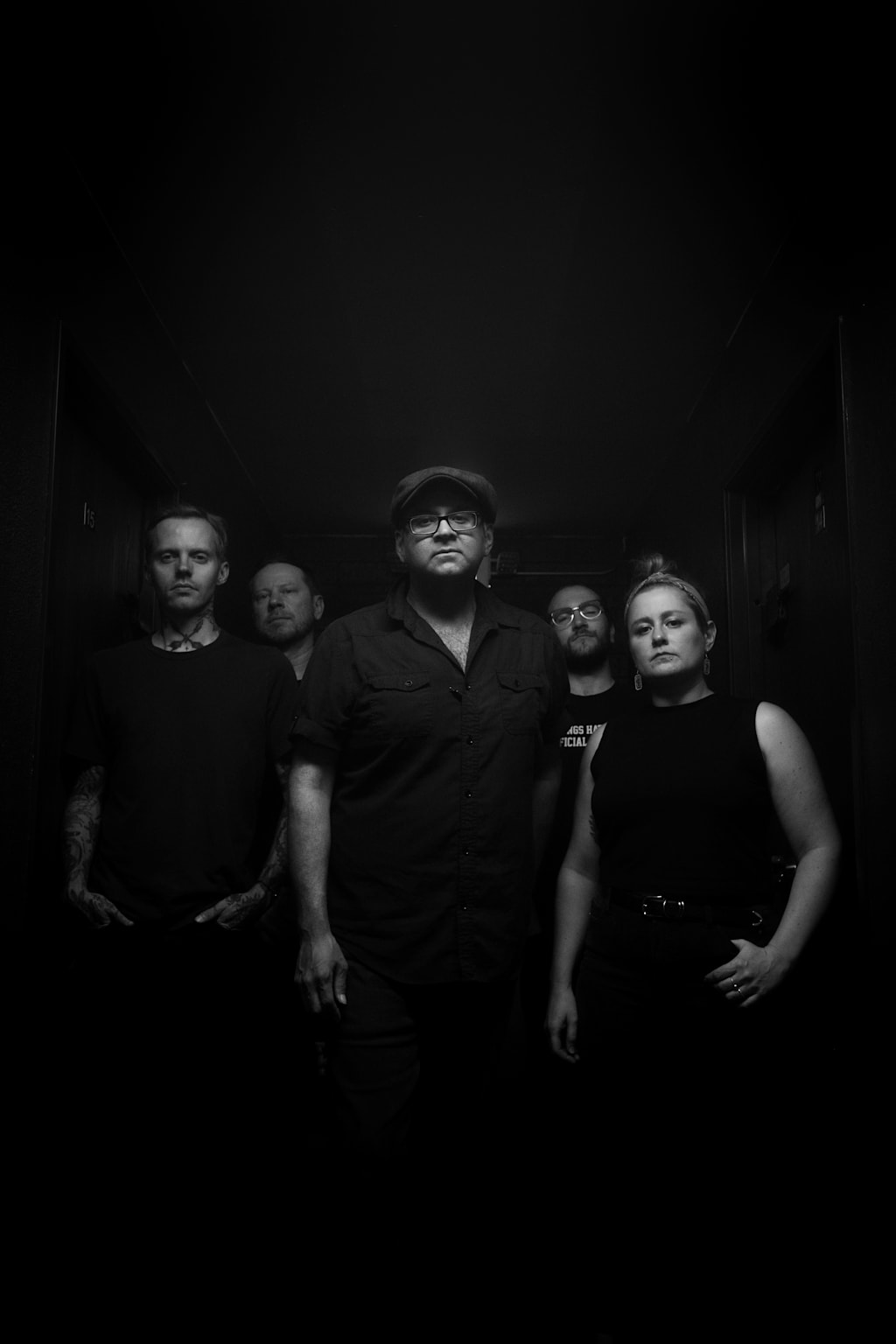
There are albums that arrive like declarations of victory. Albums that posture toward reinvention, triumph, rebirth. They announce themselves loudly, eager to convince both the listener and the artist that survival has already been resolved into meaning.
Then there are records like Still Here.
The new album from Ghost in the Willow does not sound resolved. It sounds lived-in. Bruised at the edges. Hard-earned in the way only certain records become when they emerge not from mythology, but from endurance. The title itself reads almost disarmingly simple at first glance: Still Here. Until you understand how much life had to be survived for those two words to exist at all.
For Gil Rodriguez, the phrase is neither slogan nor branding exercise. It is inventory. A quiet accounting of everything that threatened to silence him over the last several years: the deaths of his father, mother, and brother, the loss of a former collaborator, a kidney transplant that permanently altered his relationship with time itself. Lesser artists might have turned those experiences into spectacle or self-mythology. Rodriguez does something more difficult. He folds them into the emotional grain of the music until grief stops functioning as subject matter and instead becomes atmosphere. It is present in the rooms, lingering in the reverb, embedded somewhere beneath the guitars and horns and trembling vocal lines.
“It’s perseverance,” he says simply. “Life gets harder and more complex as we grow older and it’s easy to lose yourself to grief or struggle. However if you just keep going a little past that, you’ll still be here.”
That philosophy animates every corner of Still Here, released March 6, 2026: an album that transforms survival into momentum without ever pretending pain has concluded neatly. The songs do not offer closure so much as continuation. They understand something many records avoid admitting: grief rarely ends cleanly. It simply changes shape and learns how to live beside you.
That tension, between devastation and forward motion, has always existed somewhere inside Ghost in the Willow. The project began quietly in 2017 while Rodriguez was still playing in the punk band The Combat Medic, initially conceived as an acoustic side outlet for songs that didn’t belong anywhere else. But over time, the project outgrew its original function. By the release of the band’s second record, I Was Once A Charming Man, Rodriguez realized Ghost in the Willow had become something larger than an experiment.
“This is real,” he remembers thinking. “This is something I want to totally pursue.”
What followed was not reinvention so much as expansion. Over the years, Ghost in the Willow evolved from stripped-down acoustic punk into something far more difficult to categorize: a widescreen, emotionally maximalist rock band that exists somewhere between heartland rock grandeur and punk urgency. The music carries the bruised honesty of DIY spaces while reaching unapologetically toward cinematic scale. Horn sections crash against ragged guitars. Violin melodies drift through songs like weather fronts. Vulnerability arrives without irony or self-protection.
The result is a band perpetually caught between worlds.
“Too punk for the rock crowd and too rock for the punk crowd,” Rodriguez says with a laugh.
The description feels accurate, but incomplete. What Ghost in the Willow actually inhabit is the increasingly rare territory between sincerity and spectacle. It is music unconcerned with coolness, allergic to emotional distance, committed instead to the radical possibility that earnestness might still matter.
That emotional openness becomes the defining force of Still Here.
Recorded between the intimacy of FC Studio in Tempe and the legendary rooms of NRG Studios in Los Angeles, the album balances closeness against enormity with startling precision. Half the songs feel like they are happening inches from your face. The other half seem designed to swallow entire rooms whole. Producer Kyle McAulay of Spanish Love Songs understood immediately how to preserve that tension.
At NRG, the band chased sonic weight: massive drum sounds, layered guitars, arrangements that stretched outward without losing emotional immediacy. At FC Studio, a space Rodriguez speaks about now with visible grief after its destruction, the recordings captured something rawer and more fragile. Together, the environments became complementary emotional languages.
“They’re close and chaotic and visceral,” Rodriguez says of the FC sessions. “Then NRG gave us the huge room those songs needed.”
But perhaps the most transformative evolution inside the band came through the arrival of violinist and vocalist Sam Camacho. Rodriguez describes her addition with the kind of reverence artists reserve for rare creative shifts that permanently alter how they hear themselves.
“She added that missing ‘it’ factor,” he says. “The songs went from two-dimensional to suddenly being three-dimensional.”
You can hear that dimensionality everywhere on Still Here. Camacho’s violin does not function as ornamentation; it operates like emotional weather, widening the songs until they feel almost cinematic in scope. Her harmonies soften the sharpest edges without dulling them. Around her, the band expands accordingly. Ghost in the Willow now regularly perform as a six-piece, occasionally swelling to nine musicians with a full horn section. This is a choice that feels almost rebellious in an era obsessed with minimalism and logistical efficiency.
Most bands operating within punk-adjacent spaces eventually shrink themselves for practicality. Ghost in the Willow chose the opposite direction.
“To me there’s no risk,” Rodriguez says. “It’s all reward.”
That philosophy becomes especially meaningful as the band prepares for its upcoming Pacific Northwest run this June, including stops in Portland, Tacoma, Bellingham, and Seattle. For Rodriguez, the Pacific Northwest has become more than a touring region. It has evolved into a kind of emotional and creative refuge; a place he has returned to for nearly two decades searching for clarity, inspiration, and rest.
“Portland has always been my muse,” he says.
The city even appears on the cover of Still Here, not as geographical branding, but as emotional symbolism. Rodriguez speaks about the region almost spiritually: the audiences willing to see unfamiliar bands simply because music itself matters culturally there, the conversations after shows, the sense of community that survives outside industry logic. Compared to Phoenix, a scene he describes affectionately but honestly as fragmented and difficult to navigate, the Pacific Northwest represents possibility.
“There’s a cultural love of music that exists there,” he says. “People see shows of bands they’ve never heard of just because it’s something to do. Then they become fans.”
That spirit feels deeply aligned with Ghost in the Willow’s entire ethos. This is not music optimized for algorithms or trend cycles. It is blue-collar rock & roll in the truest sense: songs built slowly over years, carried forward by friendship, trust, and stubborn belief in the emotional necessity of making them at all.
And perhaps that is what ultimately makes Still Here feel so resonant right now. So much contemporary music arrives hyper-curated, emotionally mediated through irony or aesthetic distance. Ghost in the Willow move in the opposite direction. Their songs refuse detachment. They ask listeners to sit directly inside grief, uncertainty, memory, endurance.
Rodriguez understands how risky that vulnerability can feel.
“I have a hard time being vulnerable as a person,” he admits. “But in my music I can be as vulnerable as I want and that’s pretty freeing.”
That freedom reaches its emotional apex on “My Dad & I,” the album’s devastating closing track written late during the recording process after Rodriguez rediscovered an unfinished voice memo inspired partially by Paul Westerberg. Encouraged by McAulay, he finished the song almost immediately inside the studio, recording it in only a few takes with a Les Paul Junior he found there.
Once playback began, he knew instinctively the album had found its ending.
“A sort of emotional ending to a batch of songs my father never got to listen to,” he says quietly.
The placement feels intentional in the deepest possible way. After all the scale and horns and cathartic noise, Still Here closes not with triumph, but intimacy. A reminder that sometimes the quietest songs carry the heaviest emotional weight.
And throughout the album, time itself seems to haunt the edges of every decision. Surviving a kidney transplant permanently altered Rodriguez’s relationship with postponement, with the dangerous illusion that there will always be another tomorrow.
“Some people think there is always tomorrow,” he says. “For me, that’s no longer always the case.”
You can hear that awareness embedded everywhere inside Still Here. Not panic exactly. Not despair. Something sharper. A heightened understanding that making art is inseparable from mortality because every song represents time converted into memory before it disappears.
But the remarkable thing about Ghost in the Willow is that they never allow that awareness to collapse inward into cynicism. The album remains fundamentally communal. Friendship hums beneath every arrangement. The joy of collaboration survives alongside grief. Even the massive live setup, the horns, the layered instrumentation, the refusal to scale the songs down for convenience, reflects a belief that audiences deserve emotional fullness rather than efficiency.
That belief may ultimately explain why Ghost in the Willow matter so deeply within their field right now. They occupy a disappearing space in modern independent music: a band unafraid of earnestness, scale, sentimentality, or emotional risk. They refuse to flatten themselves into marketability. They insist on playing real instruments loudly in crowded rooms with too many musicians because the songs demand it. They believe vulnerability is not weakness but obligation.
And perhaps most importantly, they understand that perseverance itself can become a form of artistry.
Not survival as branding. Survival as practice.
When Rodriguez imagines people listening to Still Here years from now, he does not speak about legacy in grandiose terms. Instead, he hopes listeners hear themselves reflected back through the songs: old relationships, sudden losses, forgotten memories illuminated briefly again.
“I paid for the experiences that led to this album in grief,” he says. “So whatever comes from it, I want it to be good.”
That sentence lingers long after the album ends because it contains the entire emotional architecture of Ghost in the Willow in miniature. The understanding that art cannot erase suffering. It can only transform it into something shareable. Something survivable together.
Some records arrive as declarations of arrival. Still Here arrives differently. Like headlights appearing slowly through fog. Like voices carrying through the walls of a crowded bar.
Like proof that after everything collapses, there are still people somewhere loading guitars into vans, driving north toward another city, another stage, another chance to make something loud enough to hold the weight of being alive.
And sometimes, against all odds, that is enough.
About the Creator
Enjoyed the story? Support the Creator.
Subscribe for free to receive all their stories in your feed.
Comments
There are no comments for this story
Be the first to respond and start the conversation.