
Angalia Bianca Shares How Faith, Hope and Purpose Changed the Course of Her Life
Visionary Women Who Inspire

Success is often measured by accomplishments, but there is something equally powerful about the courage it takes to change your life. Angalia Bianca has done exactly that. Today, she is an international speaker, award-winning author, and community and youth advocate whose message has reached audiences across the United States and around the world. From law enforcement agencies and college campuses to leaders working to combat human trafficking and terrorism in Abu Dhabi, Angalia continues to use her voice to educate, inspire, and create meaningful conversations about healing, violence prevention, addiction recovery, and second chances.
Angalia Bianca has every reason to be proud of the life she has built. Her journey reflects determination, faith, personal growth, and a genuine commitment to helping others discover that hope still exists, even during life’s most difficult moments. After overcoming addiction, homelessness, incarceration, and unimaginable personal loss, she made a decision that changed not only her own future but the lives of countless people who have heard her story. Her willingness to share both the painful and victorious chapters of her life has made her a respected advocate whose impact continues to grow.
Her memoir, IN DEEP, offers readers a glimpse into experiences that many believed she would never survive. Yet, as remarkable as her story is, her greatest achievement may be the life she continues to live every day — with purpose, compassion, empathy, and service to others. Her work reminds us that healing is possible, that people deserve opportunities to grow beyond their past, and that one decision can change the direction of an entire life.
In this exclusive interview, Angalia Bianca reflects on the defining moments that shaped her journey, the promise she made that continues to guide her life, the lessons she has learned through recovery, and why she believes there is hope for anyone who is ready to embrace change.
Your journey from surviving addiction, violence, homelessness, and incarceration to becoming an international speaker, award-winning author, and advocate is extraordinary. When you reflect on your life, what was the moment that changed the direction of your story?
Angalia: When I was in an Illinois state penitentiary, my father died. Over the years, I had lost other family members. Like my grandmother and stepmother while I was in prison.
But when my father died, it was at that moment that I realized that life did not freeze to wait for me, to kick back into gear. I was losing my family one by one. And never got to say Goodbye to any of them. I looked in the mirror in the prison bathroom and said to myself. You’re getting older. You gotta get your life together. I wanted my family back, and my children. And I decided that I would do whatever I could to change my life. But was unsure of how. After a couple months and before I got out, I said a prayer to God, I said “God, I’ll make a deal with you. If you will take the taste of the Heroin and the streets from my mouth until my last dying breath I will help people” i never went back on that promise. And I never looked back or got high again.
Many people hear your story and ask, “How is she still alive?” What do you believe allowed you to survive the darkest chapters of your life and ultimately transform your pain into purpose?
Angalia: I am a very determined person even when I was in that lifestyle. I think that I survived so many things that should have killed me because I was very determined and relentless in surviving. I somehow used my humor and my gift to gab to get out of situations that otherwise would have ended badly. And I learned to be very street-smart. I knew how to navigate the streets very well.
You were raised in Chicago by a loving Sicilian family and a grandmother who adored you, yet you were still drawn into the streets. What do you want people to understand about the complexity of your early life and the choices you made?
Angalia: I had a lot of untreated childhood trauma. But in those days that was something nobody talked about. (Early 1960s)
When I was 4 years old, I was raped by a male babysitter that my mother left me with. When she came home, I immediately told her and afterwards, no one ever talked about it again.
Then, when I was 5 years old, my mother left us in the middle of the night. I didn’t know why because I was only 5. My grandmother raised me and my sister. It became something else we never talked about. So I suppose my resilience came from an early age of learning to deal with things on my own. I was introduced to morphine tablets at the age of 9 years old, and I tried one and I liked it. And now, looking back, I think that filled the void or made me feel a calm within myself that I hadn’t felt because I clearly was in some kind of denial of childhood trauma. After that, I continued to get high. I never stopped.
After seven trips to the penitentiary and 12 years in Illinois state prisons, August 9, 2011, became a defining day in your life. What happened internally that made you choose a different path?
Angalia: When I got out I knew that I had made that promise to God and I figured I could at least try. So I decided to go into a recovery program, not really believing it was gonna work but I thought I’d keep up my end of the bargain and the deal that I made with God.
Your recovery journey at A Safe Haven allowed you to address the root causes of your addiction. What did you discover about yourself during that process that you had never faced before?
Angalia: A Safe Haven gave me a roof over my head with wraparound services. As weeks went by, I participated in their program, and I started to learn new skills and look at life a little bit differently. I was sober. But it was one defining moment that the President of the organization stopped me in the hall and wanted to introduce me to a Senator. When she introduced me, the Senator shook my hand and looked at me with respect. I really felt that because no one had looked at me with respect in probably over 3 decades or longer. That feeling of respect gave me so much motivation, and somehow, from that moment on I knew I could make it.
You found your calling as a violence interrupter with CeaseFire and went on to become a respected voice in violence prevention and social change. How did your own lived experiences shape the way you connected with young people and communities?
Angalia: It was by pure accident that I found my calling. I just happened that I wanted to keep my promise to God and I kept stopping on corners on my own. Where I saw gatherings of young teenagers or young adults that I knew were involved in high risk activity. And I started talking to them, and somehow I don’t know if I was entertaining them, or they could just tell by the few sentences that I spoke that, yeah, this girl has been through a thing or two, but they were cool with me. And they listened, and we built bonds. I wanted to tell them the ugly side of the lifestyle, because in the beginning we think we’re having fun, and then all of a sudden, we’re not and all of a sudden we’re in the penitentiary, and they seem to be listening to me. A CeaseFire program manager happened to see this a few times and stopped to walk over to me. He asked me to talk with him. And he said, do you know those guys? And I said, well, I do now, I didn’t an hour ago, but we’re cool now and he asked me if I knew what they were doing. And I said, yeah, I know what they’re doing, because I used to be them and then he offered me a job. I went to the interview and I got the job. I felt very important because in 2011, the job paid $15 an hour. That was a lot of money to me. And it was legal money. I felt a feeling that I can’t ever remember feeling. Most important, I was helping people
Your book IN DEEP shares only a small portion of your life story. What inspired you to share your journey, and what do you hope readers take away from your story?
Angalia: I want readers to know that no matter how far down the rabbit hole, they go. There’s always hope because I should have been dead a 100 times and as of this writing, I am sober over 16 years. It seems like a whole other life ago, so I try to inspire people through my memoir. I remember I had no hope. I thought I would never be able to change my life. I was in too deep and all the mistakes I had made that, I could never correct them all. I was wrong, so I want the whole world to know that. I made out so anyone can.
You have spoken before law enforcement, college campuses, prisons, national audiences, and leaders in Abu Dhabi working against human trafficking and terrorism. What message do you carry into those rooms when sharing your story?
Angalia: I still use my lived experiences as I’ve been an addict, homeless, a drug dealer, a prisoner, a career criminal, and I have found that it’s about learned behavior. No matter what country I’m in, no matter what the issue is, I believe that by treating the root causes that’s the start of change. By using a public health approach and education to understand why an individual is behaving this way, no matterwhat they are involved in. I believe that we can change the trajectory of their path if they are willing.
You lost relationships, experienced estrangement from your family, and lost custody of your children during your darkest years. How has your journey shaped your understanding of forgiveness, healing, and rebuilding?
Angalia: I am very grateful that I have reunited with my entire family and my children. It means the world to me that my grandchildren only know this person who I am right now because I am no longer the person I used to be. I’m blessed that I got to spend the last 5 years of my mother’s life with her. And she saw this person, and she was proud of me. So when she died, she knew I was sober, healthy, and productive.
Today, Angalia Bianca is a symbol of resilience and transformation. What legacy do you hope to leave, and what message would you give to someone who feels trapped in their own darkest chapter?
Angalia: To never give up hope, and if a person has 1 oz of hope inside of them to wanna change, they can change. And words alone won’t convey that so I often offer the whole world to call me when they’re ready, and I’ll help them. It’s a critical piece that the person has to be ready.
I would like to leave a legacy when I’m gone of empathy, compassion and integrity like the old saying, goes “Live your life so that when your children think of integrity, they think of you”.
Now I realize, all those decades that I wandered everywhere, looking for something that was right in front of me all along.
I finally found my way home.
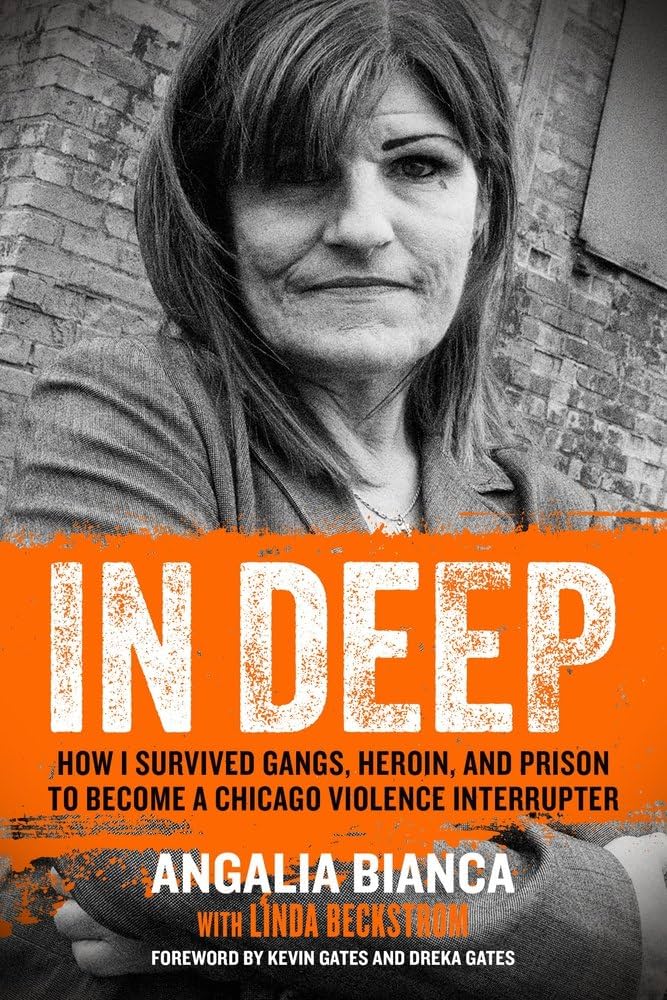
To learn more about Angalia Bianca, visit www.angaliabianca.com. She continues to be invited as a guest speaker throughout the United States and on international stages, where she shares her inspiring story and expertise on violence prevention, addiction recovery, public health, and social change. Organizations interested in booking Angalia Bianca as a guest speaker can do so through her website.
About the Creator
Tammy Reese
Tammy is best known for her legendary interviews with Sharon Stone, Angela Bassett, Sigourney Weaver, Geena Davis, Morris Chestnut, Jeffrey Dean Morgan, Sheryl Lee Ralph, Laurence Fishburne, Omar Epps, Joseph Sikora, and more.
Enjoyed the story? Support the Creator.
Subscribe for free to receive all their stories in your feed.
Comments
There are no comments for this story
Be the first to respond and start the conversation.