
Anastasiia Osypova on HR and Ukrainian Adaptability
How do human resources, professional development, and adaptability help Ukrainians navigate war and migration?

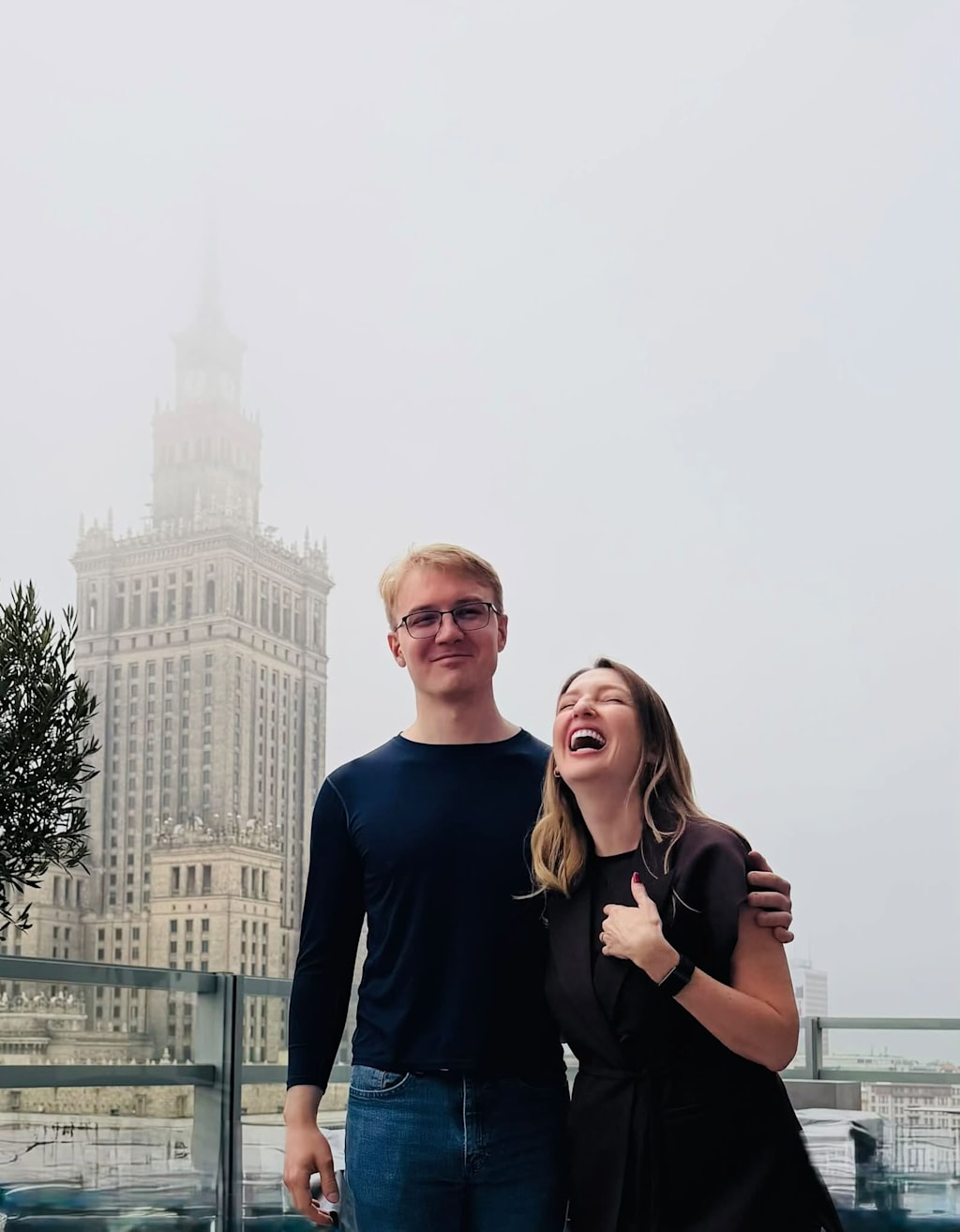
Anastasiia Osypova is an HR consultant, trainer, and coach with more than eighteen years of experience. She runs BUILD by Osypova, focusing on people and team management, recruitment, professional development, and executive coaching. Her studies in international economics, management, psychology, and coaching inform her work helping individuals and organizations find suitable paths for growth.
Scott Douglas Jacobsen interviews Anastasiia Osypova about her career in human resources, recruitment, professional growth, and recovery from demanding work. They explore differences between Ukrainian cities, wartime experiences, migration, and cultural adaptation. Osypova discusses Ukrainian resilience, language learning, cultural adaptability, artificial intelligence, and how individual priorities shape responses to changing professional circumstances.
Scott Douglas Jacobsen: Could you describe your professional background, and tell me about your company?
Anastasiia Osypova: I have worked on HR practices, training, and coaching for more than eighteen years. I run my own company, BUILD by Osypova, and work mainly with people management and team development.
Jacobsen: Why did you get into HR?
Osypova: If I think back eighteen years, it was something that found me. I went with the flow. But I really love working with people. I really believe in their potential and their ability to grow. When people are in the right place, they can do their best. I try to bring the right people together with the right business.
Jacobsen: Would you describe it as not choosing the path, but having the path choose you?
Osypova: Initially, yes. But then I also earned my second degree in psychology.
Jacobsen: Which area of psychology?
Osypova: Practical psychology, so it was broad. My first degree was in international economics and management, which is also quite broad. I felt I was missing some psychological understanding of what happens to people's mindsets at different stages. Then I also studied coaching. Being that said, I collected the background I needed to develop what I do in my field.
Jacobsen: What is necessary in human resources to help people grow?
Osypova: It depends on the area you work in. If it is hiring, you need to understand the business you are hiring for: its values, competencies, and strategy. You need that background to match the right person with the business.
HR is broad. If you want to build systems, large companies use a variety of systems and platforms. You can work with those and with numbers, which mainly requires an analytical mindset. But I would say the main thing is loving people and communicating with them, because it can be exhausting sometimes.
Jacobsen: When the work leaves you drained, how do you recover? What would you recommend to someone working in HR or thinking about entering it?
Osypova: I like to go into introvert mode. When I work closely with people, I need time to myself. I like going somewhere in nature, a park or a forest, and being alone.
I love singing; it energizes me. Sport is a must. Meditation helps too. Recently, I realized how important an organized schedule is for me: getting enough sleep and having a routine. Those are the fundamentals.
For my mental well-being, I also work with coaches and psychologists to get more organized. I love travelling because I meet different people and cultures, and see new places. That brings me energy. But if I am completely drained, I first need time alone to recover. Only after I’m able to recharge through other activities.
Jacobsen: In which cities have you worked?
Osypova: In Ukraine, I have worked in Kyiv, Lviv, Odesa, and other cities, but mainly Kyiv. Today I’m based in Warsaw. I've worked on projects in Cyprus and have many online projects. That is it for now.
Jacobsen: How would you describe the differences between Odesa, Lviv, and Kyiv?
Osypova: That is a tricky question. I love Kyiv. For me, it is the most active place to live.
Jacobsen: A business hub?
Osypova: Exactly. Many people do not want to leave Kyiv. I used to travel there every week or month whenever I had an opportunity or a project, until there was a missile attack in front of my house. That really shocked me.
For me, Kyiv is a business hub with active people and a business atmosphere. Lviv and Odesa are more relaxed. They differ quite a bit in culture and mindset, but both feel more relaxed than Kyiv.
Now I like going to Lviv. It feels safer to me and is closer to Warsaw. Sometimes I go there to refresh myself, hear my native language, talk to people, and feel the atmosphere I miss.
Jacobsen: When Ukrainians in the diaspora talk about the war, what is similar to, and different from, the perspectives of those living through it in Ukraine?
Osypova: Many people living in Kyiv now say, “Do not even ask us how we are living with everything happening there.” I think reading the news from abroad can feel more terrifying than living there.
Jacobsen: Hannah Arendt had a phrase about evil: the “banality of evil.” Evil does not necessarily come at us like a Balrog from The Lord of the Rings or a man in a red costume with a pitchfork, a tail, and an aura of fire. It can appear in something methodical, bureaucratic, and ordinary.
On the Dutch side of my family, my grandfather fought the Nazis for six years. He fell in love, and after the war they moved to Canada. Both survived.
There is the familiar defence of “I was just following orders.” A guard leads Jews to the gas chambers, supposedly just following orders. A bureaucrat looks at death figures for Jews, Roma, gay men, and others as a tally. In modern terms, it would be an Excel sheet; then they were checking boxes. It is like taking a bank teller’s approach to mass killing. That bureaucratic routine is part of what I mean by banality.
In this war, we see videos of drones striking bridges while cars pass by, or attacks affecting energy infrastructure. The power goes out. It is cold. There is no running water. Ordinary things —hot and cold water, lights, computers, and the electricity needed for work —are interrupted; something terribly ordinary about how those disruptions enter daily life.
Osypova: What I have realized about Ukrainians, something I knew in theory but now you can really feel, is that we have a high level of adaptability.
Whether you are in Ukraine facing tough situations or abroad building a life, you need to adapt. If there is no electricity, you quickly learn to use generators at home and in business. If there is no water, you find another solution. Abroad, you adapt to new cultures, documents, taxes, environments, language, collaborations, and partners. Adaptability is the common characteristic.
Jacobsen: There is the phrase “Necessity is the mother of invention.” It expresses something recognized in many cultures. Perhaps the more general principle is that necessity is the mother of adaptation.
Osypova: Yes, but the speed at which we adapt is amazing.
Jacobsen: Shared language and cultural experiences can make adaptation easier. Ukrainian and Polish are related Slavic languages, although Ukrainian uses Cyrillic and Polish uses the Latin alphabet. Shared experiences of communist rule can also provide points of familiarity, although Poland was not a Soviet republic.
Expectations of men and women, dominant religions, and social attitudes can vary. There are also additional difficulties. I have seen reports and videos of apparent anti-Ukrainian attacks in Poland, including against women and some men. I don't have reliable statistics to gauge their scale.
I do not know how those experiences compare with Canada. Canada has a large, long-established Ukrainian diaspora. That is another element to bear in mind.
In my experience, adaptability matters, as does letting some things brush off your shoulders: What matters? What does not? Focus on what matters. It's about separating the wheat from the chaff.
Osypova: Even with language, well, Polish is relatively similar and easier to learn. English was taught in schools, and many people speak it. But I am also amazed by how many people have learned German, Spanish, or French over the years and now speak them pretty well. You are rebuilding your life in different aspects. It is about adaptability, curiosity, and being able to react, of course, through necessity. I believe this makes Ukrainians a unique nation.
Jacobsen: Thank you very much for the opportunity and your time, Anastasiia.
Scott Douglas Jacobsen is the Founder and Publisher of In-Sight Publishing (ISBNs: 978–1–0692343, 978–1–0673505) and Editor-in-Chief of In-Sight: Interviews (ISSN: 2369–6885). An accomplished journalist, his portfolio includes over 10,000 publications across 200+ outlets, including International Policy Digest, The Humanist, Basic Income Earth Network, Humanist Perspectives, and rabble.ca. He has served in leadership and board roles across global media and humanist organizations and holds memberships with the Canadian Association of Journalists, PEN Canada, and Reporters Without Borders.
Image Credit: Scott Douglas Jacobsen.
About the Creator
Scott Douglas Jacobsen
Scott Douglas Jacobsen is the publisher of In-Sight Publishing (ISBN: 978-1-0692343) and Editor-in-Chief of In-Sight: Interviews (ISSN: 2369-6885). He is a member in good standing of numerous media organizations.
Enjoyed the story? Support the Creator.
Subscribe for free to receive all their stories in your feed.
Comments
There are no comments for this story
Be the first to respond and start the conversation.